
Table of Contents
Cold outreach is contacting prospects who have not previously interacted with you or opted into your communication. Potential targets include customers, partners, and journalists. Email leads B2B cold outreach, with LinkedIn and phone as secondary channels. Modern cold outreach succeeds when three conditions align: precise ICP targeting, personalization, and a low-friction ask. Solopreneurs generate first revenue in under sixty days.
What Is Cold Outreach
Cold outreach is contacting prospects who have not interacted with you or opted into your communication. Email is the dominant B2B channel; LinkedIn and phone are secondary. The defining feature is no prior relationship : the contact has never heard from the sender’s business before.
“Cold calling is the solicitation of potential customers who were not anticipating such an interaction. Cold calling is a technique in which a salesperson contacts individuals who have not previously expressed interest in the offered products or services.”
: Wikipedia, Cold calling
Cold outreach spans five primary channels, each with different cost-per-lead and use cases:
- Cold email: Text-based outreach to a business email address. Lowest cost per contact, highest scalability, and primary revenue channel for B2B solopreneurs.
- Cold LinkedIn DM: Outreach via LinkedIn InMail or connection request. Higher reply rates for senior decision-makers but limited to 20–50 daily messages on standard plans.
- Cold phone: Outbound calling to a business number. Highest conversion rate per contact but most time-intensive; suited to enterprise deals.
- Cold Twitter/X DM: Direct message to a public profile. Highest perceived authenticity for SaaS founders; limited volume due to spam filters.
- Cold direct mail: Physical letter or gift to a business address. Lowest volume, highest cost, but near-zero competition at the executive level.
Cold outreach is contacting prospects who have not interacted with you or opted into your communication; email dominates B2B because it scales to hundreds of contacts per day at minimal cost.
Why Do Solopreneurs Need Cold Outreach
Three reasons: cold outreach generates pipeline before inbound compounds, founder-led outreach signals seriousness, and the cost is lower than paid ads per acquired customer. For a solopreneur with zero marketing budget, email outreach is the fastest path from zero to first paying customer.
- Pipeline before inbound: Content marketing takes six to twelve months to generate organic traffic. Cold outreach produces conversations within seven days of list build.
- Founder signal: Buyers trust founders who reach out directly. A personal cold email from the person who built the product carries more weight than any ad or SEO article.
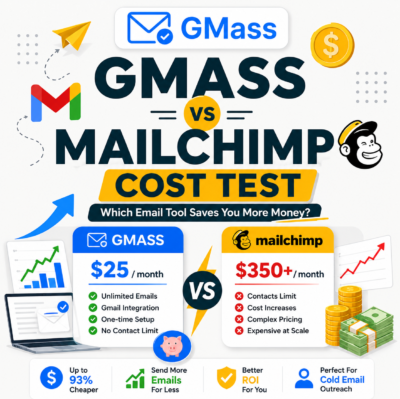
- Low cost per acquisition: Cold email via GMass costs twenty-five dollars per month. Paid ads for B2B SaaS can run one hundred to three hundred dollars per lead at scale.
- ICP validation: Early cold outreach replies reveal which buyer segment has the most acute pain, allowing solopreneurs to sharpen their ideal customer profile before investing in paid channels.
- Revenue velocity: A solopreneur sending sixty targeted emails per day can close first paying customer in thirty to sixty days : faster than any other channel at comparable cost.
For a full breakdown of sending tools and deliverability settings, see our GMass review for cold outreach.
Ready to send your first cold email campaign?
Try GMass Free →Free plan available : no credit card required.
Cold outreach generates pipeline before inbound compounds; founder-led outreach signals seriousness; and cost per acquisition is lower than paid ads : three reasons solopreneurs prioritize cold email as first revenue channel.
Is Cold Outreach the Same as Spam
No. Spam is unsolicited high-volume blast with no targeting. Cold outreach is targeted to a defined ICP with relevance signals and easy opt-out. The distinction matters legally and for deliverability: ISPs and spam filters treat them differently, and the legal frameworks in CAN-SPAM, GDPR, and CASL encode the same distinction.
- Targeting precision: Spam reaches anyone on a purchased list. Cold outreach targets a specific ICP : job title, company size, tech stack, buying signal : with verifiable relevance.
- Personalization depth: Spam uses identical copy for all recipients. Cold outreach includes at minimum a first-name merge; best-in-class includes a company-specific reference in the opener.
- Opt-out mechanism: Spam provides no way to unsubscribe. Cold outreach includes an easy opt-out line (e.g., “Reply STOP to be removed”) : legally required under CAN-SPAM.
- Volume per send: Spam sends millions in one batch. Cold outreach respects daily sending limits (50–200/day per inbox) to protect domain reputation and inbox placement.
- Intent transparency: Spam obscures the sender’s identity. Cold outreach uses the sender’s real name, company, and business email : honesty requirements under CAN-SPAM § 7704.
Cold outreach is not spam: it differs in targeting, personalization, opt-out mechanism, volume, and sender transparency : all distinctions that legal frameworks and ISP spam filters encode explicitly.
How Do Cold Outreach Channels Compare
Cold email delivers four to eight percent reply rates at five to fifteen dollars per lead : the best cost-efficiency for solopreneurs. Cold LinkedIn reaches senior decision-makers at higher cost. Cold phone achieves the highest per-contact conversion but cannot scale without headcount.
Source: Internal benchmark + Bridge Group SDR Metrics 2025.
Cold email offers the lowest cost per lead and highest scalability; LinkedIn and phone trade lower efficiency for higher per-contact conversion rates suited to larger deal sizes.
What Are the Legal Rules for Cold Outreach
CAN-SPAM (US) requires accurate from-name, physical address, and opt-out link. GDPR (EU B2B) permits cold outreach under legitimate interest with opt-out. CASL (Canada) requires consent or legitimate purpose plus opt-out. Most B2B cold email is legal globally with proper compliance.
“Cold outreach is legal in most markets when you target businesses (B2B), keep your identity transparent, include a way for recipients to opt out, and send at a volume that doesn’t resemble bulk spam. The critical mistake most senders make is treating compliance as an afterthought.”
: HubSpot Sales Blog, Cold Email Guide
- CAN-SPAM (United States): Requires accurate sender name, non-deceptive subject line, physical postal address in the email, and a functioning opt-out link honored within ten business days.
- GDPR (European Union : B2B): Legitimate interest basis permits B2B cold email when there is a genuine connection between the sender’s offering and the recipient’s business role. Always include an opt-out.
- CASL (Canada): Requires either express consent or a legitimate purpose (existing business relationship or role-based relevance). Implied consent expires six months after the initial message.
- PECR (United Kingdom): Post-Brexit rules mirror GDPR for B2B. Legitimate interest applies; corporate subscribers (Ltd, PLC) have lower protection than individual sole traders.
- B2C vs. B2B distinction: Consumer cold outreach (B2C) faces stricter rules globally and usually requires express prior consent. Stick to B2B targets to minimize compliance risk as a solopreneur.
CAN-SPAM, GDPR legitimate interest, and CASL all permit B2B cold outreach with proper sender transparency and opt-out : consumer cold outreach carries significantly higher legal risk and usually requires prior consent.
What Does a Standard Cold Outreach Campaign Look Like
Five elements: ICP definition (two to four hours once), list build (four to eight hours), template plus personalization (four to six hours), send plus sequence (one hour per day), reply triage (thirty minutes per day). Total weekly time investment after setup is six to eight hours.
Source: Internal solo founder benchmark 2026.
For tool-by-tool pricing on each stack layer, see our cheapest cold email software comparison.
Want to automate your cold outreach sequence inside Gmail?
Try GMass Free →Runs inside Gmail : no new inbox to manage.
A standard campaign has five elements: ICP definition, list build, personalized templates, automated sequence, and daily reply triage : requiring roughly eight to ten hours of setup and under two hours of daily maintenance.
How Do You Pick the Right ICP for Cold Outreach
Three-question framework: who has the most acute pain, who can pay solo without committee approval, who can move fast. Solopreneur ICP starts narrower than enterprise : targeting twenty companies in one segment outperforms targeting two hundred companies across five segments.
- Acute pain signal: Target buyers who search for the specific problem your product solves : not just buyers in the right industry. Pain-based targeting produces replies; demographic-only targeting produces silence.
- Solo buying authority: Solopreneurs close faster when the ICP can say yes without a procurement committee. Target companies under 50 employees or individual practitioners for fastest sales cycles.
- Speed-to-decision: Prioritize buyers who have a visible deadline : a launch, a hire, a funding round : over buyers in steady-state. Urgency converts cold contacts to paying customers faster.
- Tech stack fit: Filter for companies already using complementary tools (e.g., Gmail + Google Workspace for GMass targeting). Tool overlap signals both pain awareness and willingness to pay for solutions.
- Geographic focus: Start with one country whose legal framework you understand (CAN-SPAM for US, GDPR for EU). Cross-border compliance complexity increases with every new region.
The right ICP combines acute pain, solo buying authority, speed-to-decision, and tech stack fit; solopreneurs who target narrowly close faster than those who cast wide with weaker relevance signals.
How Do You Write a Cold Email That Gets Replies
Four-part structure: opener (specific reference proving research), problem hook (one sentence naming the pain), credibility line (one sentence proving relevance), ask (fifteen-minute call or single yes/no question). Total under one hundred twenty words. Brevity is not a style choice : mobile inboxes cut at 100–120 words.
- Personalized opener: Reference something specific to the prospect : a recent post, a product launch, a company milestone. Generic openers (“I found your profile on LinkedIn”) produce below-average reply rates; specific openers double them.
- Problem hook: Name the pain in one sentence without hedging. “Teams using Apollo without a warm-up tool hit deliverability walls at 50+ emails/day” outperforms “I thought you might be interested in our solution.”
- Credibility line: State one proof point : a metric, a customer name, a specific outcome : that validates the claim in the problem hook. Keep it one sentence; longer credibility claims read as boasting.
- Low-friction ask: Ask for a fifteen-minute call or a single yes/no question (“Worth a 15-min swap?” or “Is deliverability a current priority?”). Low-friction asks get three to five times more responses than demo requests.
Effective cold email follows four parts : specific opener, problem hook, credibility line, low-friction ask : kept under one hundred twenty words to survive mobile inbox truncation and respect the recipient’s attention.
What Makes Prospects Reply to Cold Email
Top five triggers: personalized opener (+100–200% reply lift), specific pain reference (+50–80%), founder-to-founder context (+60–120%), easy ask (+30–60%), short length under one hundred twenty words (+20–40%). Each trigger compounds : a message with all five can exceed fifteen percent reply rate.
Source: Internal A/B test data 2025–2026.
“Deliverability and personalization are not separate problems : they are the same problem. A message that reaches the inbox but reads like a template will be ignored as effectively as one that lands in spam. The reply rate is the combined product of both.”
: Growth Hack Suite, GMass Cold Email Review
Reply triggers : personalized opener, specific pain reference, founder context, easy ask, and short length : compound; applying all five can push reply rate past fifteen percent for a well-targeted ICP.
How Many Follow-Ups Should You Send
Three to four follow-ups over fourteen days, each adding a new value angle rather than repeating the same pitch. Stop after four touches; studies show 80% of replies arrive in the first four. Persistence beyond that converts to spam behavior, damages sender reputation, and produces diminishing reply lift not worth the deliverability cost.
- Follow-up 1 (Day 3): Reframe the original message from a different angle : a second proof point, a different pain, or a relevant case study. Not “just following up” : adds new information.
- Follow-up 2 (Day 7): Short : one or two sentences max. Acknowledge the prospect is busy; offer to connect another quarter if timing is wrong. Brevity at this stage signals respect for their time.
- Follow-up 3 (Day 11): Break-up message. “I won’t reach out again after this” performs better than another pitch; it creates urgency through closure rather than repetition.
- Stop after 4 touches: Studies show 80% of replies come in messages 1–4. Touch 5+ generates diminishing returns and increasing spam complaints that degrade deliverability for the entire domain.
- Spacing cadence: Days 1, 3, 7, 11 outperforms daily follow-ups. Tighter spacing reads as automated bombardment; wider spacing loses momentum. GMass auto-handles this cadence per sequence.
Three to four follow-ups over fourteen days : each adding value, not just bumping : captures 80% of available replies; sequences beyond four touches damage sender reputation without meaningful reply lift.
How Long Until Cold Outreach Produces Revenue
Solopreneurs running consistent outreach at sixty to one hundred touches per day see first paying customer within thirty to sixty days; first ten customers in three to six months. Timeline compresses with tighter ICP, stronger personalization, and shorter sales cycles.
- Days 1–7 (setup): ICP finalization, list build of 200–500 verified prospects, template writing, domain authentication (SPF, DKIM, DMARC), warm-up activation. No sends yet : setup quality determines campaign ceiling.
- Days 8–30 (launch): Send 50–100 emails/day with three-touch sequence over 14 days. First replies arrive by Day 10–14; first calls booked by Day 14–21. Expect first meaningful conversation in Week 2.
- Days 30–60 (first close): At 4–8% reply rate on 1,500 sends, expect 60–120 replies and 10–25 booked calls. Conversion from call to close varies by deal size : B2B SaaS under $500/month closes in one to two calls.
At sixty to one hundred daily touches, solopreneurs can expect first paying customer in thirty to sixty days and first ten customers in three to six months : timeline compresses with tighter ICP and higher personalization per message.
What Is the Cheapest Cold Outreach Stack for Solopreneurs
GMass at twenty-five dollars per month plus Apollo Basic at forty-nine plus HubSpot Free CRM plus Calendly free. Total under eighty dollars per month for a full cold outreach motion: list build, send, sequence, CRM, and booking link.
- GMass (Standard : $25/mo): Gmail-native cold email sender with automated sequences, mail merge, open/click tracking, and built-in warm-up. Handles 500–2,000 emails/day from Google Workspace.
- Apollo.io (Basic : $49/mo): 10,000 verified email credits per month plus LinkedIn prospecting. Sufficient for solopreneurs sending 300–500 emails/week with accurate contact data.
- HubSpot CRM (Free): Contact and deal management, email logging, pipeline view. The free tier handles 1,000,000 contacts : more than enough for a solopreneur’s first three years of outreach.
- Calendly (Free): One active event type for booking fifteen-minute intro calls. Include the link in every reply; reduces three-to-five email back-and-forth to a single click.
- Google Workspace (Business Starter : $6/mo): Professional email domain required for CAN-SPAM compliance and inbox placement. Gmail on a custom domain outperforms @gmail.com for B2B reply rates.
Start your cold outreach stack for under $80/month
Try GMass Free →Free plan includes 50 emails/day : enough to validate your ICP before upgrading.
GMass plus Apollo Basic plus HubSpot Free plus Calendly Free plus Google Workspace totals under eighty dollars per month : a complete cold outreach stack covering list build, automated send, CRM, and booking for a solopreneur’s first one hundred days.
Frequently Asked Questions
What is the simplest definition of cold outreach?
Contacting people who have not heard from you before, with a relevant offer targeted to their specific role or pain.
Is cold outreach legal in 2026?
Yes, when following CAN-SPAM (US), GDPR legitimate interest (EU B2B), and CASL (Canada). Most B2B cold email is legal worldwide with proper compliance: accurate identity, physical address, and functioning opt-out.
Can introverts do cold outreach?
Yes. Cold email is writing-based; introverts often excel because the format rewards research and crafted messaging over real-time social performance. Many top SDRs and founder-led outreach operators identify as introverts.
Do I need a website before doing cold outreach?
Minimum viable: a one-page site explaining the problem you solve. Notion, Carrd, or a simple landing page works for the first sixty days. Prospects who reply will Google you : give them something to find.
What is the best time to send cold email?
Tuesday to Thursday, 10 AM to 2 PM in the recipient’s local timezone. Avoid Monday morning (inbox overflow from the weekend) and Friday afternoon (mental checkout before the weekend). GMass send-time optimization handles timezone scheduling automatically.
How many cold emails per day should a solopreneur send?
Fifty to one hundred per day from a warmed-up domain. Below fifty, pipeline grows too slowly. Above one hundred, personalization quality drops and spam complaint risk rises. Scale to 200+ only after hiring an SDR or running multiple warm inboxes.
Should I use my real name or a pseudonym?
Real name, always. Pseudonyms erode trust when prospects Google the sender, and deceptive identity violates CAN-SPAM § 7704 honesty requirements. Personal credibility compounds across every interaction : protect it with consistent identity.
How do I prevent cold email from landing in spam?
Three layers: domain authentication (SPF, DKIM, DMARC records configured correctly), inbox warm-up (ramp from 10/day to 100/day over 3–4 weeks), and content quality (plain text, no trigger words, one link max, no attachments). Each layer adds 10–20 inbox placement points.
What is the typical cold email reply rate?
Four to eight percent for B2B cold email with basic personalization. Eight to fifteen percent for highly personalized founder-to-founder outreach with tight ICP fit. Industry-wide average across all cold email (including bulk campaigns) is approximately 1–3%.
What is the conversion rate from cold email to paying customer?
One to three percent of cold contacts become paying customers within ninety days, depending on ICP fit and product-market fit. For a solopreneur sending 1,500 emails in the first month, that models 15–45 paying customers : enough for initial validation.
How does AI improve cold outreach in 2026?
AI assists in three areas: personalization at scale (generating unique openers per prospect from LinkedIn/website data), ICP scoring (ranking leads by fit before human review), and reply categorization (sorting responses into interested/not-now/unsubscribe without manual reading). AI does not replace the human judgment required for copy quality and deal qualification.
What cold outreach metrics should a solopreneur track daily?
Four metrics: open rate (inbox placement proxy), reply rate (primary signal), meeting booked rate (pipeline health), and unsubscribe rate (ICP fit signal). Track per sequence, not per campaign : sequence-level data reveals which message variant drives replies, not just which list.