Table of Contents
Product Overview & Target Audience
Comparing ActiveCampaign vs Zoho CRM starts with understanding the core identity of each platform. ActiveCampaign began as an email marketing and automation tool and evolved into a powerful customer lifecycle platform. It emphasizes behavior-based automation, email personalization, and multi-channel engagement, making it ideal for businesses where marketing automation drives revenue. ActiveCampaign’s target users typically include ecommerce brands, SaaS companies, and digital businesses that depend on nurturing funnels and segmentation to scale.
Zoho CRM, meanwhile, is built as a full customer relationship management suite, supporting sales teams with lead tracking, deals, workflows, and cross-department collaboration. It fits organizations that prioritize sales pipelines, CRM structure, contact databases, and multi-team operations. Its ecosystem of 40+ Zoho apps allows companies to centralize operations across marketing, support, finance, and reporting.
From my personal experience, ActiveCampaign feels like a “growth engine,” while Zoho CRM feels like an “operational hub.” Businesses focused on marketing-driven growth usually align better with ActiveCampaign. Teams needing a comprehensive sales CRM with an integrated ecosystem often find more value in Zoho CRM.
| Evaluation Criteria | ActiveCampaign | Zoho CRM |
|---|---|---|
| Marketing Focus | ⭐⭐⭐⭐⭐ | ⭐⭐⭐ |
| Sales & CRM Depth | ⭐⭐⭐ | ⭐⭐⭐⭐⭐ |
| Ease of Adoption | ⭐⭐⭐⭐ | ⭐⭐⭐ |
| Ecosystem & Apps | ⭐⭐⭐ | ⭐⭐⭐⭐⭐ |
| Automation Role | ⭐⭐⭐⭐⭐ | ⭐⭐⭐ |
| Total Score | 4.0 / 5 | 3.8 / 5 |
Growth Hack Suite Recommendation: ActiveCampaign is better suited for marketing-driven growth and automation-heavy businesses, while Zoho CRM is the stronger choice for teams who prioritize sales pipelines, CRM structure, and a broader operational ecosystem.
Ease of Use and Learning Curve
In the detailed review of ActiveCampaign vs Zoho CRM, ease of use becomes a key factor because both platforms serve different user types. ActiveCampaign offers a clean, modern interface designed for marketers. Most features—email builder, automations, segments, pipelines—are easy to navigate. However, because the tool is built around behavior-driven automation, beginners may need time to understand triggers, conditions, and workflow logic. Once mastered, the interface becomes extremely efficient for marketing tasks.
Zoho CRM, on the other hand, feels more like a traditional enterprise system. It includes many modules such as Leads, Contacts, Deals, Activities, Reports, Dashboards, and more. This broader structure can be overwhelming at first, especially for users who have never worked inside a multi-layered CRM. However, Zoho provides guided onboarding, interactive tours, and pre-built templates, which help shorten the learning curve for sales teams.
From my personal experience, ActiveCampaign is easier to use on day one, but harder to master fully. Zoho CRM is harder on day one, but becomes easier as your business builds a structured sales process. Each tool becomes “easy” when used for the right purpose.
| Evaluation Criteria | ActiveCampaign | Zoho CRM |
|---|---|---|
| Interface Simplicity | ⭐⭐⭐⭐ | ⭐⭐⭐ |
| Navigation Intuitiveness | ⭐⭐⭐⭐ | ⭐⭐⭐⭐ |
| Onboarding Experience | ⭐⭐⭐⭐ | ⭐⭐⭐⭐ |
| Setup Time | ⭐⭐⭐ | ⭐⭐⭐⭐ |
| Learning Curve | ⭐⭐⭐ | ⭐⭐⭐⭐ |
| Total Score | 3.8 / 5 | 4.0 / 5 |
Growth Hack Suite Recommendation: ActiveCampaign is better for marketers who want a clean, quick-to-learn interface, while Zoho CRM is more suitable for sales teams needing structured modules and step-by-step onboarding.
CRM Capabilities and Contact Management
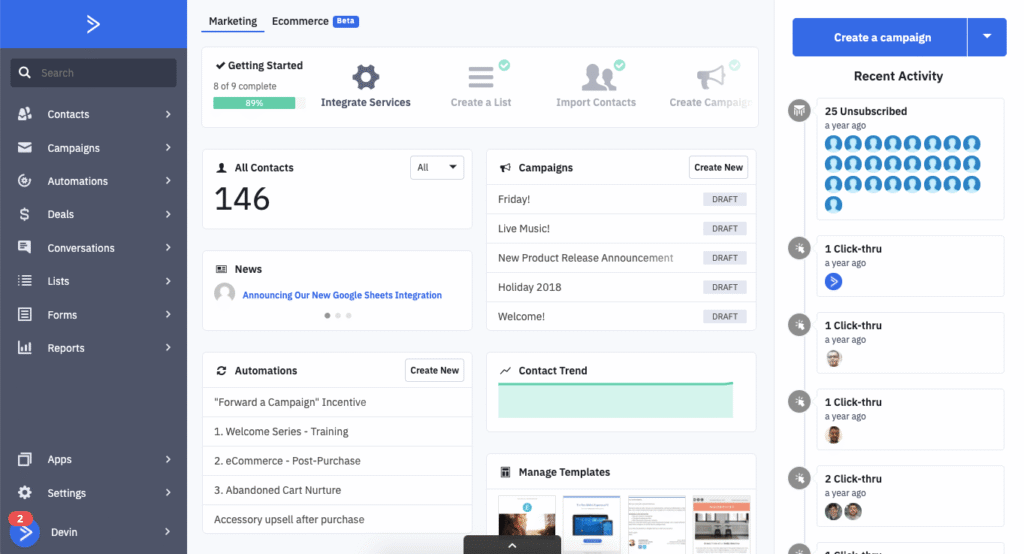
During the analysis of ActiveCampaign vs Zoho CRM, CRM capabilities are one of the most important areas of difference. ActiveCampaign includes CRM tools, but they are primarily designed to support marketing-driven sales, not enterprise-level pipeline management. The Deals pipeline is visual and easy to use, offering features like lead scoring, automated task creation, and deal stage triggers. This makes it great for lean teams and digital businesses whose sales process is tightly connected to automated campaigns.
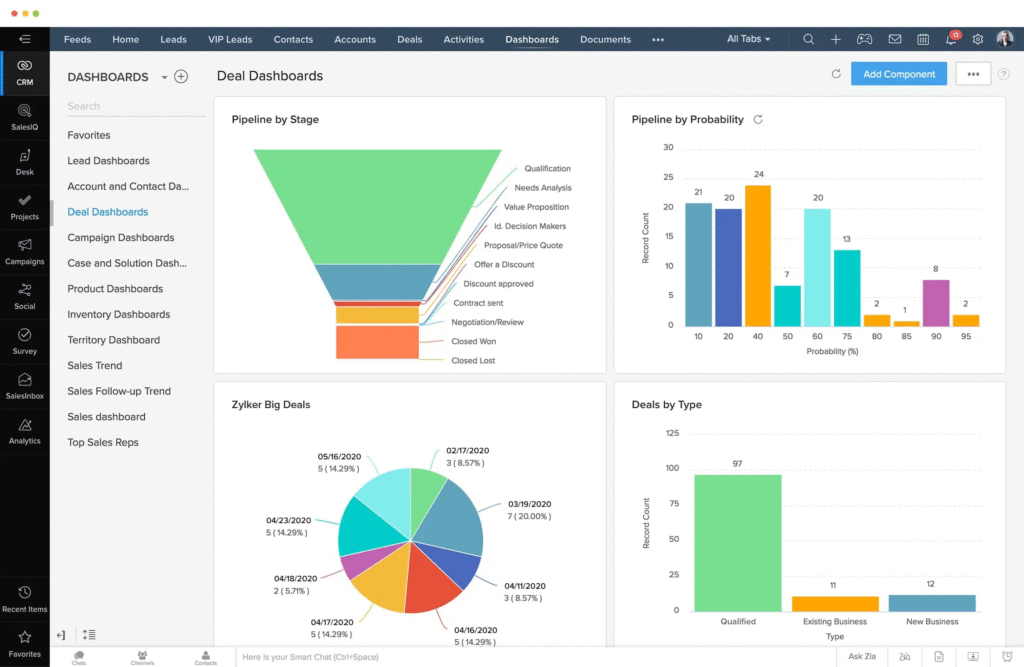
Zoho CRM, however, is a full-scale CRM platform built for sales teams, multi-department workflows, and complex sales cycles. It offers deeper database customization, advanced modules, role-based visibility, and powerful tools like territory management, sales forecasting, and multi-pipeline support. Zoho’s contact management is also more robust, with customizable fields, scoring rules, blueprints, and detailed activity logs.
From my experience implementing both tools, ActiveCampaign is ideal when you want CRM features that integrate seamlessly with automations and email behavior, while Zoho CRM is superior for teams needing full control over structured sales processes, multi-team collaboration, and enterprise workflow mapping.
| Evaluation Criteria | ActiveCampaign | Zoho CRM |
|---|---|---|
| CRM Depth | ⭐⭐⭐⭐ | ⭐⭐⭐⭐⭐ |
| Contact Management | ⭐⭐⭐⭐ | ⭐⭐⭐⭐⭐ |
| Deal Pipelines | ⭐⭐⭐⭐ | ⭐⭐⭐⭐ |
| Sales Collaboration | ⭐⭐⭐ | ⭐⭐⭐⭐⭐ |
| Customization Level | ⭐⭐⭐ | ⭐⭐⭐⭐⭐ |
| Total Score | 3.8 / 5 | 4.8 / 5 |
Growth Hack Suite Recommendation: Zoho CRM is the better choice for teams that rely heavily on structured CRM workflows and sales management, while ActiveCampaign is ideal for marketers who want CRM tools tightly integrated with automation and email engagement.
Marketing Automation Power
One of the most defining differences in ActiveCampaign vs Zoho CRM is how each platform approaches marketing automation. ActiveCampaign is widely recognized as one of the strongest automation tools in the SMB market. Its visual automation builder allows you to create multi-branch workflows, trigger actions based on behavior, personalize messaging, and automate tasks across email, CRM pipelines, scoring, and site tracking. For businesses that rely on nurturing funnels, automated follow-ups, or lifecycle sequences, ActiveCampaign offers an incredibly flexible and intuitive automation engine.
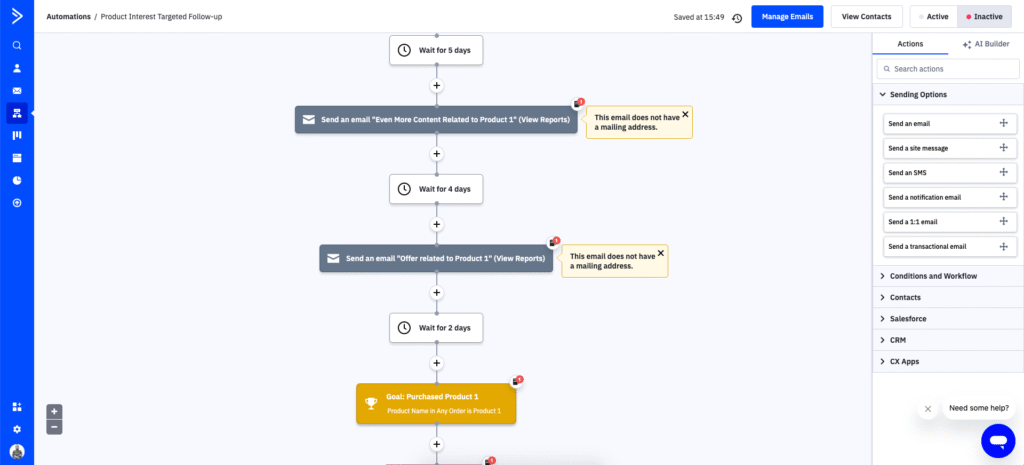
Zoho CRM, on the other hand, includes automation but focuses more on internal sales workflows rather than deep marketing behavior triggers. It offers workflow rules, blueprints, assignment rules, and basic drip campaigns, but these lack the sophistication of ActiveCampaign’s journey builder. Zoho can automate sales tasks efficiently, but it does not excel in content-driven or behavior-based marketing automation unless paired with Zoho Marketing Automation or Zoho Campaigns.
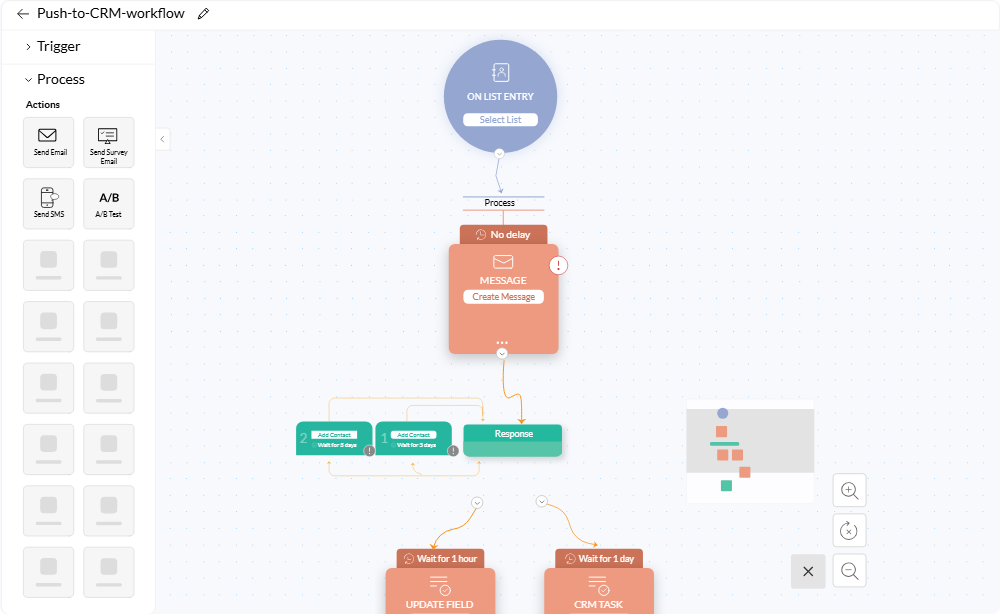
From my hands-on experience, ActiveCampaign feels like building a smart marketing brain that reacts dynamically to user behavior. Zoho CRM feels like building automated internal processes to support sales teams, not marketing funnels. Both are useful, but they serve different automation philosophies.
| Evaluation Criteria | ActiveCampaign | Zoho CRM |
|---|---|---|
| Visual Automation Builder | ⭐⭐⭐⭐⭐ | ⭐⭐⭐ |
| Behavior-Based Triggers | ⭐⭐⭐⭐⭐ | ⭐⭐⭐ |
| Multi-Channel Automation | ⭐⭐⭐⭐ | ⭐⭐⭐ |
| Workflow Complexity | ⭐⭐⭐⭐⭐ | ⭐⭐⭐⭐ |
| Automation Flexibility | ⭐⭐⭐⭐⭐ | ⭐⭐⭐ |
| Total Score | 4.8 / 5 | 3.4 / 5 |
Growth Hack Suite Recommendation: Choose ActiveCampaign if automation is central to your marketing strategy. Choose Zoho CRM if you need structured internal workflows and rely more on sales processes than automated marketing funnels.
Email Marketing Features
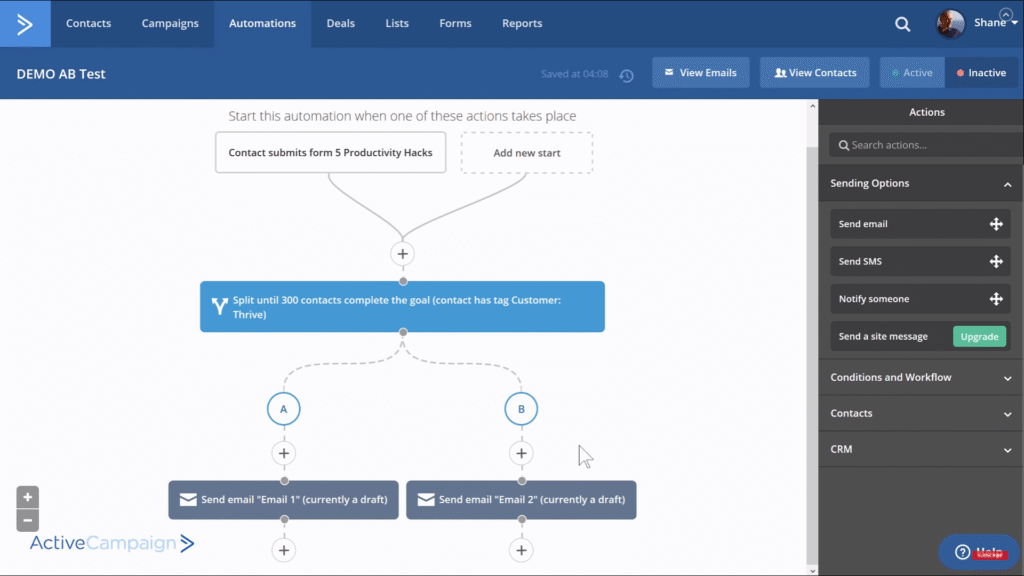
Email marketing is one of the clearest areas where the difference between ActiveCampaign vs Zoho CRM becomes immediately visible. ActiveCampaign was built around email-first marketing, so its feature set is far more advanced. The editor is smooth, flexible, and supports dynamic content, conditional blocks, smart personalization, and event-triggered campaigns. Marketers can design broadcasts, automations, split-tests, and segmented campaigns without relying on extra tools. This makes it an excellent choice for brands that generate sales through email-driven funnels, product launches, and nurture sequences.
Zoho CRM approaches email from a completely different angle. Its email tools exist to support sales communication, not marketing operations. You can send templates, follow-ups, and small batch emails, but advanced features are limited. To get broader marketing capabilities, users must integrate Zoho Campaigns or additional Zoho applications. While these tools expand functionality, it results in a less streamlined workflow compared to ActiveCampaign’s unified environment.
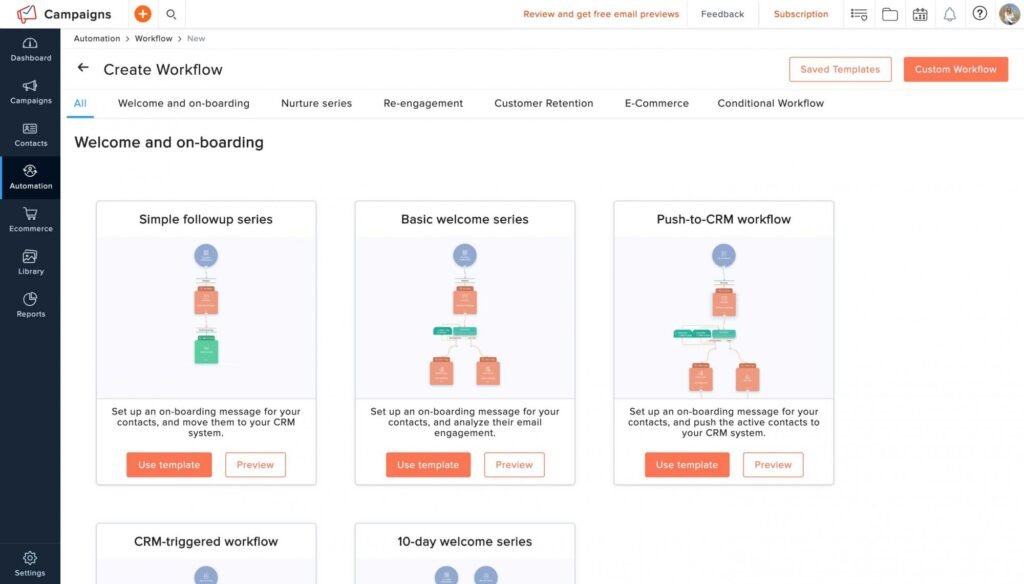
From my own experience using both platforms with clients, the difference becomes clear: ActiveCampaign feels like a platform built for revenue-focused email strategy, while Zoho CRM provides just enough email functionality for sales reps to communicate with leads. If email is a core part of your growth engine, this gap matters significantly.
| Evaluation Criteria | ActiveCampaign | Zoho CRM |
|---|---|---|
| Email Builder Quality | ⭐⭐⭐⭐⭐ | ⭐⭐⭐ |
| Template Variety | ⭐⭐⭐⭐ | ⭐⭐ |
| Personalization Tools | ⭐⭐⭐⭐⭐ | ⭐⭐⭐ |
| A/B Testing Capabilities | ⭐⭐⭐⭐⭐ | ⭐⭐ |
| Marketing Email Performance | ⭐⭐⭐⭐⭐ | ⭐⭐⭐ |
| Total Score | 4.8 / 5 | 2.8 / 5 |
Growth Hack Suite Recommendation: If your growth strategy depends heavily on email engagement, funnels, or audience personalization, ActiveCampaign delivers a far more capable and cohesive toolset. Zoho CRM works best for sales-oriented communication, but it doesn’t offer the depth marketers need unless paired with extra modules—adding cost, complexity, and more steps to your workflow.
Deliverability and Communication Quality
When evaluating ActiveCampaign vs Zoho CRM, email deliverability becomes a meaningful factor—especially for businesses that rely on consistent inbox placement. ActiveCampaign is known for maintaining strong deliverability due to its specialized sending infrastructure, compliance monitoring, and sender reputation controls. Features like spam testing, email authentication tools, and automated list hygiene help marketers maintain clean lists and high inbox rates. For brands sending regular newsletters or automation-heavy campaigns, this reliability makes a noticeable difference.
Zoho CRM, in contrast, handles email delivery primarily for one-to-one sales communication, not bulk or behavioral campaigns. Deliverability is solid for rep-driven outreach, but it lacks the advanced tools ActiveCampaign provides for large-scale marketing sends. Bulk marketing emails typically require integrating Zoho Campaigns—which can dilute control and introduce extra steps. While Zoho’s communication quality is stable, it isn’t optimized for high-volume marketing operations.
Based on my own usage, ActiveCampaign consistently outperforms Zoho CRM for busy email lists, especially when managing thousands of contacts. Zoho is dependable for sales outreach but not designed for marketing deliverability at scale.
| Evaluation Criteria | ActiveCampaign | Zoho CRM |
|---|---|---|
| Inbox Placement Reliability | ⭐⭐⭐⭐⭐ | ⭐⭐⭐⭐ |
| Spam Filter Optimization | ⭐⭐⭐⭐⭐ | ⭐⭐⭐ |
| Bulk Sending Quality | ⭐⭐⭐⭐⭐ | ⭐⭐⭐ |
| Sales Communication Reliability | ⭐⭐⭐⭐ | ⭐⭐⭐⭐⭐ |
| Deliverability Tools | ⭐⭐⭐⭐⭐ | ⭐⭐⭐ |
| Total Score | 4.6 / 5 | 3.8 / 5 |
Growth Hack Suite Recommendation: If your business depends on consistent inbox placement for newsletters, automations, or promotional sequences, ActiveCampaign gives you far more control and stability. Zoho CRM handles sales communication well, but it isn’t engineered for high-volume marketing delivery unless you rely on additional Zoho apps.
Sales Features and Lead Management
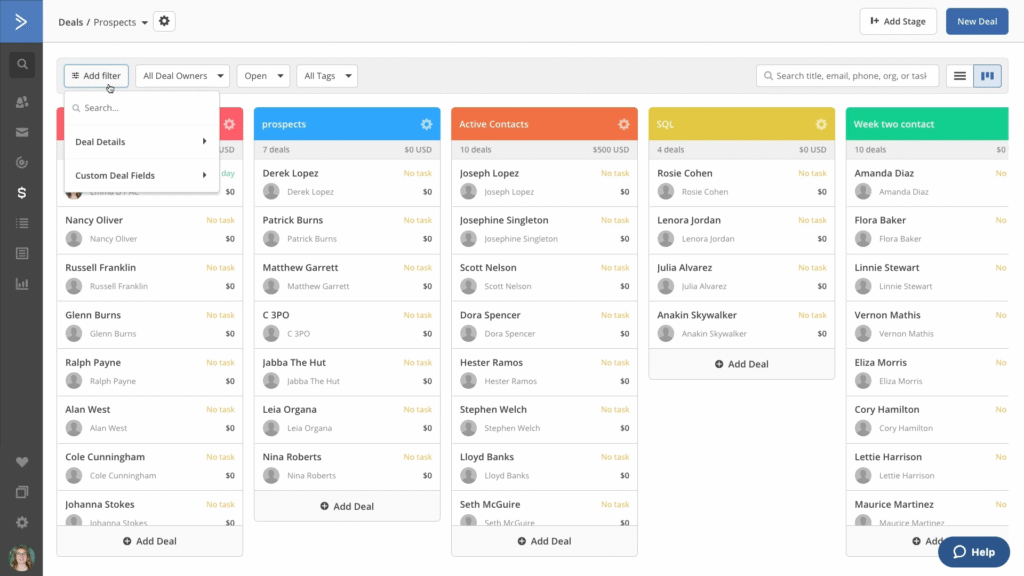
In the comparison of ActiveCampaign vs Zoho CRM, sales functionality is an area where the two tools diverge sharply. ActiveCampaign includes a lightweight CRM designed to support sales teams that work closely with marketing automation. Its Deals pipeline is visual and simple, offering features like lead scoring, automated follow-up tasks, and pipeline triggers. It works extremely well for small to mid-size teams that manage shorter sales cycles or operate within digital-first business models.
Zoho CRM, however, is built for organizations that rely heavily on structured sales processes. It offers multiple sales pipelines, advanced workflow rules, territory management, lead assignment, SLA tracking, task automation, and deep customization of fields and layouts. The ability to design full sales processes using Zoho Blueprint gives teams a clear, enforceable workflow—something ActiveCampaign cannot match at the same depth.
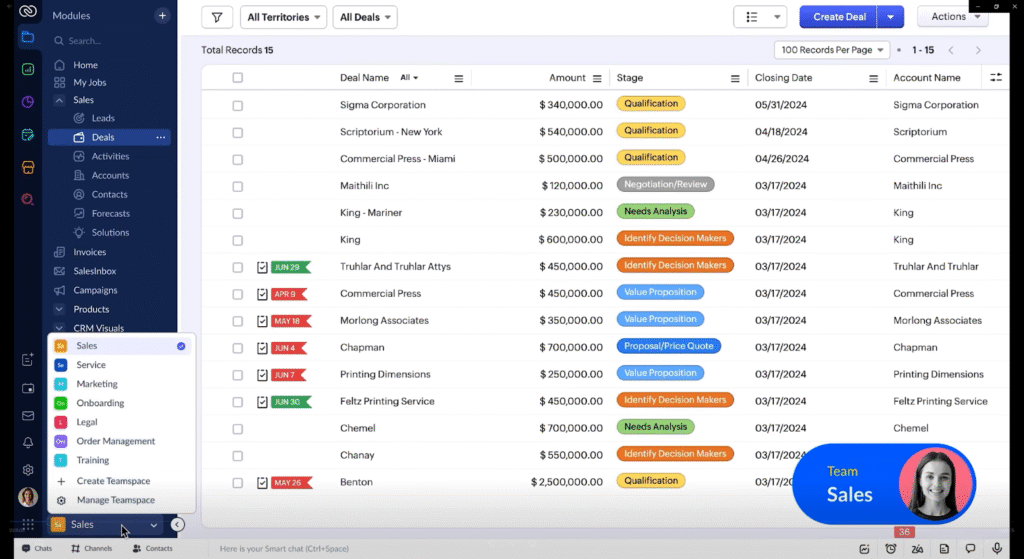
Based on my own client projects, ActiveCampaign shines in environments where marketing automation and sales communication need to flow seamlessly. Zoho CRM is far more suitable for traditional sales teams with multi-stage pipelines, multiple reps, and a strong need for operational structure.
| Evaluation Criteria | ActiveCampaign | Zoho CRM |
|---|---|---|
| Sales Pipeline Tools | ⭐⭐⭐⭐ | ⭐⭐⭐⭐⭐ |
| Lead Management | ⭐⭐⭐⭐ | ⭐⭐⭐⭐⭐ |
| Collaboration Features | ⭐⭐⭐ | ⭐⭐⭐⭐⭐ |
| Customization Options | ⭐⭐⭐ | ⭐⭐⭐⭐⭐ |
| Sales Workflow Automation | ⭐⭐⭐⭐ | ⭐⭐⭐⭐⭐ |
| Total Score | 3.8 / 5 | 4.8 / 5 |
Growth Hack Suite Recommendation: If your business relies on structured sales motion—team-based selling, multi-step deal pipelines, or territory assignments—Zoho CRM offers far more control and scalability. ActiveCampaign is better suited for companies where sales and marketing blend closely and where automation-driven deal movement is more important than complex sales processes.
Integrations and Platform Ecosystem
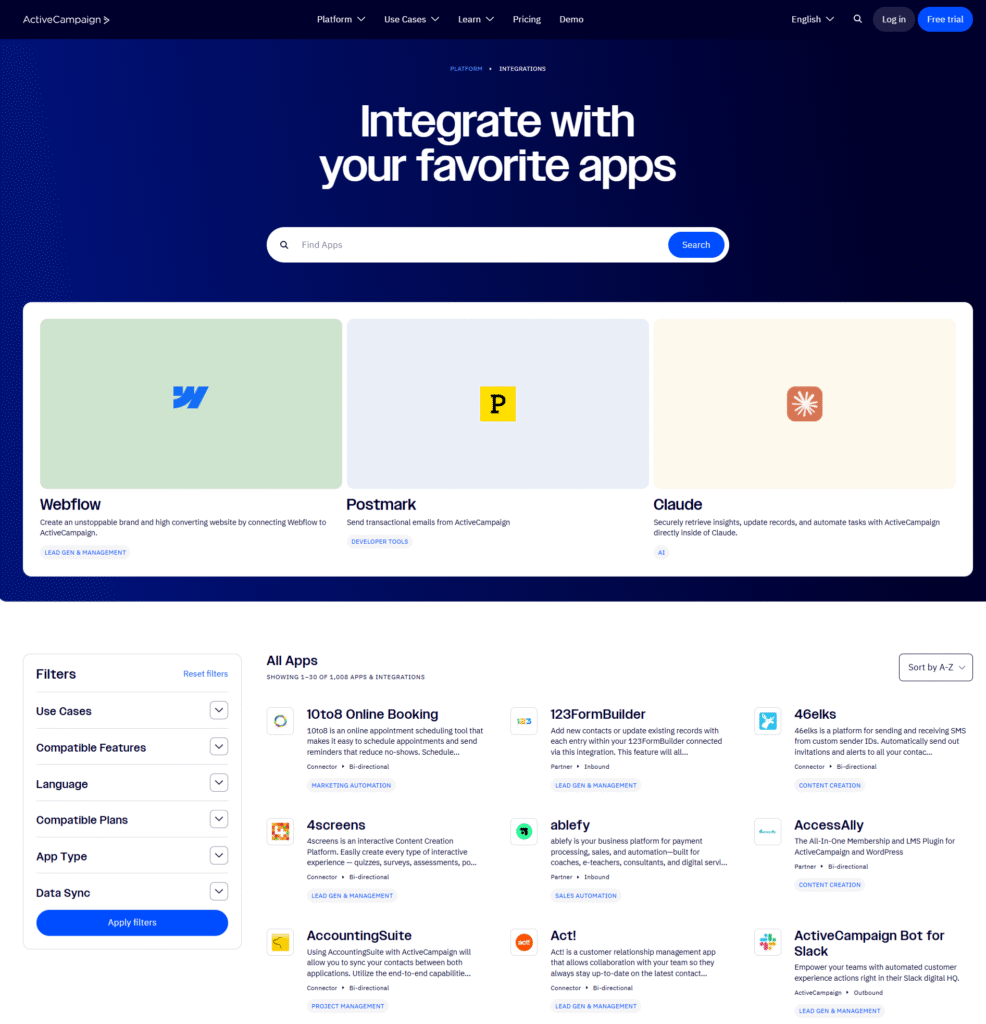
When comparing ActiveCampaign vs Zoho CRM, integrations are essential because they determine how smoothly each platform fits into your tech stack. ActiveCampaign integrates with over 1008+ apps, including Shopify, WooCommerce, Pipedrive, ClickFunnels, Stripe, Typeform, and many more. Its API and webhook support make it flexible enough for custom workflows, while native integrations allow marketers to sync contacts, events, and purchases effortlessly. This makes ActiveCampaign especially strong for businesses running multi-tool marketing funnels.
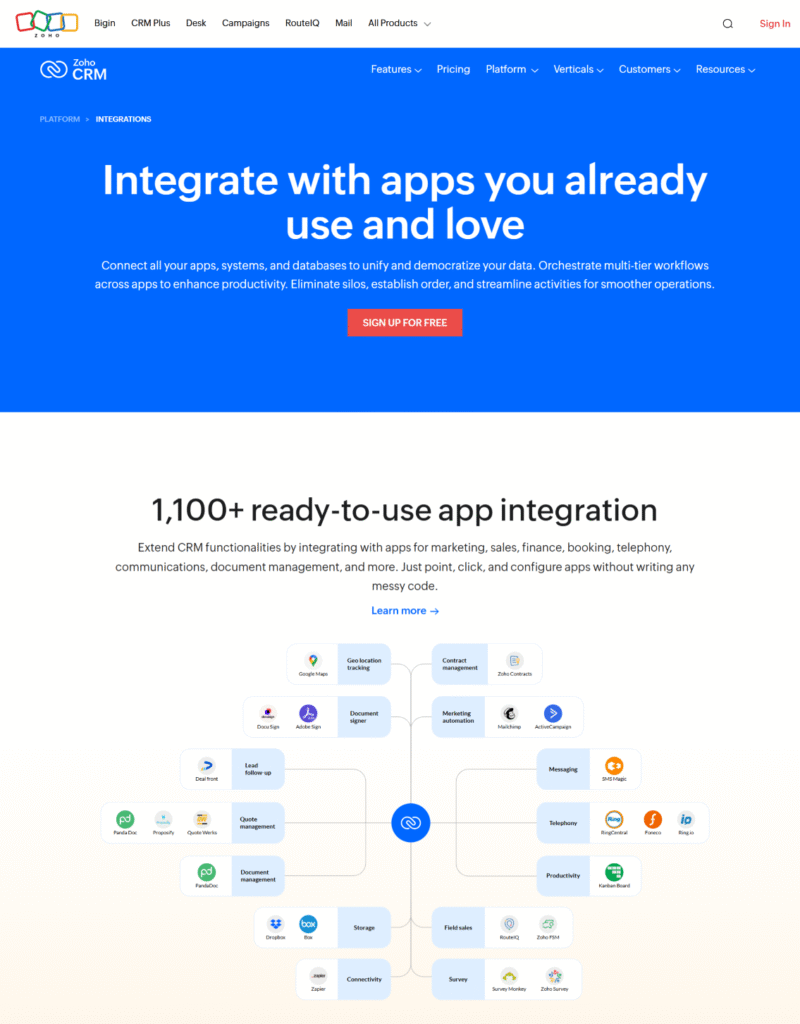
Zoho CRM takes a different approach. Instead of relying mostly on third-party integrations, it offers a massive internal ecosystem of 40+ Zoho apps — including Zoho Books, Zoho Desk, Zoho Campaigns, Zoho Social, and others. For companies that want all business operations under one brand, Zoho’s ecosystem is unmatched. Moreover, its integration capability extends beyond the Zoho suite: the platform supports 1,100+ apps ready for integration (via its integrations marketplace).
From my implementation experience, ActiveCampaign works best when your business relies on a variety of external marketing tools. Zoho CRM is ideal if you want everything centralized within the same ecosystem and prefer an all-in-one operational suite.
| Evaluation Criteria | ActiveCampaign | Zoho CRM |
|---|---|---|
| Number of Integrations | ⭐⭐⭐⭐⭐ | ⭐⭐⭐⭐ |
| API & Webhook Support | ⭐⭐⭐⭐⭐ | ⭐⭐⭐⭐ |
| Marketplace Ecosystem | ⭐⭐⭐⭐ | ⭐⭐⭐⭐⭐ |
| Ecommerce Compatibility | ⭐⭐⭐⭐⭐ | ⭐⭐⭐⭐ |
| Internal App Ecosystem | ⭐⭐⭐ | ⭐⭐⭐⭐⭐ |
| Total Score | 4.4 / 5 | 4.4 / 5 |
Growth Hack Suite Recommendation: If your marketing system depends on many external tools—landing page builders, analytics platforms, ecommerce plugins—ActiveCampaign delivers a smoother integration experience. But if you’re aiming to centralize operations under one unified suite, Zoho CRM’s ecosystem gives you far more long-term consolidation and efficiency.
Analytics and Reporting
Analytics play a crucial role in the ActiveCampaign vs Zoho CRM comparison because they directly influence your ability to make data-driven decisions. ActiveCampaign provides detailed marketing analytics, including automation performance, conversion tracking, contact behavior timelines, and campaign-level insights. Its reporting is especially strong for businesses that rely on funnels, email engagement, and lifecycle automation. While some dashboards feel lightweight, the depth becomes clear once you explore behavioral data and goal tracking.
Zoho CRM, meanwhile, excels in sales analytics and operational reporting. Its dashboards offer granular insights into pipelines, revenue forecasts, team performance, activities, and deal progression. You can build custom reports with complex filters, cross-tab views, and scheduled email summaries. For organizations running multi-rep sales teams, Zoho’s analytics are significantly more comprehensive than ActiveCampaign’s.
From my personal experience working with clients, ActiveCampaign shines for understanding how leads behave, whereas Zoho CRM is superior for understanding how your sales team performs. The difference reflects each platform’s core identity: marketing automation vs sales operations.
| Evaluation Criteria | ActiveCampaign | Zoho CRM |
|---|---|---|
| Marketing Analytics | ⭐⭐⭐⭐⭐ | ⭐⭐⭐ |
| Sales Reporting | ⭐⭐⭐ | ⭐⭐⭐⭐⭐ |
| Custom Report Builder | ⭐⭐⭐⭐ | ⭐⭐⭐⭐⭐ |
| Funnel & Behavior Insights | ⭐⭐⭐⭐⭐ | ⭐⭐⭐⭐ |
| Dashboard Flexibility | ⭐⭐⭐⭐ | ⭐⭐⭐⭐⭐ |
| Total Score | 4.4 / 5 | 4.6 / 5 |
Growth Hack Suite Recommendation: If your growth strategy revolves around understanding user actions—what they click, how they engage, and when they convert—ActiveCampaign gives you the behavioral visibility you need. But if your priority is tracking sales performance, forecasting revenue, and monitoring rep activities, Zoho CRM provides richer and more customizable reporting tools.
Pricing and Value for Money
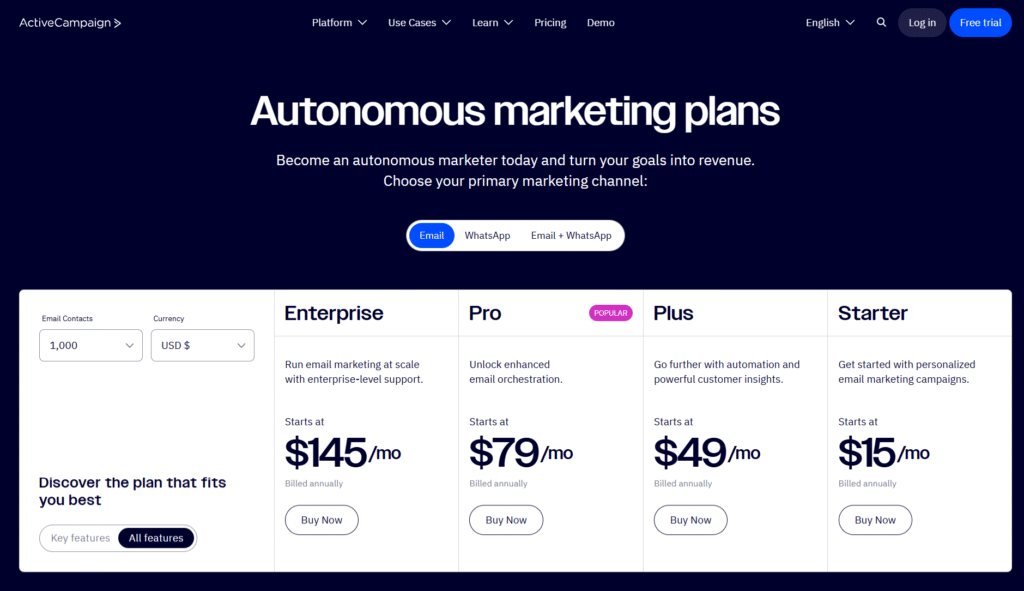
Pricing plays a major role in the ActiveCampaign vs Zoho CRM comparison, especially because the two platforms scale costs in opposite ways. ActiveCampaign remains one of the most affordable marketing automation tools at the entry level, with plans starting at $15/month for small contact lists. Even when upgrading to higher tiers, users often find that the cost increases gradually and stays reasonable as long as your contact volume is managed. For businesses that depend on funnels and behavioral automation, ActiveCampaign delivers exceptional value per dollar, especially compared to CRM-heavy platforms.
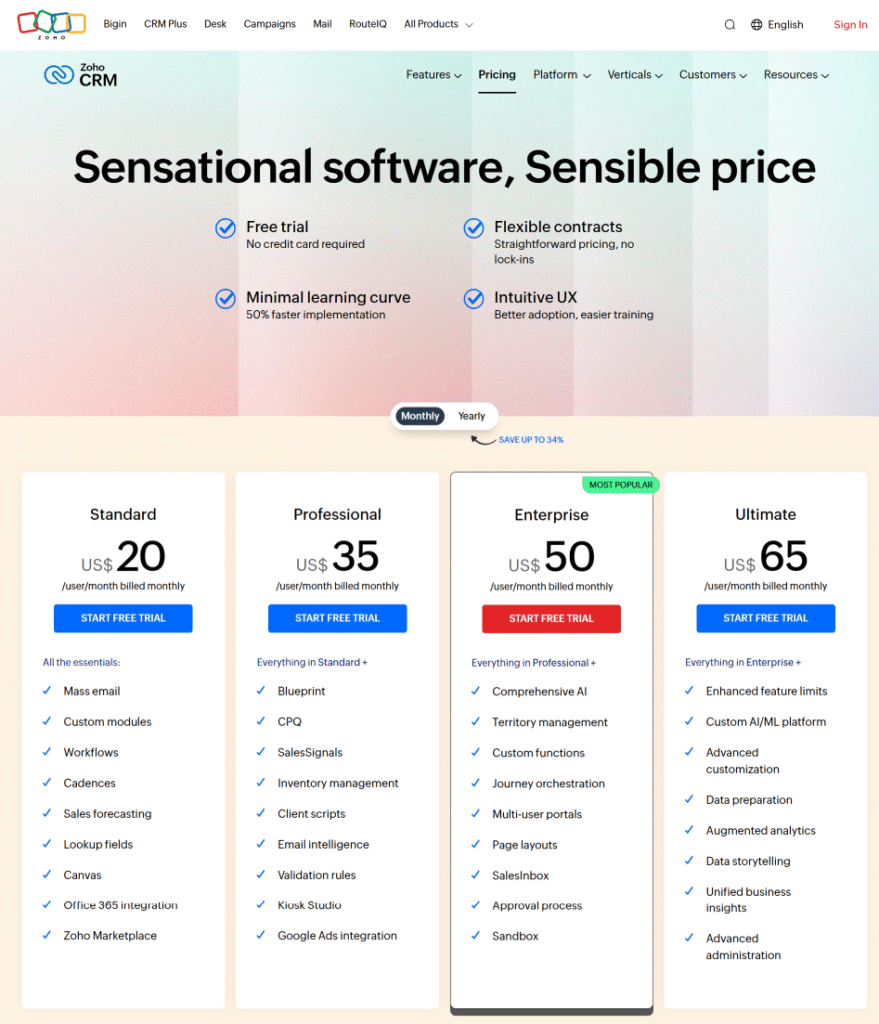
Zoho CRM, on the other hand, starts at $20/month per user—and costs can rise quickly as your team expands. Because it uses a per-user pricing model, companies with multiple sales reps or departments will experience significantly higher total monthly fees. And while Zoho includes robust CRM tools, it does not include advanced marketing automation or email marketing by default. To match capabilities similar to ActiveCampaign, you must purchase additional apps like Zoho Campaigns or Zoho Marketing Automation, which pushes the overall cost even higher.
From my experience supporting clients on tight budgets, ActiveCampaign consistently provides better ROI for businesses that rely on email revenue and automation. Zoho CRM becomes noticeably more expensive when your team grows, and total costs can exceed expectations once add-ons are included.
| Evaluation Criteria | ActiveCampaign | Zoho CRM |
|---|---|---|
| Entry Pricing | ⭐⭐⭐⭐⭐ | ⭐⭐⭐ |
| Pricing Predictability | ⭐⭐⭐⭐ | ⭐⭐⭐ |
| Cost Efficiency at Scale | ⭐⭐⭐⭐ | ⭐⭐ |
| Feature-to-Price Ratio | ⭐⭐⭐⭐ | ⭐⭐⭐⭐ |
| Pricing Transparency | ⭐⭐⭐⭐ | ⭐⭐⭐⭐ |
| Total Score | 4.2 / 5 | 3.2 / 5 |
Growth Hack Suite Recommendation: If you want maximum value and don’t want pricing to balloon as you grow, ActiveCampaign is the more financially efficient choice. Zoho CRM is better suited for organizations with larger budgets that prioritize deep sales functionality—but once you factor in per-user fees and required add-ons, the total cost can easily surpass ActiveCampaign.
Customer Support and Training Resources
Support quality is a major consideration in the ActiveCampaign vs Zoho CRM comparison, especially as businesses depend more on automation and cross-team workflows. ActiveCampaign offers a strong support ecosystem that includes live chat, a large help center, video tutorials, community forums, and an active network of certified consultants. Higher-tier plans unlock one-on-one training, strategy calls, and priority support. This makes the platform accessible for users who need both operational help and marketing guidance.
Zoho CRM provides a different type of support experience. Its strength lies in extensive documentation, structured onboarding, a large knowledge base, and a global partner network. Zoho also offers webinars, implementation specialists, and multi-language support, which is helpful for larger organizations. However, some users find response times slower, and advanced assistance often requires premium support plans or third-party consultants.
From my personal projects working with scaling teams, ActiveCampaign feels more approachable for daily troubleshooting and marketing-related questions. Zoho CRM, meanwhile, is better suited for organizations that require structured onboarding and long-term CRM guidance.
| Evaluation Criteria | ActiveCampaign | Zoho CRM |
|---|---|---|
| Support Availability | ⭐⭐⭐⭐ | ⭐⭐⭐⭐ |
| Training Resources | ⭐⭐⭐⭐⭐ | ⭐⭐⭐⭐ |
| Knowledge Base Depth | ⭐⭐⭐⭐ | ⭐⭐⭐⭐⭐ |
| Expert/Partner Network | ⭐⭐⭐⭐ | ⭐⭐⭐⭐⭐ |
| Response Quality | ⭐⭐⭐⭐ | ⭐⭐⭐ |
| Total Score | 4.2 / 5 | 4.2 / 5 |
Growth Hack Suite Recommendation: If your team needs fast answers, marketing-focused guidance, or direct access to specialists, ActiveCampaign provides a smoother and more responsive support experience. Zoho CRM is a better match for companies that value structured onboarding, detailed documentation, and access to a wide ecosystem of implementation partners.
Security, Compliance, and Reliability
Security is a crucial factor in the ActiveCampaign vs Zoho CRM comparison, especially for businesses handling sensitive customer data. ActiveCampaign follows strong security practices including GDPR compliance, data encryption, secure data centers, SSO support, and advanced permission settings. Uptime is consistently high, and the platform invests heavily in protecting marketing automation workflows from unauthorized access. For companies using email and automation to store behavioral data, this level of protection adds substantial peace of mind.
Zoho CRM goes even further in security depth due to its enterprise orientation. It offers role-based access, audit logs, IP restrictions, HIPAA compliance for certain tiers, domain-based security, and region-specific data hosting. Zoho’s global infrastructure ensures reliable uptime and strong redundancy. This makes Zoho CRM ideal for industries like finance, healthcare, and enterprise sales where strict data governance is essential.
From my hands-on experience implementing CRM systems, ActiveCampaign covers the needs of most SMBs extremely well. Zoho CRM, however, provides a more robust set of controls suitable for larger or regulated organizations.
| Evaluation Criteria | ActiveCampaign | Zoho CRM |
|---|---|---|
| Data Protection Standards | ⭐⭐⭐⭐ | ⭐⭐⭐⭐⭐ |
| Compliance Certifications | ⭐⭐⭐⭐ | ⭐⭐⭐⭐⭐ |
| Access Control Options | ⭐⭐⭐⭐ | ⭐⭐⭐⭐⭐ |
| System Reliability & Uptime | ⭐⭐⭐⭐ | ⭐⭐⭐⭐ |
| Risk Management Tools | ⭐⭐⭐⭐ | ⭐⭐⭐⭐⭐ |
| Total Score | 4.0 / 5 | 4.8 / 5 |
Growth Hack Suite Recommendation: For most digital businesses, ActiveCampaign delivers more than enough security and reliability to support marketing operations. But if your organization requires strict compliance, granular access control, or enterprise-level governance, Zoho CRM provides a more comprehensive and regulation-friendly environment.
Pros and Cons Comparison
Summarizing the strengths and limitations of ActiveCampaign vs Zoho CRM helps clarify which platform aligns better with different business contexts. ActiveCampaign excels in marketing automation, email capabilities, and behavior-driven engagement. Its interface is clean, intuitive, and built for marketers. However, its CRM features are lighter and may not satisfy complex sales teams. Costs can also rise quickly as contact lists grow.
Zoho CRM stands out with deep CRM functionality, extensive customization, and a powerful ecosystem that covers nearly every operational need. For sales teams or organizations needing structured processes, Zoho is hard to beat. The downside is that its interface can feel more complex, and its native email marketing features require add-ons to match ActiveCampaign’s capabilities.
| Category | ActiveCampaign | Zoho CRM |
|---|---|---|
| Key Strengths | ⭐ Automation, Email Power, Personalization | ⭐ Deep CRM, Customization, Ecosystem |
| Main Weaknesses | ⭐ Limited CRM Depth | ⭐ Needs Add-ons for Email Marketing |
| Ease of Use | ⭐⭐⭐⭐ | ⭐⭐⭐ |
| Best Use Case | ⭐ Marketing-Driven Growth | ⭐ Sales-Driven Operations |
| Flexibility | ⭐⭐⭐⭐ | ⭐⭐⭐⭐⭐ |
| Total Score | 4.0 / 5 | 4.3 / 5 |
Growth Hack Suite Recommendation: If your business thrives on automated engagement, lifecycle marketing, and personalized communication, ActiveCampaign brings more practical advantages. But if your success depends on multi-stage sales processes, customization, and a unified operational system, Zoho CRM offers a more complete and scalable foundation.
Use Case Recommendations
Choosing between ActiveCampaign vs Zoho CRM becomes easier when you match each platform to specific business scenarios. ActiveCampaign is a strong fit for businesses driven by marketing automation, email engagement, and funnel-based growth. If your revenue relies on nurture sequences, product launches, or ongoing audience communication, the platform’s automation engine and advanced personalization deliver significant advantages.
Zoho CRM is ideal for businesses that operate through structured sales processes. Companies in real estate, B2B services, finance, or enterprise teams benefit from Zoho’s extensive customization, deep CRM architecture, and multi-department workflows. If you need advanced sales forecasting, territory management, or built-in operational apps, Zoho CRM becomes the more strategic choice.
From observing client outcomes, I’ve found that ActiveCampaign works best for agile, digitally native teams, while Zoho CRM shines in organizations with layered sales pipelines and growing internal departments.
| Business Scenario | Recommended Platform |
|---|---|
| Ecommerce & digital marketing funnels | ActiveCampaign |
| Multi-stage B2B sales pipelines | Zoho CRM |
| Solo creators & online businesses | ActiveCampaign |
| Enterprise sales teams | Zoho CRM |
| Multi-department operations | Zoho CRM |
| Automation-heavy customer journeys | ActiveCampaign |
| High customization requirements | Zoho CRM |
| Fast setup & simple workflows | ActiveCampaign |
Ultimately, the right tool depends on whether your core engine is marketing-driven automation or long-form sales operations.
Final Verdict
Deciding between ActiveCampaign vs Zoho CRM ultimately comes down to understanding whether your business grows through marketing automation or through structured sales operations. ActiveCampaign provides a highly polished environment for email marketing, personalized engagement, and behavior-driven workflows. It’s built for brands that rely heavily on digital funnels, segmentation, and automated follow-up systems to drive revenue.
Zoho CRM, meanwhile, is the more powerful choice for organizations that require deep CRM functionality, multi-step sales cycles, and a tightly integrated ecosystem to manage operations across multiple teams. Its customization capabilities, reporting depth, and enterprise-ready features make it a long-term platform for scalable sales processes.
From years of working with marketing teams and sales departments, the choice becomes clear: businesses centered around automation and customer journeys thrive with ActiveCampaign, while companies with layered sales structures gain more stability and control with Zoho CRM.
In the end, choose ActiveCampaign if marketing is your growth engine; choose Zoho CRM if sales operations define your success.
