Table of Contents
A sales engagement platform is software that helps sales reps run and automate multi-channel outreach, email, calls, and social, through sequences, with tracking and analytics built in. It sits between the CRM and the inbox, executing the touches a rep would otherwise do by hand. GMass covers the email side of sales engagement from Gmail with sequences and tracking. The platform turns scattered manual outreach into a measured, repeatable process.
What Is a Sales Engagement Platform?
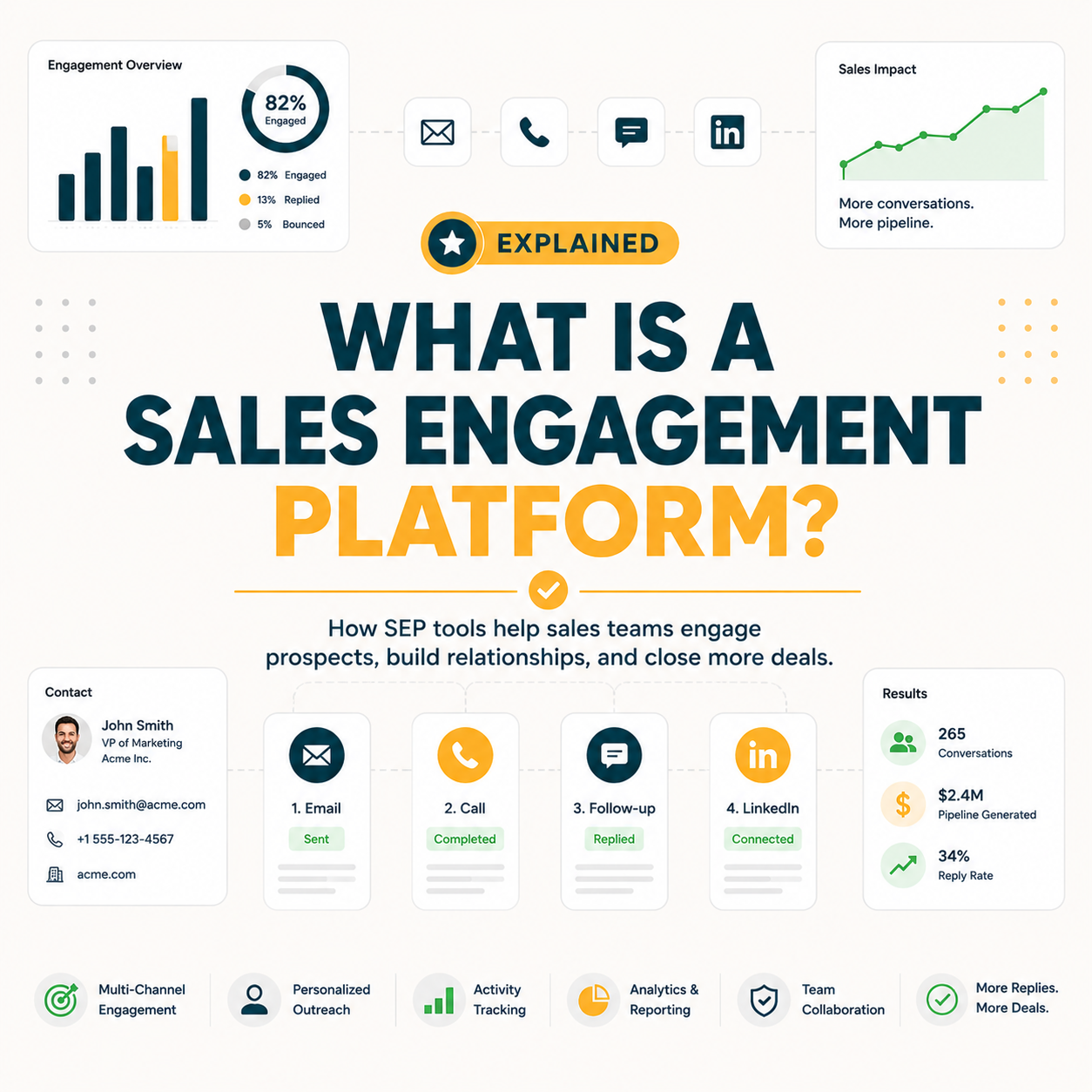
A sales engagement platform is software that organizes and automates the outreach sales reps send across email, phone, and social channels. It runs multi-step sequences, logs every touch, and reports on what works. The goal is to let reps reach more prospects consistently while capturing the data that shows which messages and cadences drive replies and meetings.
“Sales is the activity of selling, or the number of goods sold in a given targeted time period, and forms a core part of business revenue generation.”
: Wikipedia: Sales
A sales engagement platform organizes and automates outreach across email, phone, and social. It runs sequences, logs every touch, and reports on what drives replies and meetings.
What Does a Sales Engagement Platform Do?
It builds multi-step sequences of emails, calls, and tasks, sends and schedules them automatically, tracks opens, clicks, and replies, and reports on rep and campaign performance. It also queues daily tasks so reps know exactly who to contact next. In short, it executes and measures outreach so the team works a defined process instead of improvising.
- Sequence automation: Builds and runs multi-step cadences across email and other channels so no follow-up is missed.
- Activity tracking: Logs opens, clicks, and replies on every message, giving a clear record of prospect engagement.
- Task queues: Surfaces the next contacts to call or email each day so reps spend time selling, not deciding.
- Performance reporting: Shows which sequences, messages, and reps generate replies and meetings for steady improvement.
It builds sequences, sends and schedules them, tracks opens, clicks, and replies, queues daily tasks, and reports on performance. It executes and measures outreach as a defined process.
How Does It Differ from a CRM?
A CRM stores contacts, deals, and the system of record; a sales engagement platform executes the outreach that fills that record. The CRM answers what is the state of each deal, while the platform answers how do reps reach prospects today. They are complementary: the platform does the sending and the CRM holds the resulting relationships and pipeline.
A CRM stores contacts and deals; a sales engagement platform executes the outreach that fills it. They are complementary, the platform sending and the CRM holding the pipeline.
What Are the Core Features?
Core features are multi-channel sequences, email automation with personalization, call and task management, engagement tracking, A/B testing, and analytics dashboards. Most platforms also integrate with a CRM to sync activity. These features together let a small team run the outreach volume that would otherwise need many more reps doing everything manually.
“Sales engagement tools help reps connect with prospects across multiple channels and automate the repetitive parts of outreach so they can focus on selling.”
: HubSpot: Sales Blog
Core features are multi-channel sequences, email automation, call and task management, engagement tracking, A/B testing, and analytics, with CRM integration to sync activity.
Why Do Sales Teams Use One?
Sales teams use a platform to reach more prospects with consistent follow-up, never drop a lead, and see which outreach actually works. Manual outreach does not scale and leaks leads when reps forget to follow up. The platform enforces the cadence and surfaces the data, turning individual effort into a measurable, repeatable team process.
Teams use a platform to reach more prospects with consistent follow-up, never drop a lead, and see what works. It turns individual effort into a measurable, repeatable process.
How Does It Fit a Cold Email Workflow?
In cold email, the platform runs the sequence: an initial email plus timed follow-ups that stop on reply, sent at a safe pace with tracking. It handles the volume and cadence that make cold outreach work while keeping each touch personalized. The platform is the engine that executes a cold email campaign from first send to booked meeting.
To set realistic targets for a cold email sequence, the cold email benchmarks guide defines healthy reply and meeting rates.
In cold email, the platform runs the sequence of an initial email plus timed follow-ups that stop on reply, at a safe pace with tracking. It is the engine that executes the campaign.
How Does GMass Compare to a Full Platform?
GMass covers the email engagement side, sequences, personalization, follow-ups, and tracking, from inside Gmail, without the calls, social, and CRM layers of a full platform. For teams whose outreach is email-first and runs from Gmail, it delivers the core of sales engagement at a fraction of the cost. A full platform adds multi-channel and team features email-only senders may not need.
“GMass delivers the email side of sales engagement, sequences, personalization, and tracking, from inside Gmail, without the price and complexity of a full multi-channel platform.”
: Growth Hack Suite: GMass Cold Email Review
Run email sales engagement from Gmail with GMass
Try GMass Free →Sequences and tracking inside Gmail. Free 7-day trial, no credit card.
GMass covers the email engagement side, sequences, personalization, follow-ups, and tracking, from Gmail, without the calls, social, and CRM layers of a full platform.
Full platforms like Apollo.io go further by bundling a built-in contact database into the sequencer, so prospecting and outreach live in one tool. If you are weighing that bundled data against a dedicated email finder, see how Apollo.io compares to Hunter.io before committing to a platform.
Sales Engagement Platform vs Email Tool?
An email tool sends and personalizes email; a sales engagement platform adds multi-channel sequencing, task queues, CRM sync, and team analytics on top. The platform is the broader category, while a focused email tool covers the email channel deeply. Email-first teams often start with the tool and adopt a full platform only when they add calls and social at scale.
An email tool sends and personalizes email; a sales engagement platform adds multi-channel sequencing, task queues, CRM sync, and analytics. The platform is the broader category.
What Does One Cost?
Full sales engagement platforms typically run from about 50 to over 150 dollars per user per month, billed by seat, while email-focused tools cost far less. Pricing scales with channels, seats, and analytics depth. For a small email-first team, a Gmail-based tool delivers the core engagement features at a small fraction of a full platform’s per-seat cost.
Source: published vendor pricing pages, general reference, 2026.
Full platforms run roughly 50 to 150 dollars per user monthly, while email-focused tools cost far less. For a small email-first team, a Gmail tool covers the core at a fraction.
What Are Common Mistakes?
Common mistakes are buying a heavy platform before outreach volume justifies it, automating bad messaging so it fails faster, ignoring deliverability, and not using the analytics. The tool amplifies whatever process exists, good or bad. The biggest mistake is treating the platform as a shortcut around targeting and message quality rather than an engine for an already-sound approach.
Start with email engagement before a heavy platform
See GMass Pricing →Email engagement from $29.95/user/month. Free 7-day trial, no credit card.
Common mistakes: buying a heavy platform too early, automating bad messaging, ignoring deliverability, and not using analytics. The tool amplifies whatever process already exists.
When Do You Need a Sales Engagement Platform?
You need one when outreach volume outgrows manual tracking, when multiple reps must run consistent cadences, or when you need data on what works across channels. Below that, an email tool and a spreadsheet suffice. The trigger is scale and the need for a measurable, repeatable process across a team rather than a single sender improvising.
You need one when volume outgrows manual tracking, multiple reps run cadences, or you need cross-channel data. Below that, an email tool and a spreadsheet suffice. The trigger is scale.
Is a Sales Engagement Platform Right for You?
A full platform is right for a multi-channel sales team running calls, email, and social at volume; an email-first team or solo sender is better served by a focused Gmail tool. Match the tool to your channels and scale. If your outreach is email and runs from Gmail, you get the core of sales engagement without paying for layers you will not use.
To build the prospect list any engagement engine runs on, the cold email list building guide covers sourcing and cleaning your audience.
Get the core of sales engagement from Gmail
Try GMass Free →Email-first engagement inside Gmail. Free 7-day trial, no credit card.
A full platform fits a multi-channel team at volume; an email-first or solo sender is better served by a Gmail tool. Match the tool to your channels and scale.
Frequently Asked Questions
The 12 most-asked questions about sales engagement platforms.
What is a sales engagement platform?
Software that organizes and automates outreach across email, phone, and social, running sequences, logging every touch, and reporting on what drives replies and meetings.
What does a sales engagement platform do?
Builds multi-step sequences, sends and schedules them, tracks opens, clicks, and replies, queues daily tasks, and reports on rep and campaign performance.
How does it differ from a CRM?
A CRM stores contacts and deals as the system of record; a sales engagement platform executes the outreach that fills it. They are complementary, not competing.
What are the core features?
Multi-channel sequences, email automation with personalization, call and task management, engagement tracking, A/B testing, analytics, and CRM integration.
Why do sales teams use one?
To reach more prospects with consistent follow-up, never drop a lead, and see which outreach works, turning individual effort into a measurable team process.
How does it fit a cold email workflow?
It runs the sequence, an initial email plus timed follow-ups that stop on reply, at a safe pace with tracking. It is the engine that executes a cold email campaign.
How does GMass compare to a full platform?
It covers the email side, sequences, personalization, follow-ups, and tracking, from Gmail, without the calls, social, and CRM layers of a full platform.
Platform or just an email tool?
An email tool sends and personalizes email; a platform adds multi-channel sequencing, task queues, CRM sync, and analytics. The platform is the broader category.
What does one cost?
Full platforms run roughly 50 to over 150 dollars per user per month, while email-focused tools cost far less. Pricing scales with channels, seats, and analytics depth.
What are common mistakes?
Buying a heavy platform too early, automating bad messaging, ignoring deliverability, and not using the analytics. The tool amplifies whatever process already exists.
When do you need a sales engagement platform?
When outreach volume outgrows manual tracking, multiple reps run consistent cadences, or you need cross-channel data. Below that, an email tool and a spreadsheet suffice.
Is a sales engagement platform right for me?
A full platform fits a multi-channel team at volume; an email-first or solo sender is better served by a focused Gmail tool. Match the tool to your channels and scale.