
Table of Contents
Redis is an in-memory data store that keeps data in memory for extremely fast access, used for caching, session storage, queues, and real-time features. Because reading from memory is far faster than disk or a traditional database, it speeds up websites and applications, and it is commonly used as a persistent object cache for WordPress. This guide explains what this data store is, how it works, and how it speeds up sites.
Last updated: August 2026. Written by the Growth Hack Suite editorial team, with details cross-checked against provider documentation. This page carries affiliate links to Kinsta.
See how Kinsta offers managed object caching on Google Cloud
Try Kinsta →Available as a paid add-on, with a 30-day money-back guarantee.
What Is Redis?
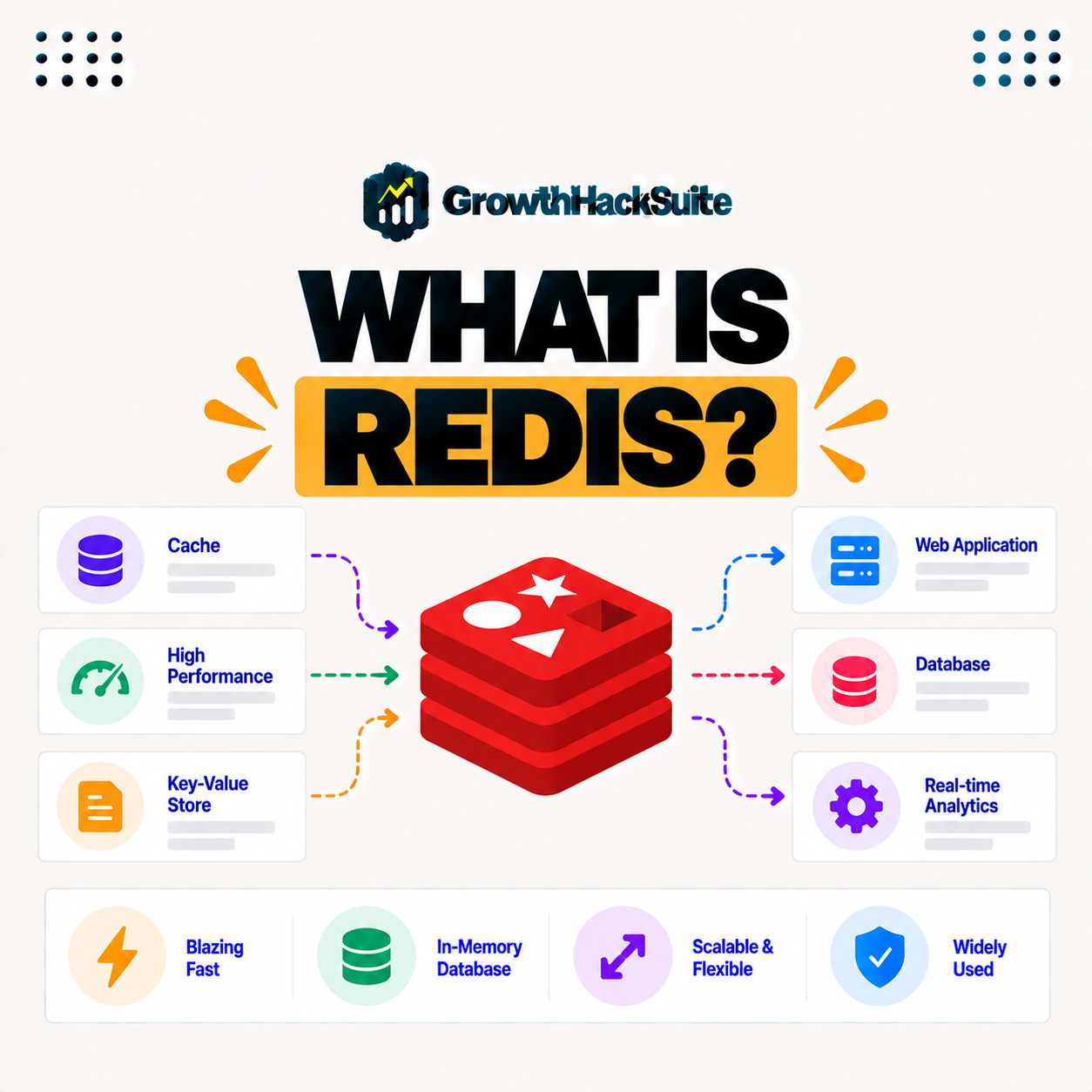
Redis is an open-source, in-memory data store that keeps data in memory for extremely fast access, used for caching, session storage, queues, and real-time features, so it serves data far faster than reading from disk or a traditional database. It is a core tool for performance-sensitive applications.
“Redis is an open-source in-memory key-value database, cache and message broker.”
— Wikipedia, Redis
In short, it is memory-speed storage: it holds data where it can be read almost instantly, which is what makes it so useful for caching.
How Does Redis Work?
Redis works by storing data as key-value pairs in memory, so requests for that data are answered almost instantly, and because memory access is much faster than disk, it dramatically speeds operations that would otherwise hit a slower database. The data structure is simple and fast to query.
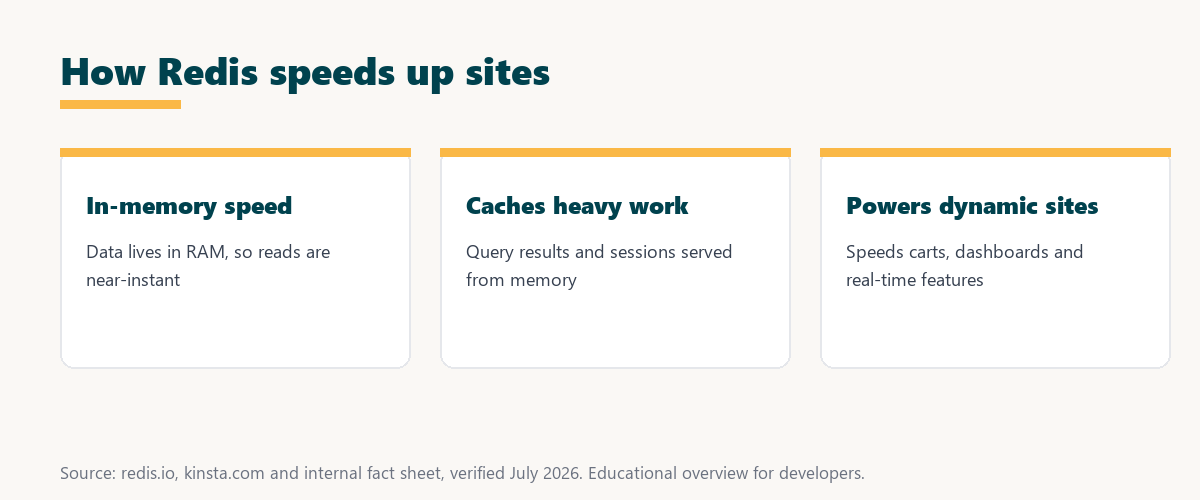
The key mechanism is memory: by holding data in RAM as simple key-value pairs, it answers repeat requests without touching a slower disk-based database.
What Is This Data Store Used For?
This in-memory store is used for caching database query results, storing user sessions, managing queues, powering real-time features like leaderboards, and rate limiting, so it accelerates and supports the parts of an application that need fast, frequent data access. Its uses span far beyond simple caching.
Five common uses show where it earns its place in an application:
- Query caching: Results of expensive database queries are stored in memory, so repeated requests are answered instantly instead of re-running the query.
- Session storage: User sessions live in memory, so logins and state persist quickly across requests without loading the main database.
- Queues: Background jobs are queued in memory, so tasks are processed reliably and in order without blocking the main application.
- Real-time features: Leaderboards, counters and live data update in memory, so features that must feel instant stay responsive under load.
- Rate limiting: Request counts are tracked in memory, so an application can throttle abuse and protect resources with near-zero overhead.
Together these uses explain its popularity: anywhere speed and frequent access matter, an in-memory store shines.
Cache vs Database: Which Role Does It Play?
This store can act as a cache that speeds access to data stored elsewhere, or as a primary in-memory database, so it is often used alongside a main database to cache results, though it can also store data directly when speed is the priority. The role depends on the project’s needs.
Source: general overview cross-checked with public product documentation, verified August 2026.
Reading down the table, it most often works as a cache in front of a main database, though it can serve as the primary store when raw speed matters most.
Why Is Redis So Fast?
It is fast because it keeps data in memory rather than on disk, and memory access is orders of magnitude quicker, so operations that would take a database many milliseconds can be served from memory in a fraction of that time. Memory is simply far faster than storage.
The practical point is that speed comes from location: keeping data in RAM removes the slow disk step that a traditional database cannot avoid.
How In-Memory Caching Speeds Up Websites
This store speeds up websites by caching frequently needed data, such as database query results and sessions, so repeated requests are served from memory instead of recomputing or re-querying, which reduces load and accelerates dynamic pages. The database does less work, and pages respond faster.
“The first five seconds of page-load time have the highest impact on conversion rates.”
— HubSpot, page load time and conversion rates
It directly protects those early seconds on dynamic sites: by serving repeated data from memory, it keeps pages fast for the visitors whose first impression depends on speed.
Redis and WordPress Object Caching
Redis is commonly used as a persistent object cache for WordPress, so it stores database query results across requests, which speeds up dynamic, uncacheable pages like carts and dashboards that page caching cannot handle. It fills the gap where page caching stops working.
The takeaway is that this object caching targets the hard part of WordPress performance: the logged-in, dynamic pages that a page cache simply cannot store.
When Should You Use Redis?
You should use Redis when your application or site is dynamic and database-heavy, so caching in memory noticeably improves performance, while a small, well-cached static site may not need it. The benefit grows with how much dynamic data a site serves.
Source: general overview cross-checked with public product documentation, verified August 2026.
Reading the table together, it covers caching, sessions, queues and real-time features, which is why database-heavy, dynamic sites benefit from it most.
How Kinsta Offers This Add-On
Kinsta offers Redis as a paid add-on for WordPress object caching and through its managed database hosting, so you can use it to speed up dynamic sites and apps on Google Cloud without operating it yourself. The service is managed, so setup and maintenance are handled for you.
Add managed caching on Kinsta’s Google Cloud platform
Start Free Migration →Available as a paid add-on, with free migration.
Speeding Up Your App or Site in Memory
You speed up your app or site by caching frequent data in memory, so with Kinsta’s managed add-on you accelerate dynamic operations without installing or maintaining the data store. The performance gain comes without the operational burden.
The takeaway is that a managed add-on lets you focus on the speed it delivers rather than the work of running it. For anyone weighing a long hosting commitment, our note on SaaS vendor lock-in is worth a read.
Managed Database Hosting for Caching
This store fits managed database hosting because running it in production benefits from managed operation, so a provider that offers it as a managed service lets you gain its speed without handling setup, memory tuning, and maintenance. Managed operation removes the hard parts of running it well.
“A tool is only worth its premium when the hours or revenue it protects exceed the invoice.”
— Growth Hack Suite, on tool ROI
Applied to this tool, the calculation is about impact: a managed add-on earns its cost when the speed and reduced database load it delivers outweigh the fee, which is most true for busy, dynamic sites.
Redis and Memcached
Redis and Memcached are both in-memory caching systems, but it supports richer data types, persistence, and more features, so it is often chosen when those capabilities matter, while Memcached remains a simple, lightweight option for basic caching. Both speed up data access from memory.
The honest summary is that it is the more capable of the two: Memcached is simpler, but its extra features make it the common default for modern caching.
Try Kinsta risk-free and add managed caching when you need it
Try Kinsta Risk-Free →Paid add-on and free migration, with a 30-day money-back guarantee.
Frequently Asked Questions About This Data Store
The 12 most-asked questions about this data store.
What is Redis in simple terms?
Redis is an in-memory data store that keeps data in memory for very fast access, used for caching, sessions, and real-time features, serving data far faster than a traditional database.
How does Redis work?
Redis works by storing data as key-value pairs in memory, so requests are answered almost instantly, and because memory is much faster than disk, it speeds operations that hit a slower database.
What is Redis used for?
Redis is used for caching query results, storing sessions, managing queues, powering real-time features, and rate limiting, accelerating parts of an app that need fast, frequent data access.
Why is Redis so fast?
Redis is fast because it keeps data in memory rather than on disk, and memory access is far quicker, so it serves in a fraction of the time a disk-based database would take.
Is Redis a cache or a database?
Redis can act as a cache that speeds access to data stored elsewhere or as a primary in-memory database, so it is often used alongside a main database to cache results.
How does Redis speed up websites?
Redis speeds up sites by caching frequently needed data like query results and sessions in memory, so repeated requests are served instantly instead of re-querying the database.
What is Redis object caching in WordPress?
Redis is commonly used as a persistent object cache for WordPress, storing query results across requests, which speeds up dynamic pages like carts and dashboards that page caching cannot handle.
When should I use Redis?
Use Redis when your app or site is dynamic and database-heavy, so in-memory caching noticeably improves performance, while a small, well-cached static site may not need it.
Is Redis persistent?
Redis is primarily in-memory but can persist data to disk for durability, so it can retain data across restarts while still serving it from memory for speed.
Does Redis replace my main database?
Redis usually complements rather than replaces a main database, caching its data for speed, though it can store data directly when fast access is the top priority.
Do I need to manage Redis myself?
You can self-host Redis, but a managed Redis service handles setup, memory tuning, and maintenance, so you gain its speed without operating the data store yourself.
Does Kinsta offer Redis?
Yes, Kinsta offers Redis as a paid add-on for WordPress object caching and through managed database hosting, so you can speed up dynamic sites and apps on Google Cloud.
About this guide
Written by the Growth Hack Suite editorial team, drawing on hands-on experience running WordPress sites. Details were cross-checked against public Redis documentation. This page carries affiliate links to Kinsta. The position is stated plainly: Redis is an in-memory data store that speeds up sites by caching query results and sessions, and it serves as a persistent object cache for WordPress. Kinsta offers Redis as a paid add-on and through managed database hosting on Google Cloud.