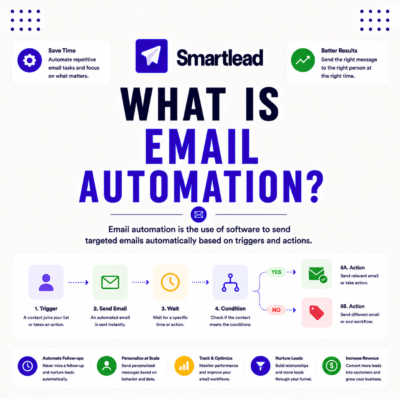
Email marketing sends promotional or transactional messages to opted-in recipients (subscribers, customers, content downloaders), while cold email targets prospects who match a defined ICP but have never opted in. The two motions differ in tools (Mailchimp vs GMass), legal frameworks (GDPR consent rules diverge), and goals (broadcast nurture vs pipeline generation). Solopreneurs typically need both once past their first ten customers.
What Is Email Marketing
Email marketing is the practice of sending promotional, transactional, or relationship-building messages to recipients who have opted in : subscribers, customers, or lead-magnet downloaders. It is broadcast-style nurture designed to move audiences along a purchase funnel without one-to-one personalization.
“Email marketing is the act of sending a commercial message, typically to a group of people, using email. In its broadest sense, every email sent to a potential or current customer could be considered email marketing.”
: Wikipedia: Email Marketing
- Opt-in consent required: Recipients must actively subscribe via form, checkout, or lead magnet before any message is sent. Sending without consent violates GDPR and CAN-SPAM.
- Broadcast volume: Typical sends range from 1,000 to one million or more per campaign. Volume is handled by shared sending infrastructure on platforms like Mailchimp and Klaviyo.
- Brand sender format: Messages arrive from a brand name (e.g., “Acme Newsletter”), not an individual person, signaling promotional intent to the recipient.
- Nurture goal: The objective is repeat engagement : re-activating dormant customers, promoting new features, or pushing seasonal offers : not generating fresh pipeline.
- Primary metric is click rate: Success is measured by how many recipients click through to a landing page, not by direct replies. Platforms report open rate, click rate, and unsubscribe rate natively.
Email marketing is the opt-in broadcast channel for nurture. It requires an existing audience, brand-format sending, and click-based success metrics.
What Is Cold Email
Cold email is the practice of sending targeted outreach to recipients who have not opted in but match a defined ideal customer profile. It is one-to-one or one-to-many sales-driven outreach intended to start a conversation and book a meeting, not broadcast a promotion. For a deep dive into how GMass powers cold outreach from Gmail, see our GMass review for cold email senders.
- No prior relationship required: Cold email targets verified ICP contacts who have never interacted with the sender, relying on relevance and personalization rather than consent.
- Per-inbox volume limits: Cold email sends range from 50 to 2,000 per day per inbox. Higher volumes are achieved by rotating multiple sending inboxes, not shared IP pools.
- Person sender format: Messages arrive from an individual (e.g., “John from Acme”), signaling one-to-one intent. Person sender format directly correlates with higher reply rates versus brand sender names.
- Pipeline generation goal: The objective is booking a meeting, getting a referral, or starting a sales conversation : not nurturing an existing relationship.
- Primary metric is reply rate: Success is measured by how many prospects respond. Industry benchmark for B2B cold email is 3-8% reply rate on a targeted, verified list.
Cold email is the no-opt-in outbound channel for pipeline. It targets ICP-matched prospects via person-format sending and measures reply rate as the core conversion metric.
How Do Email Marketing and Cold Email Differ Across Dimensions
Five dimensions separate the two motions: recipient consent, volume range, tool infrastructure, sender format, and conversion goal. Email marketing is opt-in broadcast for nurture; cold email is targeted no-opt-in outreach for pipeline. The table below maps each dimension side by side.
Source: Industry classification 2026-05.
Five dimensions differ: recipient consent, volume, tools, sender format, and goal. Email marketing is opt-in broadcast for nurture; cold email is targeted no-opt-in outreach for pipeline.
Can You Use the Same Tool for Both Motions
Technically yes but not recommended. Mailchimp routes from shared marketing IP pools optimized for opt-in audiences; cold email needs Gmail-native sender reputation built on an individual inbox. Using the wrong tool for either motion causes deliverability failures that compound over weeks.
- Shared IP contamination risk: Sending cold email via Mailchimp triggers spam reports from non-opted recipients, which penalizes the shared IP pool and hurts every other user on that infrastructure.
- Missing personalization layer: Marketing tools like Mailchimp lack per-row variable injection at the level cold email requires : GMass reads each column in a Google Sheet as a unique personalization field per recipient.
- Reply tracking mismatch: Marketing platforms are built to track clicks to landing pages, not manage two-way reply conversations. Cold email tools route replies back to your Gmail inbox for direct follow-up.
- Unsubscribe handling differs: Marketing tools maintain suppression lists automatically across all campaigns; cold email tools track opt-outs per sequence to prevent re-contact in that specific pipeline motion.
- Sender name logic: Marketing platforms enforce brand-name sending; cold email tools allow individual person-name sending. Swapping sender format breaks recipient expectations and drops reply rate.
Technically yes but not recommended. Mailchimp routes from shared marketing IP pools; cold email needs Gmail-native sender reputation. Wrong tool for either motion damages deliverability.
Why Does Sender Format Matter
Marketing email uses brand from-name (Acme Newsletter); cold email uses person from-name (John from Acme). Brand from-name signals broadcast; person from-name signals one-to-one. The mismatch between sender format and recipient expectation is one of the most common deliverability mistakes solopreneurs make when starting outbound.
“Cold emails sent from a person’s name rather than a brand name consistently outperform brand-name senders in reply rate : because recipients perceive them as genuine one-to-one communication rather than a marketing campaign.”
: HubSpot: Cold Email vs. Email Marketing
- Inbox placement signal: Gmail and Outlook filters use sender format as one signal when categorizing messages. Brand-format senders are more likely routed to Promotions; person-format senders land in Primary.
- Psychological trust cue: A message from “Sarah at Acme” reads as a personal note; a message from “Acme Newsletter” reads as a marketing broadcast. Recipients make this judgment in under two seconds on the preview line.
- Reply rate impact: Cold email tests show a 1.5-2x higher reply rate for person-name senders versus brand-name senders on identical copy, because person-name implies a human expects a response.
- Follow-up expectation: Person-format sending creates an implicit two-way conversation expectation. Brand-format sending signals a one-way broadcast where replies go to a shared support inbox, not an individual.
- Domain reputation scope: Person-format cold email builds sender reputation on one inbox’s domain; brand-format marketing affects the shared reputation of the entire marketing IP pool.
Marketing uses brand from-name (broadcast); cold email uses person from-name (one-to-one). Mismatching sender format and motion type is a deliverability and reply-rate mistake.
What Legal Rules Apply to Each
CAN-SPAM applies to both motions. GDPR is strict on email marketing (explicit consent required); cold B2B can use legitimate interest in most EU jurisdictions. CASL is strict on both. All frameworks require a working unsubscribe mechanism. For a side-by-side look at how GMass and Mailchimp handle compliance differently, see our GMass vs Mailchimp head-to-head.
Source: GDPR ICO guidance + FTC CAN-SPAM rules 2026.
CAN-SPAM applies to both. GDPR is strict on marketing (consent required); cold B2B can use legitimate interest. CASL is strict on both. All require working unsubscribe.
When Should You Use Email Marketing
Use email marketing when you have an opt-in list, you are nurturing existing customers or content subscribers, or you are running broadcast campaigns (product updates, newsletters, seasonal promotions). Email marketing is the right motion when your audience has already signaled interest.
- Customer retention campaigns: Existing customers who opted in at purchase are ideal email marketing targets. Re-engagement campaigns for lapsed customers reduce churn by 10-20% at scale.
- Content subscriber nurture: Readers who subscribed via a lead magnet, newsletter sign-up, or gated resource represent an opted-in audience expecting periodic branded communication.
- Product update broadcasts: Feature announcements, pricing changes, or policy updates to the entire user base require opt-in broadcast infrastructure : not one-to-one cold outreach tooling.
- Seasonal promotions: Black Friday, end-of-quarter, and launch-day campaigns need volume sending of 5,000 to 50,000 at once : only possible via shared marketing IP infrastructure.
- Onboarding sequences: New user welcome sequences triggered by account creation are transactional email marketing, not cold email. CAN-SPAM transactional exemption applies when the email relates directly to a prior commercial transaction.
Want cold email and Gmail mail merge in one tool?
Learn More About GMass →Free plan available : 50 emails/day, no credit card required.
Use email marketing when you have an opted-in list to nurture: existing customers, content subscribers, or users running through onboarding sequences.
When Should You Use Cold Email
Use cold email when you need pipeline from accounts that have not opted in, you are running outbound sales, or you are doing customer discovery as a founder. Cold email is the right motion when you need conversations with strangers who fit your ICP.
- Outbound SDR pipeline: Sales reps targeting net-new accounts in a named account list use cold email to book discovery calls. Reply rate 3-8% on verified lists equates to 3-8 meetings per 100 emails sent.
- Founder customer discovery: Pre-product founders interviewing potential buyers use cold email to book 20-minute discovery calls with ICP targets before building anything. First 50 conversations typically cost $25 in tool spend at GMass free tier.
- Partnership outreach: Solopreneurs seeking distribution partners, podcast interviews, or co-marketing arrangements use cold email to initiate relationships with complementary founders.
- Link building campaigns: Content marketers running outreach to editorial contacts requesting backlinks use cold email : not email marketing : because recipients have no prior relationship with the sender.
- Recruiting outreach: Hiring managers messaging passive candidates on LinkedIn then following up via professional email are running cold outreach, subject to legitimate interest basis under GDPR.
Use cold email when you need pipeline from non-opted accounts: outbound SDR, founder customer discovery, partnership outreach, or link-building campaigns.
Which Tools Are Built for Each Motion
Mailchimp and Klaviyo are built for email marketing broadcast : routing from shared IP pools with list management, segmentation, and click-tracking. GMass, Lemlist, and Instantly are built for cold email outreach directly via Gmail. Apollo combines a cold email sender with a B2B contact database layer for end-to-end prospecting at $49/month.
“GMass routes every cold email through your personal Gmail inbox, meaning your sender reputation is built on your own domain : not a shared marketing IP pool. That one structural difference explains most of the deliverability gap between cold email tools and marketing platforms.”
: Growth Hack Suite: GMass Cold Email Review
Source: Vendor pricing pages 2026-05-28.
Mailchimp and Klaviyo are for email marketing. GMass, Lemlist, and Instantly are for cold email. Apollo combines cold sending with a data layer for end-to-end prospecting.
Can You Cross-Use the Tools
No. Using Mailchimp for cold email triggers spam reports from non-opted recipients and burns the shared marketing IP pool, hurting other Mailchimp users. Using GMass for newsletters works technically but lacks list management, segmentation, and automated unsubscribe suppression that marketing operations require.
- Mailchimp for cold email: Non-opted recipients mark cold messages as spam. Mailchimp’s abuse detection suspends accounts that exceed spam complaint thresholds, typically at 0.1% complaint rate : easily hit with cold outreach to unverified lists.
- GMass for newsletters: GMass lacks native list management for unsubscribes across multiple campaigns. A recipient unsubscribed from one GMass campaign can still be added to a new Sheets-based campaign unless the sender manually maintains exclusion lists.
- Domain reputation contamination: Mixing cold sends and marketing sends on the same domain blurs the reputation signal. Spam filter networks see inconsistent sending patterns : volume spikes followed by low-volume periods : which triggers throttling.
No. Using Mailchimp for cold email triggers spam reports; using GMass for newsletters lacks list management. Separate tools, separate sender domains, separate metrics for each motion.
How Do Reply Patterns Differ
Cold email expects reply (book meeting, request information). Email marketing expects click (visit landing page, buy product). Reply rate is the success metric for cold; click-through rate is the metric for marketing. Conflating these metrics leads to misdiagnosing campaign performance.
- Cold email reply rate benchmark: A 3-8% reply rate on a targeted, verified B2B list is considered solid. Below 1% reply rate usually signals copy problems, ICP mismatch, or poor deliverability rather than list quality.
- Marketing email click-through rate benchmark: B2B email marketing averages 2-5% click-through rate on well-segmented lists. Open rates around 20-30% are typical. Marketing platforms report both natively; cold email tools track replies and bounces instead.
- Follow-up cadence differs: Cold email follow-ups are one-to-one reply chains within 3-7 days. Marketing re-engagement is triggered by inactivity (e.g., no open in 90 days) and is broadcast, not conversational.
Cold email measures reply rate (3-8% benchmark); email marketing measures click-through rate (2-5% benchmark). Conflating the two metrics leads to misdiagnosing what is actually broken in a campaign.
Should Solopreneurs Run Both Motions
Yes once past first ten customers. Cold email drives net-new pipeline; email marketing nurtures the inbound list that grows over time. Both motions compound starting at month six: cold email fills the top-of-funnel, marketing email retains and upsells the bottom-of-funnel.
- Start with cold email: Pre-revenue solopreneurs have no opt-in list to market to. Cold email at GMass free tier ($0, 50 emails/day) books the first 10 discovery calls at zero tool cost.
- Add email marketing at $30 MRR: Once the solopreneur has 500+ opt-in subscribers from content or lead magnets, Mailchimp Essentials at $30/month becomes cost-effective for nurture. Before 500 subscribers, the ROI is low.
- Separate tools, separate domains: Run cold email on an alt-spelling domain (e.g., getacme.io) and marketing email on the primary domain (acme.com). This isolates reputation risk between the two motions permanently.
- Combined stack cost at scale: GMass Standard ($25) + Mailchimp Essentials ($30 for 2K) = $55/month for full dual-motion capability. Apollo adds prospecting data at $49 if needed. Total under $105/month for a fully equipped solopreneur outbound stack.
Ready to build your cold email pipeline?
Learn More About GMass →Start free : 50 emails/day forever. No credit card required.
Yes once past first ten customers. Cold email drives pipeline; email marketing nurtures the inbound list. Both motions together compound after month six at under $55/month combined tool cost.
Frequently Asked Questions
Is cold email the same as spam?
No. Spam is unsolicited high-volume blast with no targeting or relevance. Cold email is targeted outreach to a defined ICP with relevance signals, personalization, and an easy opt-out mechanism.
What is the volume threshold for each?
Email marketing: 1,000 to one million or more per send. Cold email: 50 to 2,000 per sending inbox per day. Cold email scales via inbox rotation; marketing scales via shared sender infrastructure.
Do recipients perceive them differently?
Yes. Marketing email looks broadcast (brand sender, designed template). Cold email looks personal (person sender, plain text). Mismatched perception : cold email using brand-format templates : erodes trust and reply rate simultaneously.
Can one person run both at the same company?
Yes, but with separate tools, separate sending domains, and separate metrics dashboards. Most modern SaaS companies run both motions : marketing team handles email marketing, sales team handles cold outreach : from day one.
Is cold B2B email legal in the EU under GDPR?
Yes under legitimate interest basis, with conditions: targeted business contact, clear relevance, easy opt-out, no exploitation of personal data. Cold B2C in the EU usually requires explicit consent. Consult qualified counsel for jurisdiction-specific guidance.
Does CAN-SPAM allow cold email?
Yes. CAN-SPAM regulates the content of commercial email (no deceptive subject lines, valid sender address, working opt-out link, physical mailing address) but does not require prior opt-in consent for cold email.
Do I need double opt-in for email marketing?
Required in some jurisdictions (Germany, Austria require it under national GDPR implementation). Strongly recommended everywhere. Double opt-in reduces spam complaint rates and improves list quality by filtering mistyped addresses.
What is a preference center?
A preference center is a user-facing page where a marketing email recipient changes subscription preferences : frequency, topic categories, format : instead of unsubscribing entirely. Mailchimp and Klaviyo provide preference centers natively; cold email tools do not.
What is the cost difference between Mailchimp and GMass?
Mailchimp Essentials at 2,000 contacts costs $30/month. GMass Standard costs $25/month regardless of list size. Scale to 10,000 contacts and Mailchimp rises to $75/month while GMass stays at $25.
Can cold email and marketing email share the same sending domain?
Not recommended. Separate domains isolate reputation. Cold email carries higher complaint risk from non-opted recipients; contaminating the primary marketing domain with cold-email complaints damages newsletter deliverability for existing subscribers.
What is segmentation in email marketing?
Segmentation divides an email list into sub-groups based on attributes (purchase history, engagement, location, industry) so senders target each group with relevant content. Mailchimp and Klaviyo offer native segmentation; GMass segments by Google Sheets column filters instead.
How does GMass pricing compare to Mailchimp at 2,000 contacts?
GMass Standard is $25/month regardless of list size. Mailchimp Essentials at 2,000 contacts is $30/month. For solopreneurs running cold outreach, GMass costs less and scales better. For newsletters to 2,000+ opted-in subscribers, Mailchimp’s list management features justify the small premium.
Start cold outreach from Gmail today.
Learn More About GMass →Free plan : 50 emails/day forever. No credit card required.