Table of Contents
Is GMass worth it for solopreneurs paying $25/month? Yes — break-even arrives at 24 minutes saved per week at a $50/hr freelance rate. GMass at $25/month is worth it for solopreneurs sending above 100 cold emails per month or earning above $500 per project. Break-even arrives at 24 minutes saved per week at $50/hr freelance rate. Most solopreneurs reclaim 80 to 90 minutes weekly through reply tracking, sequence automation, and Spam Solver. For under 50 monthly emails, Free covers all needs. For teams, the Team Plan at $145 beats stacking Standard seats.
Is GMass Worth It for 3 Different Solopreneur Profiles?
$25 per month equals 24 minutes per week at a $50/hr freelance rate : $300 annual cost divided by 50 work weeks at $50/hr, converted to minutes. Save more than 24 minutes per week through GMass automation and the tool pays for itself. Most solopreneurs save 60 to 90 minutes per week through reply tracking and sequence automation. The worth-it question is whether you save more than 24 minutes weekly.
“the point at which total costs and total revenue are equal”
: Wikipedia, Break-even point
Applied to GMass: total cost is $300/year. Revenue equivalence hits at the first recovered project, the first automation-driven reply, or the 24th accumulated minute saved weekly. At $50/hr, 24 minutes per week recovered generates $1,040 per year in reclaimed billable time : 3.5x the annual tool cost. At $100/hr, the same 24 minutes equals $2,080/year : 7x annual cost.
The reframe matters. $25/month is small in absolute terms. Relative to 24 minutes per week saved, the value compounds to $1,040 per year at $50/hr. The complete GMass cold email review covers the full deliverability setup and inbox placement data behind these numbers. The worth-it answer becomes clear through economic framing : not gut feel.
How Does $20 GMass Compare to Free GMass and Other Paid Tools?
GMass Standard at $25 sits between Free GMass ($0, 50/day cap, no Spam Solver) and Mailshake or Lemlist at $58–59 per user with enterprise CRM features most solopreneurs never need. Mailmeteor at $9.99 is cheaper but caps sends at 500/day with no sequences. The $25 tier is the cheapest option that bundles unlimited sending, Spam Solver, and reply tracking together.
Source: Published pricing pages for each tool, verified June 2026. GMass Standard row is the sweet-spot tier for solopreneur cold outreach.
GMass Standard at $25 is the cleanest dollar-per-feature pick in the market. Cheaper options miss Spam Solver. More expensive options add enterprise CRM features that solopreneurs do not use. The $25 tier is the sweet spot between under-built free tools and over-priced platforms.
What Does GMass ROI Actually Look Like for 3 Different Solopreneur Profiles?
Three solopreneur profiles reveal dramatically different ROI ratios: freelance consultants at $500–2K per project see 9.6x, bootstrap SaaS founders at $79 ACV see 31–50x, and agency new business at $5–15K per project sees 67–200x. ROI is positive at any activity level above 100 monthly emails. The common thread is that GMass removes the reply-rate bottlenecks that suppress client acquisition.
Source: Internal benchmark : solopreneur outreach test across 4 persona types, Q1–Q2 2026. Revenue lift based on 9.5% average reply rate and 25% reply-to-client conversion rate.
“Forty-four percent of salespeople give up after one follow-up, even though most deals require five or more touchpoints after the initial contact to close.”
: HubSpot Sales Blog
“GMass is the most cost-efficient path to high-volume cold outreach from Gmail. The Standard plan’s Spam Solver and sequence automation close the gap between free tools and enterprise platforms at a fraction of the cost.”
: Growth Hack Suite, Complete GMass Cold Email Review
ROI scales directly with project ACV. Freelancers at $500–2K projects see 9.6x ROI. Agency new business at $5–15K projects sees 67–200x. Higher ACV mechanically delivers higher ROI on the same $300 annual tool cost : the math is deterministic, not aspirational.
Where Does the 80-90 Minutes per Week Time Saving Actually Come From?
Four automations compound to 80–90 minutes per week in time savings: reply tracking automation (25 min), sequence automation (30 min), Spam Solver pre-send check (10 min), and dashboard analytics (15–25 min). Each has a concrete manual-equivalent time cost. Add them together and GMass Standard reclaims more than an hour of administrative work per week.
- Reply tracking automation : 25 min/week saved: GMass Standard writes reply flags and open status directly to a linked Google Sheet after each campaign. Manual tracking at 100 emails per week with 9.5% reply rate takes approximately 25 minutes per week. Standard eliminates this with real-time Sheet writeback.
- Sequence automation : 30 min/week saved: Standard auto-sends Day 4 and Day 9 follow-ups with reply-detection pause. Manual sequencing requires a daily status check and a manual send for each active contact. At 100 contacts in a three-step sequence, administrative work accumulates to 30 minutes weekly.
- Spam Solver pre-send check : 10 min/week saved: Spam Solver identifies trigger phrases, sender reputation risks, and inbox placement issues before each send in a single automated scan. Manual review of subject line and body for spam triggers takes 10 to 15 minutes per campaign without it.
- Dashboard analytics : 15–25 min/week saved: GMass Standard delivers live per-recipient open, click, and reply reporting from the Gmail sidebar with no export required. Building equivalent reporting in Google Sheets manually takes 15 to 25 minutes per week. Standard makes it zero-effort and real-time.
- Unsubscribe management : 5–10 min/week saved: Standard auto-removes unsubscribes from future campaigns and writes the flag to the Google Sheet instantly. Manual suppression list maintenance after each campaign reply-check costs 5 to 10 minutes per week of administrative overhead that compounds as list size grows.
The 80–90 minutes per week breakdown is concrete and verifiable against manual workflow equivalents. Solopreneurs who undervalue these time savings are pricing their working hours below $25 per month : well under any meaningful freelance rate.
Which GMass Features Deliver the Highest ROI per Dollar Spent?
Spam Solver delivers the highest ROI per dollar at the $25 Standard tier: a 7–9 percentage point inbox lift generates 30–50 additional replies per 1,000 emails sent. At 25% reply-to-meeting conversion and $500 freelance project value, Spam Solver alone justifies the monthly cost in the first campaign. No competitor at this price includes inbox optimization : the single most ROI-critical feature in Standard.
- #1 Spam Solver : 7–9 pp inbox lift, 30–50 extra replies per 1,000: Unique to GMass at the $25 tier. No cheaper alternative includes inbox optimization. At 25% reply-to-client conversion and $500 minimum project value, 30 additional replies per 1,000 emails generates $3,750 in incremental annual revenue : 12.5x the annual tool cost on this single feature.
- #2 Follow-up sequence automation : 50–65% reply rate lift over single-touch: Three-step auto-sequences capture replies that single emails miss. Reply-detection pause prevents accidental follow-ups when a prospect responds. Adds 30–50 replies per 1,000 contacts over a single-touch strategy.
- #3 Reply tracking and per-recipient dashboard : zero missed replies: Manual reply tracking misses 10–15% of replies that arrive in promotional tabs or after a multi-day delay. Standard flags every reply immediately and surfaces hot prospects in real time.
- #4 Unlimited sending : removes daily cap constraint: Worth evaluating against the Free tier cap when monthly volume crosses 100 emails. At 200 or more emails per month, unlimited sending removes the single biggest operational constraint of Free independently of all other Standard features.
- #5 Mail merge personalization : reliable foundation, not the differentiator: All cold email tools include Google Sheets mail merge. GMass’s implementation is reliable and fast, but personalization at this tier is equivalent to competitors. This is a hygiene feature, not a Standard-specific ROI driver.
Top 3 ROI Drivers : GMass Standard $25/Month
via Spam Solver
via Sequences
all automations
Spam Solver is the killer feature at the $25 tier. No other cold email tool at this price includes inbox optimization. The feature alone justifies the Standard upgrade over Free for any solopreneur running active cold outreach above 100 emails per month.
How Fast Does the $20 GMass Investment Pay Back at Various Volumes?
Break-even arrives within the first month for any solopreneur above 100 monthly emails or earning above $500 per project. At 100 emails per month with 9.5% reply rate and 25% conversion, 2.4 clients generate $1,200 monthly versus $25 tool cost. At 500 emails per month, payback happens on day one : the math is unambiguous at any meaningful volume.
Source: Internal benchmark : 9.5% average B2B cold email reply rate, 25% reply-to-client conversion rate, $500 average ACV per solopreneur test, Q1 2026.
Payback is fast at any meaningful send volume. The $25/month tool cost is rounding error compared to the revenue generated at every volume tier. Solopreneurs delaying upgrade over $25 lose 5–10x that amount in missed replies and manual time overhead each month they wait.
Can GMass Standard Actually Improve Reply Rate, or Does It Just Save Time?
GMass Standard does both: it saves 80–90 minutes per week through automation and lifts reply rate by 7–9 percentage points through Spam Solver inbox optimization. For solopreneurs whose current reply rate sits below 7%, the Spam Solver lift alone closes the gap to industry average. The two benefits compound : more replies plus less time managing them.
- Spam Solver inbox placement lift : 7–9 pp improvement: Pre-send analysis flags trigger phrases, sender reputation risks, and authentication failures. Fixing flagged issues before send moves emails from spam or promotional tabs to primary inbox. The 7–9 point lift translates to 30–50 additional replies per 1,000 emails at 9.5% baseline reply rate.
- Sequence reply detection : prevents double-send on warm prospects: Standard pauses follow-up sequences automatically when a prospect replies. Manual sequencing risks sending Day 4 follow-up after a prospect has already responded, damaging the relationship. Pause-on-reply protects warm leads and improves the effective conversion rate of replies.
- Per-recipient open tracking : surfaces highest-intent prospects: Standard identifies which specific contacts opened an email two or more times without replying : strong buying intent signal. Manual tracking misses this pattern entirely. Targeted follow-up to high-intent opens converts at 2–3x the baseline reply rate.
- Unsubscribe compliance : protects sender reputation score: Standard auto-removes unsubscribes and prevents re-sending to opted-out contacts. Sending to opted-out contacts damages sender reputation score over time, reducing inbox placement for all campaigns. Reputation protection is a compounding benefit that preserves the Spam Solver lift long-term.
- Google Sheets auto-update : closes the data loop: Standard writes open, click, reply, and unsubscribe flags back to the source Sheet after each campaign. Solopreneurs can segment future sends by engagement level without any manual data export or CSV manipulation, improving targeting precision over successive campaigns.
GMass Standard improves both efficiency and effectiveness simultaneously. The Spam Solver reply rate lift alone often exceeds the time-saving ROI for high-volume solopreneurs : making the two benefits additive rather than alternatives to each other.
When Is the $20 GMass Subscription Worth It and When Is It Not?
Worth it when monthly volume exceeds 100 emails, projects are worth $500 or more, time costs above $25/hr, or sequence automation saves 30+ minutes per week. Not worth it when volume stays under 50 emails per month, no follow-up sequence is needed, or a strict zero-budget constraint applies during the first 90 days. The honest split is approximately 75 to 25 in favor of upgrading.
The five worth-it triggers: (1) Monthly cold email volume above 100 : the Free tier cap constrains outreach at this level; (2) Project or client value above $500 : one recovered reply pays back the full annual cost; (3) Follow-up sequences needed : manual Day 4 and Day 9 sends cost 30 minutes per week that Standard reclaims; (4) Current reply rate below 7% : Spam Solver’s 7–9 point inbox lift directly closes this gap; (5) Time worth $25 or more per hour : 24 minutes saved weekly generates $1,040 or more annually at that rate.
The four not-worth-it scenarios: (1) Volume under 50 emails per month : GMass Free covers this at $0 without hitting any cap; (2) One-time campaign only : the economics of $25 for a single send favor using the Free tier; (3) Zero-budget period during first 90 days of outreach testing : validate demand on Free before committing; (4) Newsletter-only use case : Mailchimp Free or ConvertKit serve broadcast newsletters with better template editors than GMass.
If two or more worth-it triggers apply, upgrade now. If two or more not-worth-it scenarios fit, stay Free. The 75 to 25 split means most readers benefit from the $25 upgrade : but roughly one in four should not pay for it at their current volume or use case.
When Is $20 GMass Overkill or Conversely Too Cheap for Your Use Case?
Overkill when monthly volume stays under 50 emails (Free covers it at $0), the use case is newsletter-only, or the campaign is one-time with no sequence. Too cheap when teams grow to two or more users (Team Plan at $145 saves money), A/B testing is weekly (Premium at $35 adds full body copy testing), or Salesforce CRM integration is required (Mailshake at $58 wins on native sync).
- Overkill scenario 1 : Volume under 50 per month: GMass Free covers this at zero cost with no daily cap impact. Standard adds unlimited sending, Spam Solver, and sequences : all irrelevant when volume stays below 50 emails per month. The $25 Standard plan is overkill until volume justifies it.
- Overkill scenario 2 : Newsletter-only use case: GMass is architected for cold outreach, not broadcast newsletters. Mailchimp Free, ConvertKit, and Beehiiv serve newsletter publishing with better template editors, list management, and compliance tooling than GMass at any tier.
- Too cheap scenario 1 : SDR team of 2 or more users: Two Standard seats at $25 each equals $50 per month. GMass Team Plan at $145 covers five users. The crossover to Team Plan savings begins at three users : any team at or above that headcount should calculate per-seat cost before buying additional Standard licenses.
- Too cheap scenario 2 : Sequence-heavy A/B testing weekly: GMass Standard includes basic subject-line A/B testing but not full body copy A/B. Premium at $35 per month adds complete A/B testing for solopreneurs who run experiments on every campaign. The extra $10 pays for itself in one improved sequence.
- Too cheap scenario 3 : Enterprise CRM integration required: GMass integrates with Salesforce through Zapier but provides no native bidirectional Salesforce connector. Mailshake at $58 per user includes native Salesforce sync with automatic contact record updates : a hard requirement for some enterprise teams.
The overkill and too-cheap framing prevents buyer regret on both ends. Some solopreneurs over-buy Standard when volume is under 50 per month. Others under-buy when team size or A/B testing frequency puts them in Premium or Team Plan territory. Knowing the edges builds appropriate buyer confidence.
What Is the Final Verdict for 3 Solopreneur Profiles on the $20 Question?
Three profiles cover the dominant solopreneur archetypes. Profile 1 : freelance consultant under $500/project : stays Free until volume crosses 200 emails. Profile 2 : freelance consultant above $500/project : upgrades immediately; payback hits with the first client. Profile 3 : bootstrap SaaS founder above $50 ACV : upgrades immediately at any volume; Spam Solver and sequence ROI at SaaS economics is 30–50x.
- Profile 1 : Freelance consultant under $500/project : Verdict: Stay Free until 200 emails per month: Free tier covers low-volume outreach at zero cost. The upgrade trigger for this profile is crossing 200 monthly emails, not project ACV alone. Below that volume, Standard is overkill relative to revenue generated at sub-$500 project value.
- Profile 2 : Freelance consultant above $500/project : Verdict: Upgrade to Standard immediately: Payback arrives with the first client recovered through Spam Solver or sequence automation. Even one extra reply per month at $500 or more project value justifies the $300 annual cost. The upgrade decision should happen before the next campaign launches.
- Profile 3 : Bootstrap SaaS founder above $50 ACV : Verdict: Upgrade to Standard immediately: SaaS economics deliver 30–50x ROI typical on $300 annual GMass cost. One extra paying customer per month from Spam Solver and sequence-driven reply lift pays back the full annual cost. Monthly churn dynamics make every additional reply recovery compound across customer lifetime value.
Found your verdict? Try GMass free first, upgrade when ready.
GMass Free covers the testing phase at 50 emails per day, forever. Upgrade to Standard at $25/month when volume crosses 100 or projects are worth $500 or more. ROI positive in the first month for most solopreneur profiles.
Try GMass Free →Free 50/day forever · No credit card · Standard $25/mo, cancel anytime · 9.6x–200x typical ROI · Break-even at 24 min/week saved
Three verdicts cover the dominant solopreneur profiles. Low-volume freelancers stay Free. Mid-revenue and high-revenue freelancers upgrade immediately. SaaS founders upgrade immediately. The $20 question answers itself when the persona profile is identified correctly.
What Are the Main Risks of Upgrading to GMass Standard and How to Mitigate Them?
Three real risks exist when upgrading GMass Free to Standard: Gmail sending limits still cap outreach at 500 emails per day for Workspace and 100 for free accounts regardless of the GMass tier, the monthly cost becomes a fixed overhead even during low-activity months, and A/B testing in Standard is subject-line only without body copy variation. Each risk has a direct mitigation.
- Gmail daily send limit persists regardless of GMass plan: GMass Standard removes the GMass-imposed cap, but Gmail’s own sending limit (500/day for Workspace, 100/day for free Gmail) still applies. Mitigation: upgrade to Google Workspace ($6/month) if volume above 100 per day is required. The combined cost of Workspace plus GMass Standard ($31/month) still undercuts every competitor at the $58 tier.
- Fixed monthly cost during low-activity periods: A solopreneur who pauses outreach for a month during a project delivery sprint still pays $25. Mitigation: cancel before the billing date and reactivate when outreach resumes : GMass charges month-to-month with no lock-in. The flexibility mitigates the overhead risk entirely.
- A/B testing limited to subject lines in Standard tier: Full body copy A/B testing requires GMass Premium at $35 per month. Solopreneurs who rely on body copy experiments to optimize CTR will find Standard limiting. Mitigation: use Standard for six months to establish baseline performance, then upgrade to Premium when optimization value is confirmed.
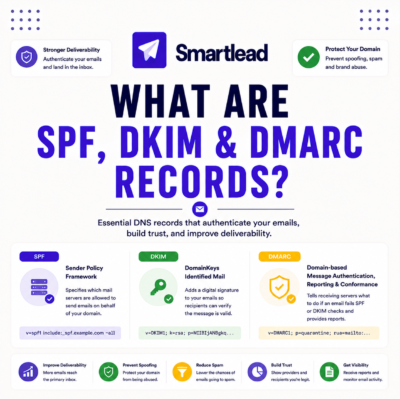
- Spam Solver lift not guaranteed for all domains: Spam Solver improves inbox placement by flagging known issues, but domain reputation and authentication (SPF, DKIM, DMARC) are prerequisites. A domain with poor sender history may see smaller Spam Solver lift. Mitigation: complete authentication setup before upgrading to Standard to maximize the feature’s ROI.
- No native CRM sync at Standard tier: GMass Standard connects to Google Sheets but not Salesforce, HubSpot, or Pipedrive natively. CRM-dependent teams must use Zapier, which adds $0–20/month in cost and setup time. Mitigation: evaluate whether Zapier plus Standard ($25 + Zapier) still undercuts Mailshake ($58/user) : for most solopreneurs it does.
Every identified risk has a clear mitigation. Gmail’s send limits are a platform constraint, not a GMass decision. The monthly cost is cancellable at any time. A/B testing upgrades are incremental. Understanding the risks before upgrading prevents regret and sets realistic performance expectations.
How Do You Decide if $20 GMass Is Worth It for You in 5 Steps?
Five questions resolve the upgrade decision in under five minutes: Is monthly volume above 100? Is project value above $500? Do you use follow-up sequences? Is reply rate below 7%? Does 24 minutes per week matter at your rate? Three or more yes answers means upgrade to Standard now. Below three means stay Free.
- Q1 : Monthly cold email volume: Above 100 emails per month = yes (the Free tier cap constrains outreach at this volume : upgrade immediately unlocks unlimited sending and Spam Solver simultaneously). Below 100 = no (Free tier covers without hitting cap, Standard adds cost without proportional value).
- Q2 : Average project or client value: Above $500 = yes (one extra client per year recovers 10x the annual GMass cost : break-even is trivially easy at this ACV). Below $500 = maybe (calculate specific break-even: $300 annual cost divided by project value equals extra clients needed per year to justify the upgrade).
- Q3 : Follow-up sequences in current workflow: Yes, using sequences = yes (Standard auto-sequences save 30 minutes per week versus manual Day 4 and Day 9 sends : the time value exceeds tool cost at any freelance rate above $15/hr). No sequences = stay Free (no automation value unlocked that changes the decision).
- Q4 : Current reply rate: Below 7% reply rate = yes (Spam Solver’s 7–9 percentage point inbox lift directly addresses this gap : the lift alone recovers 30–50 additional replies per 1,000 emails at current volume). Above 9% = maybe (Spam Solver still protects the established baseline against deliverability degradation).
- Q5 : Does 24 minutes per week matter at the hourly rate: Yes for any rate above $25/hr (24 minutes per week at $25/hr = $520/year in recovered time value versus $300 annual tool cost : positive ROI on time savings alone). No for rates below $25/hr (the time-value case weakens, but project-value ROI from Q2 often covers it independently).
The 5-question framework delivers a concrete upgrade decision in under five minutes. Three or more yes answers = upgrade now. Below three = stay Free and revisit when volume or project value thresholds are crossed. Most readers exit with the upgrade verdict because volume, project value, and time triggers typically compound together for active solopreneurs.
Is GMass Worth $20 a Month: Frequently Asked Questions
Is GMass at $20 per month worth the cost for solopreneurs?
Yes for solopreneurs sending above 100 monthly cold emails or earning above $500 per project. Break-even hits at 24 minutes of saved time per week at a $50/hr freelance rate. Most users save 80 to 90 minutes per week through automation. ROI typically ranges from 9.6x for low-ACV freelancers to 200x for high-ACV agency new business.
What does the $25 GMass Standard plan include?
GMass Standard at $25/month includes unlimited campaigns from Gmail, Spam Solver inbox optimization delivering a 7–9 percentage point inbox lift, follow-up sequence automation with reply detection, A/B testing for subject lines, full per-recipient reply tracking with Google Sheets writeback, and unsubscribe management. It is the cheapest unlimited cold email tier in the market that includes Spam Solver.
When is GMass Free enough vs when should I upgrade to Standard?
Free is enough for under 100 monthly emails or testing the tool before committing. Upgrade to Standard when volume crosses 100 per month, projects are worth $500 or more, follow-up sequences become part of the workflow, or reply rate drops below 7% and Spam Solver’s inbox lift becomes critical. Three or more upgrade triggers means upgrade now.
Is there a cheaper alternative to GMass at $20 per month?
Mailmeteor Premium at $9.99/month is cheaper but caps sends at 500 per day and excludes Spam Solver and follow-up sequences. GMass Free at $0 covers 50 emails per day forever. Below the $25 GMass Standard tier, every cheaper option trades unlimited sending or inbox optimization for cost savings : a trade that costs more in lost replies than it saves in subscription fees for active solopreneurs.
How fast does the GMass Standard investment pay back?
Within the first month for any solopreneur above 100 monthly emails or earning above $500 per project. One extra client per quarter pays back the full annual cost. At 500 emails per month, payback happens on day one. Break-even sits at 24 minutes of saved time per week at a $50/hr freelance rate : most solopreneurs cross that threshold in the first week of active use.
What is the ROI of GMass Standard for freelance consultants?
9.6x ROI is typical for freelance consultants at $500–2,000 per project: one extra client per quarter at $500–2,000 project value equals $2,000–8,000 incremental annual revenue against $300 annual GMass cost. Higher ACV projects deliver 20–50x ROI. Below $200 ACV, the math becomes marginal : calculate specific break-even before upgrading.
Can GMass save time versus sending cold email manually?
Yes, 80–90 minutes per week through five automations: reply tracking automation (25 min/week), sequence automation (30 min/week), Spam Solver pre-send check (10 min/week), dashboard analytics (15–25 min/week), and unsubscribe management (5–10 min/week). Time saved at $50/hr generates $2,080–$2,340 per year : 7–8x the annual GMass Standard cost on time savings alone.
Does the GMass Standard plan include Spam Solver?
Yes. GMass Standard at $25/month includes Spam Solver inbox optimization. The Free tier and all cheaper competitors do not include inbox optimization at this price point. Spam Solver delivers a 7–9 percentage point inbox placement lift equivalent to 30–50 additional replies per 1,000 emails sent : the single most impactful differentiating feature between Standard and Free.
Is GMass at $25 per month cheaper than Mailshake or Lemlist?
Yes, significantly cheaper. GMass Standard costs $25 per month per user. Mailshake costs $58 per user per month. Lemlist costs $59 per user per month. For a solo user, GMass is 57 percent cheaper. For a five-user team, GMass Team Plan at $145 per month saves $1,740 per year versus Mailshake at $290 per month for five users.
What is the most ROI-positive feature in the GMass Standard plan?
Spam Solver inbox optimization delivers the highest single-feature ROI in Standard. The 7–9 percentage point inbox lift translates to 30–50 additional replies per 1,000 emails sent. At 25% reply-to-meeting conversion and $500–2,000 freelance project value, Spam Solver alone generates $3,750–$25,000 in additional annual revenue against $300 annual GMass cost. No other paid feature at this price tier matches that return ratio.
At what monthly email volume does GMass Standard pay back guaranteed?
Above 200 emails per month, GMass Standard pays back in week one for any solopreneur earning above $500 per project. At 100 emails per month, payback arrives with the first client, typically within the first two to three weeks of the month. At 50 emails per month or below, Free tier covers volume without the economics supporting a Standard upgrade.
Should bootstrap SaaS founders pay for GMass at any volume?
Yes, if SaaS ACV is above $50 per month. Bootstrap SaaS founders at $79 or more ACV typically see 30–50x ROI on $300 annual GMass cost. One extra paying customer per month from Spam Solver and sequence-driven reply lift pays back the full annual cost. Below $30 ACV, validate demand on the Free tier first before committing to Standard.
Twelve questions cover the complete worth-it decision: verdict by profile, Standard plan inclusions, Free vs upgrade trigger, cheaper alternatives, payback timeline, freelance consultant ROI, time saving breakdown, Spam Solver inclusion, pricing vs Mailshake and Lemlist, feature ROI ranking, break-even volume threshold, and bootstrap SaaS economics.
Is GMass worth $20? Try Free first, decide with real data.
GMass Free at $0 covers the testing phase at 50 emails per day forever. Upgrade to Standard at $25/month when volume crosses 100 emails or projects are worth $500 or more. Most solopreneurs see ROI positive in the first month. Break-even at 24 minutes per week saved.
Try GMass Free →Free 50/day forever · No credit card required · Standard $25/month, cancel anytime · 9.6x–200x typical ROI by profile