Table of Contents
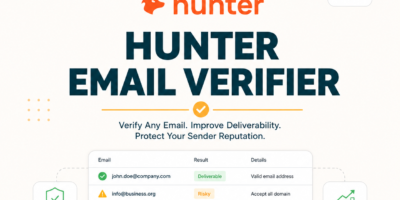
Here is how to verify an email address for free: paste it into a free email verifier and read the deliverability status in seconds, with no message sent to the person. This guide shows how to verify an email address one at a time or in bulk, read the result, and handle catch-all and invalid emails before any campaign goes out.
Verify your first email free right now — no card, no message sent.
Verify an Email Free →Free plan included · No credit card · 100 free verifications a month
Verify an email free in three steps
What Does It Mean to Verify an Email Address?
Verifying an email address means checking whether it can receive mail before anyone sends to it, without delivering anything to the inbox. A verifier confirms the format, the domain’s mail server and the mailbox, then returns a status such as valid, invalid or catch-all. The check is read-only, so the person never receives a test message.
Because verifying is a silent, read-only check, it confirms deliverability without contacting the person, which is why it is safe to run on any list, including cold prospects who have never been emailed before.
How to Verify a Single Email Address for Free
To verify one address for free, open a free email verifier, paste the email, and run the check. In a few seconds it returns a deliverability status and a confidence score. No message reaches the recipient, so checking any address is safe, including a stranger’s address pulled from a website or signature.
- Open a free verifier: Sign in to a free email verifier such as the Hunter Email Verifier, which includes a monthly free allowance with full status and scoring and asks for no credit card to start.
- Paste the address: Drop the single email into the input field exactly as written, including the full domain, then trigger the check so the verifier can query the mail server behind that domain.
- Read the status: Wait a few seconds for the deliverability result and confidence score to appear, then treat valid as safe, invalid as a guaranteed bounce, and catch-all as uncertain.
Paste your email and verify it free now.
Verify an Email Free →No credit card · Result in seconds · Nothing sent to the recipient

A single free check takes seconds and answers the only question that matters before sending: will this address bounce? The Hunter Email Verifier returns that answer instantly.
How to Verify an Email Without Sending a Message
Verifiers check deliverability with an SMTP conversation that asks the mail server whether the mailbox exists, then disconnects before any message is delivered. This is how a free check confirms a valid address without the recipient ever knowing it was tested, and why verifying differs entirely from sending a real email.
- Syntax check: The verifier first confirms the address is correctly formatted and free of obvious typos, catching errors like a missing domain or a stray space before any network call is made.
- Domain and MX lookup: Next the verifier checks that the domain exists and publishes mail-exchange records, since an address on a domain with no mail server can never receive a message.
- SMTP handshake: The verifier opens a connection to the recipient domain’s mail server and begins the delivery dialogue, asking whether the specific mailbox would accept a message at that address.
- No delivery: Before the body of any message is transmitted, the verifier closes the connection, so the server records an inquiry rather than an inbound email and nothing lands in the inbox.
- Status returned: The mail server answers with an acceptance or rejection signal, which the verifier translates into a clear deliverability status and a confidence score for that address.
Because nothing is delivered, verifying stays undetectable and safe, which is a key reason it runs cleanly on cold lists that have had no prior contact.
How to Verify a List of Emails in Bulk for Free
To verify many addresses, upload a CSV to a bulk verifier, let it process the list, then download the file with a status attached to each row. Free tiers cap monthly volume, so a large list may need splitting across months or an upgrade once the free allowance runs out partway through the file.
- Upload a CSV: Export the list to a CSV with one email per row, then upload it to the bulk verifier and map the email column so the tool knows which field to check.
- Run bulk verify: Start the batch and let the verifier process every row, which can take from seconds to minutes depending on list size and how many catch-all domains slow the checks.
- Export the clean list: Download the processed file with a status column added, then filter to keep only valid addresses and quarantine catch-all and unknown rows for a separate decision.
Bulk verification is the real workflow before any campaign; single checks suit spot-testing one address pulled from a website or a reply.
How Do You Read the Verification Result?
Every check returns a status: valid means safe to send, invalid will bounce, accept-all (catch-all) is uncertain, and unknown means the server blocked the test. A confidence score sits alongside each status, helping decide whether to include borderline addresses or hold them back from the next send.
Source: status definitions per Hunter Email Verifier documentation (hunter.io), verified 2026-06-27. Status names vary slightly between providers but map to the same four outcomes.
Reading the status correctly is the whole point: valid and invalid are simple calls, while accept-all and unknown need a judgment about risk tolerance.
What Should You Do With Catch-All and Invalid Results?
Remove invalids before sending, since they will bounce and damage deliverability. For catch-all addresses, segment them separately and send only to warm, recognised domains in low volume. Keeping invalids on the list or blasting catch-alls at scale is the fastest way to harm sender reputation and trip spam filters.
- Invalid addresses: Delete these from the active list entirely, because every one is a confirmed bounce that raises the bounce rate and signals to inbox providers that the list is poorly maintained.
- Catch-all addresses: Move these to a separate segment and send only to familiar domains in small batches, treating any reply or bounce as the real signal of whether the mailbox exists.
- Unknown addresses: Re-test these after a short wait, since a blocked or timed-out check often resolves on a second pass; exclude any that stay unknown rather than risking a guess.
- Role-based addresses: Treat generic mailboxes like info or sales with caution even when valid, since they often route to shared inboxes and tend to engage poorly with marketing or outreach messages.
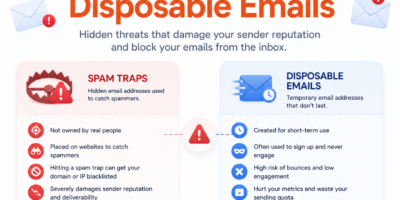
- Disposable addresses: Drop temporary or throwaway domains flagged by the verifier, because these mailboxes expire quickly and add bounce risk while contributing no lasting value to the list.
Verifying only helps when the results are acted on; segmenting risky addresses protects deliverability more reliably than deleting everything borderline.
How Accurate Is Free Email Verification?
Free verification is accurate on standard domains and reliable for catching obvious invalids and typos. It is less certain on catch-all servers, where no checker can confirm a specific mailbox by design. For most senders, a free check still removes the bulk of risky addresses and prevents the majority of bounces.
Verification confirms a mailbox exists, yet catch-all domains accept every address regardless.
— Hunter.io Email Verifier documentation
Free verification will not catch every catch-all, but it removes the invalids that cause most bounces, which is the highest-value step. The deeper benchmarks sit in the Hunter email verifier accuracy breakdown.
Which Free Email Verifier Tools Are Best?
Several verifiers offer a free tier. Hunter includes a usable monthly allowance with full status and scoring; others cap volume lower or limit features on the free plan. The best free option balances the monthly limit, accuracy on catch-all domains, and whether bulk CSV upload is included without paying.
Source: vendor free-tier pages (hunter.io, zerobounce.net, neverbounce.com, mailercheck.com), verified 2026-06-27. Free allowances change often — confirm current limits on each provider’s site before relying on them.
For a genuinely free check with full results, the Hunter free tier is among the most usable starting points, pairing a real monthly allowance with full status detail.
What Are the Most Common Mistakes When Verifying Emails?
Three mistakes undo the benefit: sending to catch-all addresses as if they were valid, skipping re-verification of aging lists, and ignoring unknown results. Each one lets risky addresses slip through and erodes the very sender reputation that verifying was meant to protect in the first place.
- Trusting catch-all as valid: Treating an accept-all result as confirmed deliverable sends mail to mailboxes that may not exist, producing hidden bounces that quietly degrade domain reputation over time.
- Not re-verifying old lists: Email lists decay as people change jobs and close accounts, so a list verified months ago can hold many dead addresses that a fresh check before sending would catch.
- Ignoring unknown results: Sending to addresses the verifier could not resolve gambles on mailboxes that may bounce, when a quick re-test or exclusion would remove the risk entirely.
- Verifying only at import: Cleaning a list once when it enters the database misses the decay that happens afterward, so addresses valid at signup may already be dead by the next campaign.
- Skipping the confidence score: Reading only the status label and ignoring the score alongside it discards the nuance that separates a borderline valid address from a clearly deliverable one.
Verifying once and forgetting is the biggest mistake; lists decay, so re-checking before each major send keeps them clean and deliverable.
How Do You Verify Emails Before a Campaign?
Before any campaign, bulk-verify the full list, remove invalids, segment catch-alls, and send only to deliverable addresses. Doing this right before send, not weeks earlier, accounts for list decay and keeps bounce rate under the safe threshold that inbox providers reward with steady placement.
- Bulk verify the list: Run the entire send list through a bulk verifier immediately before the campaign, so the results reflect the current state of every mailbox rather than a stale snapshot.
- Remove invalids: Strip out every address flagged invalid before loading the list into the sending tool, since each one is a guaranteed bounce that pushes the bounce rate toward the danger zone.
- Segment and send: Group valid addresses for the main send and isolate catch-alls for a cautious low-volume test, keeping the primary campaign aimed only at confirmed deliverable mailboxes.
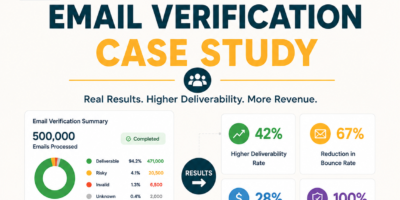
Hunter’s own verifier review found accuracy holds strong on standard domains, with valid-status addresses bouncing under 2% across a 2,000-email benchmark, the same standard this pre-send workflow is built to meet.
Verifying right before send is the habit that keeps bounce rate low and reputation intact campaign after campaign, with no surprises at launch.
When Is Free Verification Not Enough?
Free verification covers low volume and occasional checks well. The upgrade trigger arrives when monthly volume exceeds the free allowance, when bulk CSV or API access is required, or when verifying at signup in real time. At that point a paid plan’s cost per verified email becomes the deciding number.
- Volume past the free cap: Once monthly checks climb beyond the free allowance of roughly 100 verifications, a paid tier becomes necessary to keep verifying without splitting lists across billing cycles.
- Need for bulk or API: Teams that verify large CSV files or wire verification into a signup form through an API outgrow the free plan, since those capabilities sit on paid tiers.
- Real-time checks at signup: Validating an address the moment a user submits a form demands API access and headroom that a free allowance cannot supply at any meaningful traffic level.
- Recurring large cleans: Lists in the tens of thousands that need re-verifying every month run through a free allowance in minutes, making a paid pool the only practical option at that cadence.
- Team and integration needs: Shared seats, CRM connectors, and audit logs live on paid plans, so any team embedding verification into a wider workflow outgrows the single-user free tier quickly.
Free is the right place to start; the upgrade trigger is volume or automation, not any flaw in the free result itself.
Verdict: The Best Free Way to Verify an Email Address
For a single address, any reputable free verifier returns an instant, safe result. For a list, a free tier with bulk upload, like Hunter’s, is the best starting point, removing most risky addresses at no cost before deciding whether paid volume is needed for larger or recurring sends.
Verdict: A free verifier checks a single address in seconds and the Hunter free tier covers about 100 verifications a month at no cost, accurate on standard domains; upgrade only when monthly volume passes the free cap or bulk and API access become must-haves.
Email verification checks whether an address exists and can receive messages.
— Wikipedia, Email verification
Verify your first email free in seconds.
Verify an Email Free →Free plan · No credit card · Upgrade only when volume grows
Related Tools in the Hunter Stack
Verifying one address is the first step; cleaning full lists and building lists worth verifying come next. The verifier review covers bulk validation in depth, and the finder review covers sourcing the addresses that later need a check.
- Hunter Email Verifier: The full verifier covers bulk CSV validation and scoring — read what the Hunter email verifier does for the complete feature set.
- Hunter Email Finder: Build the lists that later need verifying — the Hunter.io email finder review covers sourcing accurate addresses.
- Verification basics: New to the process? Start with how email verification works before choosing a tool.
How to Verify an Email Address: Frequently Asked Questions
The 12 most-asked questions about verifying an email address.
How do I verify an email address for free?
Open a free email verifier, paste the address, and run the check. In seconds it returns a deliverability status and a confidence score, with no message sent to the recipient. The Hunter free tier covers about 100 verifications a month with no credit card required.
Can I verify an email without sending a message?
Yes. A verifier opens an SMTP conversation with the mail server, asks whether the mailbox exists, then disconnects before any message is delivered. The recipient never receives a test email, which is why verifying is safe to run on cold lists.
Does the person know if I verify their email?
No. Because the verifier disconnects before sending anything, no message lands in the inbox and no notification is triggered. The mail server simply logs an inquiry, so the address owner has no way to tell that a verification check happened.
How do I check if an email is valid?
Run the address through a verifier and read the status. Valid means the mailbox exists and accepts mail, invalid means it will bounce, and catch-all means the domain accepts everything so the specific mailbox cannot be confirmed. A confidence score sits alongside each result.
How do I verify a list of emails in bulk for free?
Upload a CSV with one email per row to a bulk verifier, run the batch, then download the file with a status attached to each row. Free tiers cap monthly volume, so a large list may need splitting across cycles or an upgrade once the allowance runs out.
What does a catch-all verification result mean?
A catch-all (accept-all) result means the domain is configured to accept mail for every address, so the verifier cannot confirm whether the specific mailbox exists. The address is neither confirmed valid nor invalid, which is why it carries real sending risk.
How accurate is free email verification?
Free verification is accurate on standard domains and reliable for catching invalids and typos. It is less certain on catch-all servers, where no checker can confirm a specific mailbox. For most senders, a free check still removes the bulk of risky addresses.
What is the best free email verifier?
The best free verifier balances monthly allowance, accuracy, and whether bulk upload is included. Hunter offers a usable free tier with full status and confidence scoring and no card required, making it a strong starting point before any paid commitment.
How do I verify an email before a campaign?
Bulk-verify the full list right before send, remove every invalid, segment catch-alls into a separate group, and send only to confirmed deliverable addresses. Verifying immediately before launch, rather than weeks earlier, accounts for list decay and keeps bounce rate low.
What do I do with invalid email results?
Remove invalid addresses from the active list before sending, since every one is a confirmed bounce. Keeping them inflates the bounce rate and signals poor list hygiene to inbox providers, which can hurt placement for the valid addresses on the same list.
Is it legal to verify someone’s email address?
Verifying an address is a read-only deliverability check and does not send mail, so it is generally permitted. The legal obligations apply to what happens next: sending email must follow consent and anti-spam rules such as GDPR and CAN-SPAM in the relevant region.
When should I pay instead of using a free verifier?
Upgrade when monthly volume passes the free allowance, when bulk CSV or API access is required, or when verifying addresses in real time at signup. At that point the deciding number is the paid plan’s cost per verified email, not the free tier’s limit.