Table of Contents
A domain name is the human-friendly address people type to reach your website, such as example.com, which maps to the server that hosts your site. Domains are registered through a registrar and rely on DNS to direct visitors to your hosting, so understanding domains explains how people find your site online. This guide explains what a domain is, how it works, and how it differs from hosting.
Last updated: August 2026. Written by the Growth Hack Suite editorial team, with details cross-checked against provider documentation. This page carries affiliate links to Kinsta.
See how Kinsta connects your domain to hosting on Google Cloud
Try Kinsta →Premium DNS and guided domain setup, with a 30-day money-back guarantee.
What Is a Domain Name?
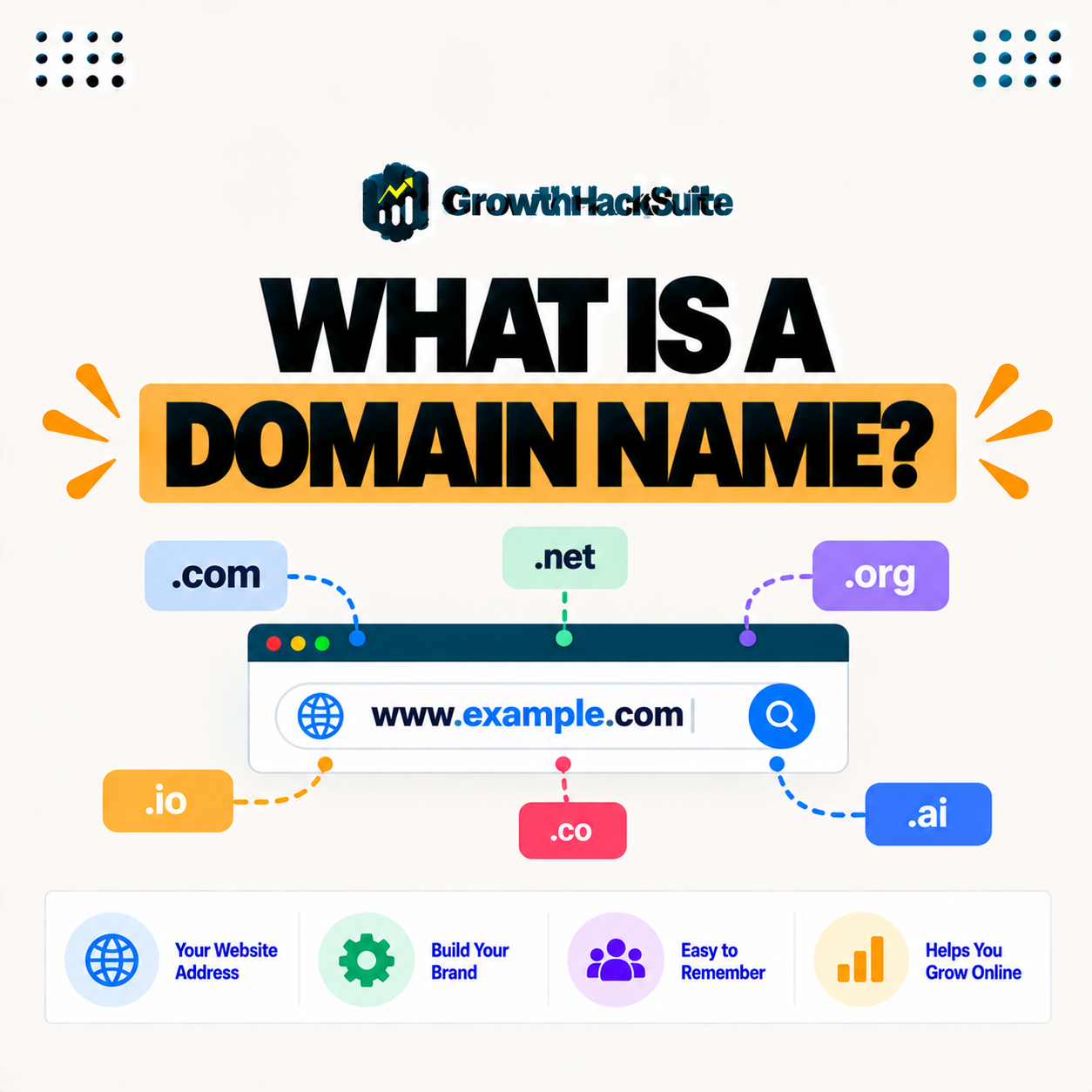
A domain name is the human-friendly address people type into a browser to reach your website, such as example.com, so instead of remembering a numeric server address, visitors use a memorable name that maps to your site. It is how people find you online.
“A domain name is a text label that identifies a realm on the internet.”
— Wikipedia, Domain name
For a beginner, the domain is simply your website’s address: the memorable name visitors type instead of a string of numbers.
How Does a Domain Name Work?
A domain name works through DNS, which translates the name into the IP address of the server hosting your site, so when someone enters your domain, DNS directs their browser to the correct server, which then delivers your pages. DNS is the translator behind the scenes.
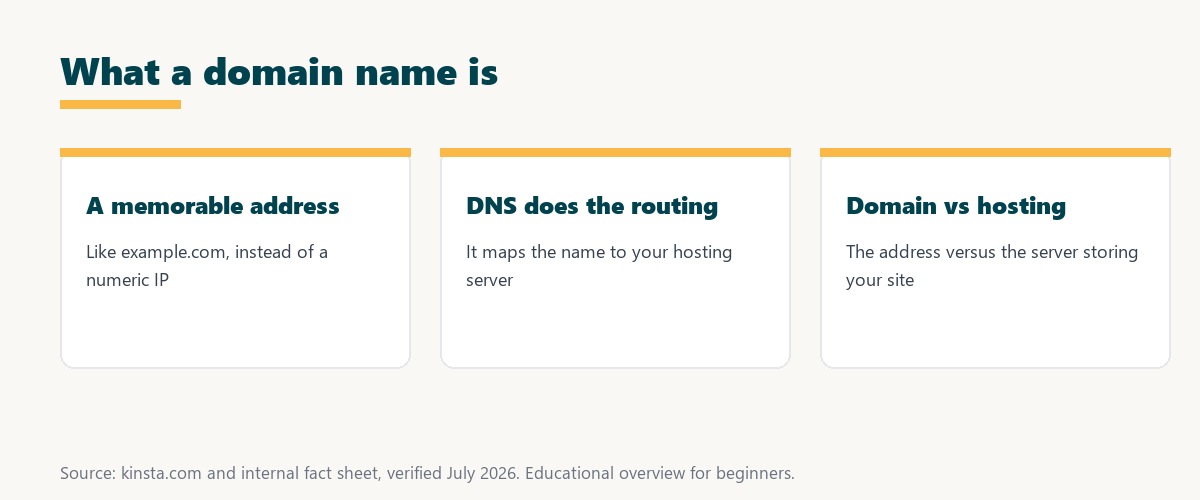
The key point is that DNS connects the two: your memorable domain on one side, the server’s numeric address on the other.
What Are the Parts of a Domain Name?
A domain name has parts including the top-level domain like .com, the second-level domain that is your unique name, and optionally a subdomain prefix, so together these form the full address people use to reach your site. Each part plays a distinct role.
Three parts make up a full domain name:
- Top-level domain: The ending like .com or .org classifies the domain, so it signals the type or region of a site to visitors and search engines.
- Second-level domain: The unique name you choose, such as example, is your brand, so it is the memorable core that people associate with your site.
- Subdomain: An optional prefix like blog or shop creates a distinct section, so it organizes parts of a site under the same main domain.
Together these parts form the complete address: an optional subdomain, your unique name, and the top-level domain that ends it.
Domain Name vs Web Hosting
A domain name is the address people type, while web hosting is the server space that stores your site, so the two are separate but both required, and DNS connects the domain to the hosting. You need both to have a working website.
Source: general overview cross-checked with public domain documentation, verified August 2026.
Reading down the table, the parts combine into a full address, from an optional subdomain through your brand name to the top-level domain.
What Is a Domain Registrar?
A domain registrar is a company accredited to register and manage domain names, so you buy or renew a domain through a registrar, which records your ownership and lets you manage settings like nameservers and DNS. It is where a domain is bought and controlled.
The takeaway is that the registrar is your domain’s home base: it holds your registration and is where you point the domain at your hosting.
Why Does Your Domain Name Matter?
Your domain name matters because it is your brand’s address and identity online, so a clear, memorable domain builds trust and recognition, while it also underpins your email and how people find and return to your site. It is more than an address; it is your identity.
“The first five seconds of page-load time have the highest impact on conversion rates.”
— HubSpot, page load time and conversion rates
A memorable domain gets people to your site, and fast hosting keeps them there: the domain earns the visit, and those early seconds decide whether it converts.
How Do You Register a Domain Name?
You register a domain name by choosing an available name and buying it through a registrar for a yearly fee, so once registered you own the right to use it and can connect it to your hosting through DNS. Registration is quick and renews each year.
The practical point is that registering is simple: pick an available name, pay the yearly fee, and the domain is yours to use and point wherever you host.
How to Connect a Domain to Your Website
You connect a domain to your website by pointing it to your host through DNS records or nameservers, so with the values your host provides, your domain directs visitors to the server that runs your site. The connection is made at your registrar or DNS provider.
Source: general overview cross-checked with public hosting documentation, verified August 2026.
Reading the table together, the domain is the address and hosting is the space, and DNS is what links them into a working website.
How Kinsta Works With Your Domain
Kinsta works with your domain by letting you point it to your Kinsta site through DNS, and it offers premium DNS in MyKinsta, so you can manage records and connect your domain to your hosting from one place. The setup is guided in the dashboard.
Connect your domain with premium DNS on Kinsta’s Google Cloud platform
Start Free Migration →Premium DNS in MyKinsta and free migration.
Getting Your Site Online With a Domain
You get your site online with a domain by registering it, setting up hosting, and connecting the two through DNS, so with a host like Kinsta guiding the DNS setup, your domain leads visitors to your live site. Three pieces come together to make a site reachable.
The takeaway is that going live is a three-step chain: register the domain, set up hosting, and connect them with DNS. For anyone weighing a long hosting commitment, our note on SaaS vendor lock-in is worth a read.
Domains, DNS, and Hosting Together
A domain, DNS, and hosting work together, so the domain is the address, DNS routes it, and hosting stores the site, which is why understanding all three explains how a website becomes reachable online. Each part depends on the others to work.
“A tool is only worth its premium when the hours or revenue it protects exceed the invoice.”
— Growth Hack Suite, on tool ROI
Applied to a website, the small yearly cost of a good domain and reliable hosting is easily worth it: together they are what let anyone find and use your site at all.
Tips for Choosing a Domain Name
Tips for choosing a domain name include keeping it short and memorable, matching your brand, avoiding confusing spellings, and preferring a well-known ending like .com, so a clear domain is easy to share and remember. A good choice pays off for years.
The honest summary is that the best domain is simple: short, on-brand, easy to spell, and easy to say aloud, so people remember and return to it.
Try Kinsta risk-free and connect your domain with ease
Try Kinsta Risk-Free →Premium DNS, guided setup and free migration, with a 30-day money-back guarantee.
Domain Names: Frequently Asked Questions
The 12 most-asked questions about domain names.
What is a domain name in simple terms?
A domain name is the human-friendly address people type to reach your website, such as example.com, which maps to the server that hosts your site.
How does a domain name work?
A domain name works through DNS, which translates the name into the server’s IP address, so entering your domain directs the browser to the server that delivers your pages.
What are the parts of a domain name?
A domain has a top-level domain like .com, a second-level domain that is your unique name, and optionally a subdomain prefix, forming the full address visitors use.
What is the difference between a domain and hosting?
A domain is the address people type, while hosting is the server space that stores your site, so both are required and DNS connects the domain to the hosting.
What is a domain registrar?
A domain registrar is a company accredited to register and manage domain names, so you buy or renew a domain through it and manage settings like nameservers and DNS.
Why does my domain name matter?
Your domain name matters because it is your brand’s online address and identity, so a clear, memorable domain builds trust and underpins your email and how people find you.
How do I register a domain name?
You register a domain by choosing an available name and buying it through a registrar for a yearly fee, so once registered you own the right to use it and connect it to hosting.
Do I need a domain and hosting separately?
Yes, you typically need both a domain and hosting, since the domain is the address and hosting stores the site, though some providers sell them together for convenience.
How do I connect my domain to my website?
You connect a domain by pointing it to your host through DNS records or nameservers, so with the values your host provides, the domain directs visitors to your site’s server.
Can I move my domain to another registrar?
Yes, you can transfer a domain between registrars while keeping ownership, so you are not locked in, though transfers follow rules and a short waiting period.
Do I own my domain name forever?
You own the right to use a domain as long as you keep renewing it, so a domain is registered for a period and must be renewed to retain it, rather than owned outright forever.
How does Kinsta work with my domain?
Kinsta lets you point your domain to your Kinsta site through DNS and offers premium DNS in MyKinsta, so you manage records and connect your domain to hosting from one place.
About this guide
Written by the Growth Hack Suite editorial team, drawing on hands-on experience running WordPress sites. Details were cross-checked against public domain documentation. This page carries affiliate links to Kinsta. The position is stated plainly: a domain name is your website’s memorable address, registered through a registrar and routed by DNS to your hosting, and it is separate from but works with hosting. Kinsta connects your domain via DNS and offers premium DNS in MyKinsta.