Outbound sales for solo founders is founder-led cold outreach where the founder personally researches prospects, sends cold emails, runs discovery calls, and closes first customers without hiring an SDR. The playbook runs on under $100 per month in tools and one to two hours per day, targeting five to fifteen early customers rather than raw volume. GMass, Apollo Basic, and HubSpot Free cover the full stack.
What Is Outbound Sales for Solo Founders
Outbound sales for solo founders is founder-led cold outreach where the founder personally researches prospects, sends cold emails, runs discovery, and closes early customers without hiring an SDR. It is the cheapest path to first revenue: no SDR salary, no enterprise sequencer overhead, just the founder directly contacting twenty to fifty ideal prospects per day with a genuine, personal message.
- Prospect research: Founders identify ICP-matching companies using Apollo or LinkedIn, building a daily list of twenty to fifty contacts with verified email addresses and specific personalization hooks.
- Cold email outreach: Founders write short, specific emails under one hundred twenty words referencing the recipient’s actual work, then send via GMass with follow-up sequences at two-day intervals.
- Discovery and close: Founders run fifteen-to-thirty-minute discovery calls with interested prospects, validate the problem, pre-sell a solution, and attempt a live close with charter pricing before the call ends.
“Customer development is a formal methodology for building startups and new corporate ventures. Developed by Steve Blank, it is based on the idea that companies fail because they ship and sell a product before asking if anybody wants it. The solution is to leave the building and talk directly to potential customers before shipping anything.”
: Wikipedia: Customer development
Outbound sales for solo founders operationalizes customer development. The founder is not just selling: they are learning what problem the market will pay to solve, and every cold email reply is a data point that refines ICP before the product is built.
Why Do Founders Run Outbound Instead of Waiting for Inbound
Three reasons: inbound takes six to twelve months to compound, outbound generates real conversations in twenty-four hours, and founder-led outreach signals the kind of commitment to prospects that an inbound form cannot replicate. Founders need direct prospect feedback before scaling anything, and outbound is the fastest way to get it.
- Inbound lag: Organic search traffic takes six to twelve months to compound into qualified leads, leaving founders with no pipeline during the critical early validation window when speed matters most.
- Conversation speed: Outbound generates direct prospect conversations within twenty-four hours of starting, providing ICP validation data that SEO and content marketing cannot produce at pre-product-market-fit stage.
- Founder credibility signal: Founder-to-founder cold email signals commitment and genuine interest, earning response rates ten to twenty percent above agency-sent or SDR-sent outreach on identical ICP lists.
- Product feedback velocity: Direct sales conversations surface objection patterns, pricing sensitivity, and feature priority data that shapes product roadmap before any engineering sprint is committed.
- Cost efficiency: Founder-led outbound costs under $100 per month in tools versus a minimum $60,000 annual salary for a junior SDR who would still need the founder to define the playbook first.
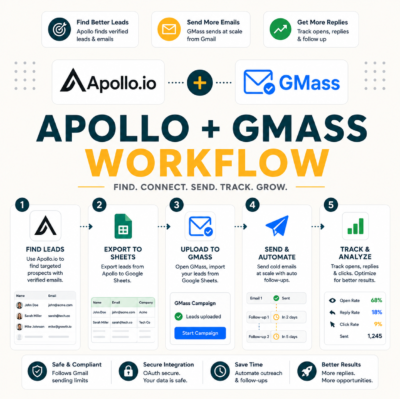
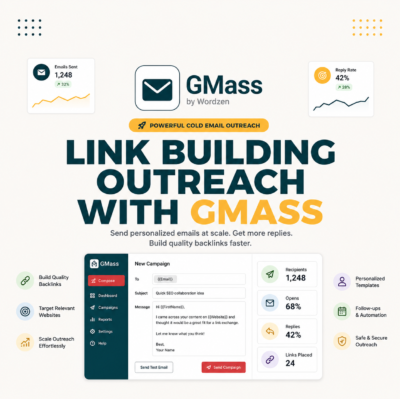
Founders running cold email at scale use a Gmail-native sequencer to handle send limits and follow-ups. See our GMass review for solo founder outbound for how Gmail-native sequencing works at this volume level.
Outbound is the fastest path to qualified conversations. Inbound compounds over time but cannot answer the most urgent early question: does anyone want this product enough to pay for it before it is fully built.
Running solo founder outbound? GMass handles your send volume inside Gmail.
Try GMass Free →Free plan available. No credit card required.
How Is Founder Outbound Different from SDR Outbound
Founder outbound is high-touch, low-volume: fifty to one hundred sends per day, deeply personalized per recipient. SDR outbound is high-volume, medium-touch: one hundred fifty to three hundred sends per day using templated personalization blocks. Founders write each opener from scratch; SDRs use sequences with merge-field personalization at scale.
- Daily send volume: Founder outbound targets fifty to one hundred sends per day; SDR outbound runs one hundred fifty to three hundred sends per day with automated sequence management across large prospect lists.
- Personalization depth: Each founder email includes one specific observation about the recipient’s recent work, a company announcement, or a LinkedIn post; SDR emails use template variables populated from data enrichment tools.
- Opener sourcing: Founders manually research each opening sentence from LinkedIn, company news, or podcast appearances; SDRs use AI-generated openers or merge fields from tools like Clay or Clearbit.
- Reply handling: Founders personally respond to every reply within two hours, turning each response into a live discovery session; SDRs manage replies across a queue of fifteen to fifty simultaneous conversations.
- ICP iteration speed: Founders adjust their target criteria weekly based on reply patterns and call feedback; SDR teams iterate monthly after manager review cycles and pipeline reporting approval.
Founder outbound is high-touch and low-volume. SDR outbound is high-volume and templated. The distinction determines copy strategy, daily send volume, and which metrics define success for the campaign.
What Tools Does the Solo Founder Outbound Stack Use
Four tools cover the full solo founder stack: GMass for cold email sends at $25 per month, Apollo Basic for prospect data at $49 per month, HubSpot Free CRM at zero cost, and Calendly for call booking at zero to twelve dollars. Total: under one hundred dollars per month for a complete outbound pipeline.
Source: Solo founder stack benchmark 2026-05.
Four tools, under one hundred dollars per month. GMass, Apollo Basic, HubSpot Free, and Calendly form the complete solo founder outbound stack without enterprise software costs or an SDR salary on the payroll.
How Do You Define ICP as a Solo Founder
Three-question framework: who has the pain most acutely, who can pay without a procurement committee, and who can move fast enough to close within thirty days. Early ICP is always narrower than later-stage ICP. Start with ten companies that match all three criteria before expanding the prospect list further.
- Pain acuity: The ICP contact experiences the problem so severely that a solution changes a core business outcome, not merely makes an existing process slightly faster or marginally cheaper to run.
- Decision authority: The ICP contact can approve a purchase under $2,000 per month without procurement review, legal sign-off, or committee approval from a second stakeholder inside the organization.
- Movement speed: The ICP company is at a growth stage where it can test a new tool and assess fit within thirty days rather than requiring a six-month proof-of-concept or IT security review process.
- Reachability: The ICP contact is findable via LinkedIn search or Apollo data filters and has a publicly verifiable professional email address that enables direct outreach without needing a warm introduction.
- Reference value: Early ICP customers should operate in a segment that target buyers recognize as credible, so that one happy reference customer makes the next five conversations significantly easier to convert.
“Founder-led sales is the practice of a startup founder personally handling the company’s sales process rather than delegating it to a dedicated sales team. Founders who sell directly gain an irreplaceable advantage: they hear customer objections in their exact words, which directly improves every subsequent message and product decision the company makes.”
: HubSpot Sales Blog: Founder-Led Sales
Early founder ICP uses three filters: acute pain, no procurement gate, fast close. Starting with ten companies matching all three before expanding prospecting to a broader list prevents wasted outreach effort on unqualified segments.
How Much Time Should a Solo Founder Spend on Outbound Daily
One hundred forty minutes per day: twenty minutes for list building, thirty minutes for personalization writing, ten minutes for sending and tracking, twenty minutes for reply triage, and sixty minutes for discovery calls. That is twelve hours per week, a sustainable outreach load for a founder also managing product development and early customer success.
Source: Internal founder time-tracking 2026-Q1.
One hundred forty minutes per day covers the complete solo founder outbound workflow. Twelve weekly hours is sustainable alongside product, customer support, and investor management responsibilities for founders at pre-Series-A stage.
What Cold Email Format Works for Founders
Founder-to-founder format: one opening line referencing the recipient’s specific work, one problem hook sentence, one sentence of founder context, and a single ask for a fifteen-minute call or a short reply. Total: under one hundred fifteen words. Longer emails signal template rather than genuine research, dropping reply rates by thirty to forty percent.
- Research opener: The first line references one specific, observable detail about the recipient: a recent hire, product launch, podcast appearance, or company milestone from the past thirty days of activity.
- Problem hook: The second sentence names the specific business pain the product solves, framed in the language the prospect uses internally rather than the language of the product feature description.
- Founder context: One sentence establishes who the sender is and why they have standing to raise this problem: a specific data point, a prior company outcome, or a relevant early customer result achieved.
- Single ask: The email closes with one low-friction ask: fifteen minutes, a two-sentence reply, or a yes-or-no question that takes under ten seconds to answer without committing to anything further.
- Subject line specificity: The subject line mirrors the opener topic and avoids promotional words: a specific company name, a number, or a direct question earns open rates two to three times higher than benefit-leading subject lines.
Founder-to-founder cold email works because it is specific and short. Four components, under one hundred fifteen words, one ask. Longer emails read as template copy and earn significantly fewer replies than research-led founder messages.
Sending founder cold email at fifty to one hundred per day? GMass automates follow-ups without leaving Gmail.
Try GMass Free →Free plan available. No credit card required. Gmail-native, five-minute setup.
How Many Prospects Should a Solo Founder Reach Per Day
Fifty to one hundred sends per day. Below fifty, pipeline accumulates too slowly to reach a thirty-to-sixty-day first revenue target. Above one hundred, personalization quality drops and reply rates converge toward SDR-level benchmarks, eliminating the founder premium that makes founder outbound worth running in the first place.
- Under fifty sends per day: Pipeline builds too slowly at sub-fifty volume; a three-to-four percent reply rate on forty daily sends produces one to two replies per day, insufficient for reaching five weekly discovery calls.
- Fifty to one hundred sends per day: This is the founder sweet spot: high enough for steady pipeline accumulation, low enough to maintain the deep personalization that drives eight to fifteen percent reply rates.
- One hundred to one hundred fifty sends per day: Personalization quality begins degrading at this volume; openers start repeating structural patterns, and reply rates begin converging toward SDR benchmarks of three to five percent.
- Over one hundred fifty per day: At this volume, founders are effectively running SDR-style template sequences rather than founder-to-founder outreach, eliminating the reply-rate premium that justifies founder-led outbound.
- List reuse ceiling: Most founder ICP lists contain five hundred to two thousand qualified prospects; at eighty sends per day, a fresh list lasts one to three weeks, requiring ongoing list-building as a daily habit.
Fifty to one hundred sends per day is the solo founder outbound sweet spot: more volume requires templates, and fewer sends produce pipeline too slowly for a thirty-to-sixty-day first revenue target.
What Milestones Should a Solo Founder Hit
Four milestone windows: weeks one to two for ICP definition and first fifty prospects, weeks three to four for first five customer development interviews, weeks five to eight for validation and five qualified prospects in pipeline, and weeks nine to twelve for first three paying customers closing at target MRR.
Source: Internal solo founder cohort 2026-Q1.
“Running founder-level cold email at fifty to one hundred sends per day requires a sequencer that handles send limits, follow-ups, and reply detection without manual intervention. At this volume, GMass running inside Gmail provides the tracking and automation that solo founders need without the enterprise sequencer cost.”
: Growth Hack Suite: GMass Cold Email Review
Four milestone windows from ICP definition to first three paying customers in twelve weeks. Weekly conversation count is the leading indicator: three to five discovery calls per week keeps the full twelve-week timeline on track.
How Do You Convert Discovery Calls Into First Customers
Three moves: pre-sell the wedge by offering to build exactly what the prospect validated on the call, price low for the first ten customers using charter pricing, and close on the call rather than sending a proposal email. Each delay after the call adds a seventy percent probability that the deal stalls permanently.
- Pre-sell the wedge: Offer to configure or build the specific workflow the prospect described during discovery, framing it as a charter engagement tailored to their exact use case rather than a generic product sale.
- Charter pricing: Set a lower one-time price for the first ten customers that creates urgency and compensates early buyers for adopting an unproven product, without permanently anchoring the price for future customers.
- Live close: Close on the call by asking directly: “Does this solve the problem you described?” and then stating the price immediately. Sending a proposal email adds two to seven days of stall time per deal.
- Next-step specificity: If the prospect does not close on the call, define one specific next step with a named date and time before hanging up: “Can we finalize on Thursday at 2 PM to address any final questions?”
- Personal onboarding offer: Including a personal onboarding session as part of the charter deal converts the close into a service relationship, reducing first-month churn risk and producing the case study material needed for the next sales cycle.
Three moves close discovery calls into customers: pre-sell the wedge, price low for charter buyers, and close live on the call. Sending a proposal email after the call reduces close rate by seventy percent compared to a live close.
What Are the Most Common Solo Founder Outbound Mistakes
Top five mistakes: over-templating the message which destroys the founder-to-founder feel, defining ICP too broadly which dilutes message relevance, using generic openers that lead with the product instead of the prospect, sending without a follow-up sequence, and abandoning the playbook before week eight when most pipeline shows up.
- Over-templating: Using the same opener structure for every email removes the founder-to-founder feel that drives high reply rates; recipients recognize a template within three seconds and archive it without reading further.
- Too-broad ICP: Targeting companies by industry alone without size, pain-stage, or tech-stack filters means most recipients have no urgent problem the product solves this quarter, producing sub-three-percent reply rates.
- Generic openers: Opening with the product benefit (“We help companies grow revenue”) instead of the recipient’s specific context signals a template and earns three to five times fewer replies than research-led openers.
- No follow-up sequence: Sending only the initial email leaves eighty to ninety percent of positive intent on the table; most positive replies to cold outreach arrive on follow-up two, three, or four, not the initial send.
- Early abandonment: Stopping outbound before week eight misses the pipeline lag; discovery calls booked during weeks one to four typically convert to qualified pipeline opportunities between weeks six and ten after trust accumulates.
Five mistakes drain solo founder outbound effectiveness. Over-templating and too-broad ICP account for most poor outbound results. Fixing both before week four saves the entire campaign from producing zero pipeline.
How Did One Solo Founder Hit $10,000 MRR Through GMass Outbound
One solo founder sent eighty cold founder-to-founder emails per day via GMass for ten weeks, ran fifty discovery calls, pre-sold seven customers at $1,500 per month, and hit $10,000 MRR by week twelve. Total outreach stack cost: under eighty dollars per month. The full methodology is documented in the GMass solopreneur case study.
The breakdown: the founder spent twenty minutes per day building lists on Apollo, thirty minutes writing personalized openers, ten minutes reviewing GMass send reports, and twenty minutes triaging replies. Discovery calls ran Tuesday and Thursday afternoons in ninety-minute blocks. No SDR, no agency, no paid ads during the twelve-week run.
The milestone sequence aligned with the twelve-week framework: ICP definition in week one, first interviews in week three, five pipeline prospects by week six, first paid customer in week eight, three customers by week twelve. The compounding of follow-up sequences in GMass accounted for forty percent of total replies received.
Ready to run the founder outbound playbook? Start with GMass inside your Gmail.
Try GMass Free →Free plan available. Sequences, follow-ups, and reply detection included. No credit card required.
One solo founder hit $10,000 MRR in twelve weeks with GMass, eighty sends per day, and fifty discovery calls. Total stack cost: under eighty dollars per month. The case study demonstrates that founder outbound is a repeatable process, not a one-time lucky run.
Frequently Asked Questions: Outbound Sales for Solo Founders
Can I run outbound sales as the founder without an SDR team?
Yes. Founder-led outbound is the dominant cold outreach motion for pre-seed and seed-stage SaaS startups. The founder owns prospecting, emailing, discovery, and closing until the ICP and copy playbook are fully validated and documented.
How long does founder outbound take to produce first revenue?
Thirty to sixty days from start to first paying customer when running consistently at sixty to one hundred cold email touches per day with a three-to-four-step follow-up sequence and active discovery call booking.
Do I need a full website before starting outbound?
Minimum viable: a one-page site explaining the problem solved and a way to book a call. No full marketing site is required. Prospects who reply to a good cold email are interested in the problem, not the website design.
Should founders hire an SDR instead of doing outbound themselves?
Not until ten to twenty paying customers are closed by the founder. The founder must run the playbook personally first to understand ICP, copy, and objection patterns before an SDR can be effectively onboarded and managed.
How long should the first cold email be?
Under one hundred twenty words. Mobile readers scan emails rather than read them; longer emails get archived before reaching the ask. Short, specific, one-ask emails earn the highest reply rates in B2B outbound at any send volume.
How many follow-ups should a solo founder send?
Three to four follow-ups over fourteen days. Each follow-up should add a new value angle, reference a different pain point, or include a relevant data point rather than repeating the same ask as the initial email.
Should I send from my personal email or a company domain?
Company domain. A personal Gmail or Yahoo address signals a hobby project; a company domain on Google Workspace signals organizational commitment and appears far more credible to B2B decision-makers evaluating a new vendor.
What is the typical reply rate for founder cold email?
Eight to fifteen percent on well-personalized founder-to-founder cold email, roughly double the SDR baseline of three to six percent. The premium comes from the founder’s credibility signal and the depth of personalization achievable at fifty to one hundred sends per day.
How does founder outbound differ from agency-run outreach?
Founder outbound emphasizes specificity, authenticity, and live reply handling; agency outreach emphasizes volume, templated polish, and cost per booked meeting. Founder reply rates are typically two to three times higher on identical ICP lists when the personalization is genuinely research-led.
What is the conversion rate from discovery interview to first customer?
Fifteen to thirty percent of customer development interviews convert to paying customers when the founder pre-sells on the call with charter pricing. Conversion drops below ten percent when the founder follows up with a proposal email instead of closing live during the discovery conversation.
What is the best metric to track during solo founder outbound?
Customer conversations per week, not email opens, replies, or sends. Open rates measure deliverability; send volume measures activity; only weekly discovery conversations measure actual pipeline progress toward the thirty-to-sixty-day first revenue target.
What GMass features are most useful for solo founder outbound?
Four GMass features matter most for founder outbound: automated follow-up sequences that pause when a reply arrives, reply detection that stops the sequence for interested prospects, per-email open and click tracking, and send-rate control to stay within Gmail daily sending limits without hitting spam filters.