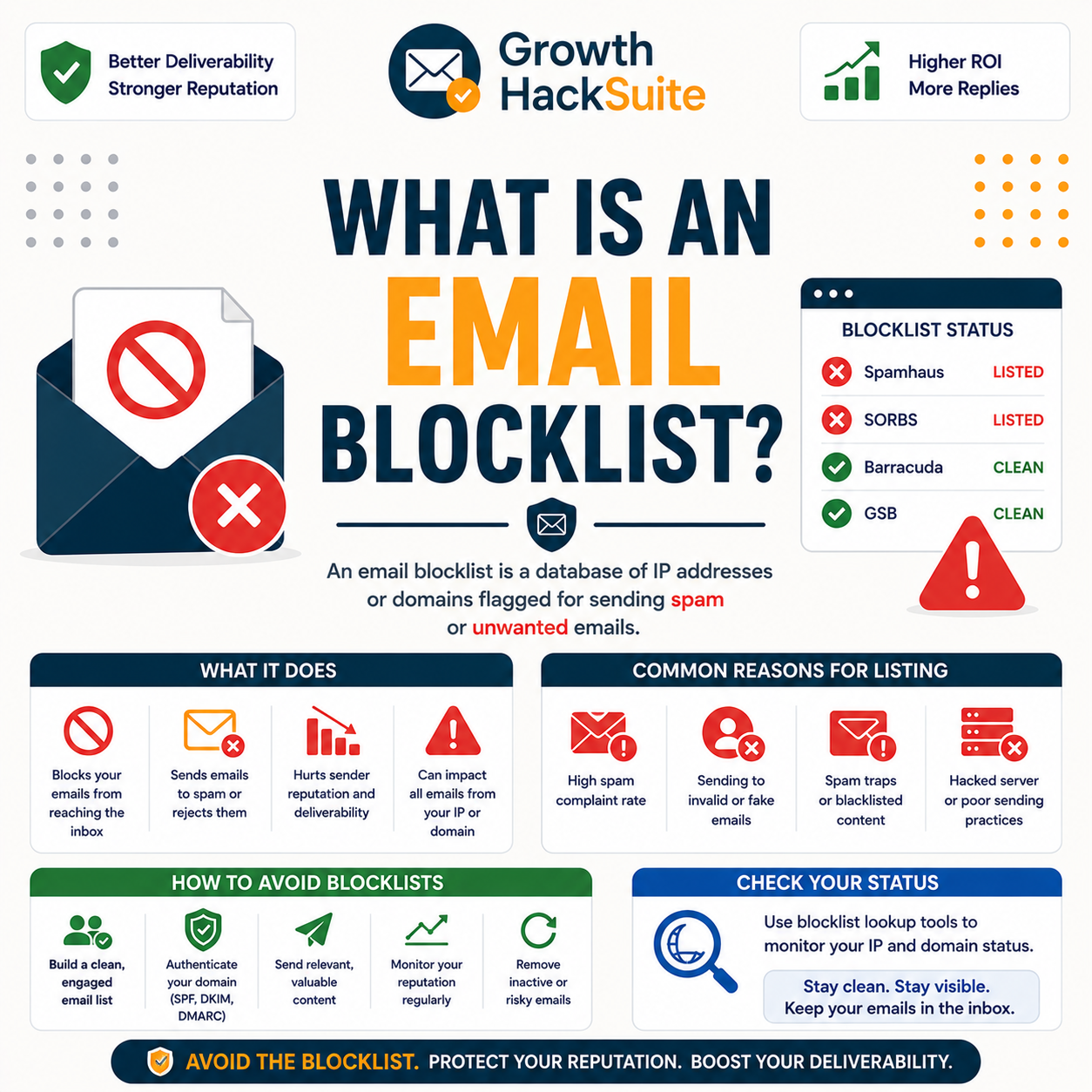
What Is an Email Blocklist (RBL)? How to Avoid It
An email blocklist is a database of spam-linked IPs and domains mail servers use to reject mail. See what lands you on one and how to avoid it. Full guide below
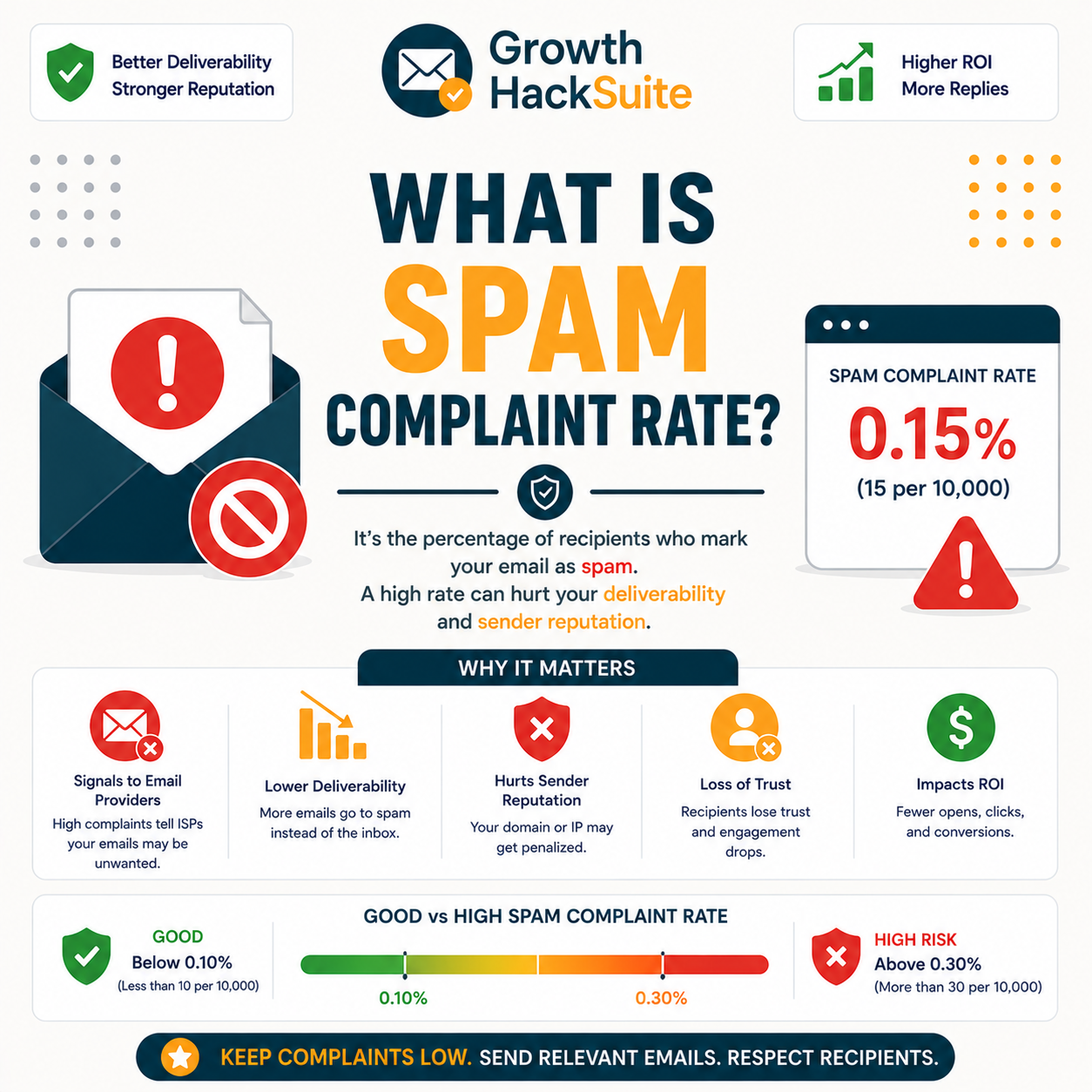
A spam complaint rate is the share of recipients who mark your email as spam. Above 0.1% it hurts sender reputation. Learn the safe threshold and how to lower it.
Accept-all vs catch-all describe the same thing: a domain that accepts mail to any address. Verifiers say accept-all, admins say catch-all. Here is what it means.
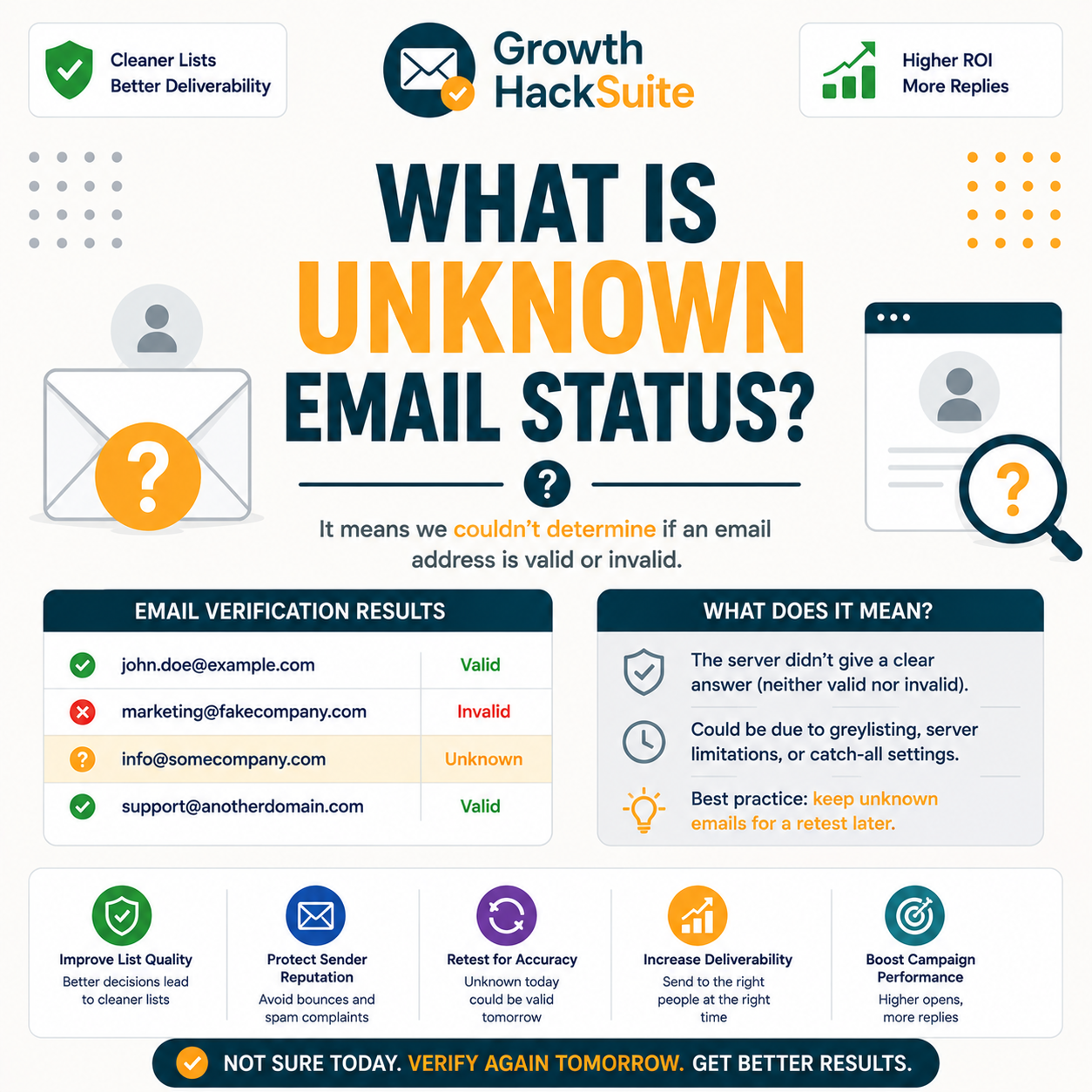
An unknown email status means a verifier could not confirm whether an address is deliverable. It is undetermined, not invalid, usually caused by catch-all domains or greylisting hiding the answer.
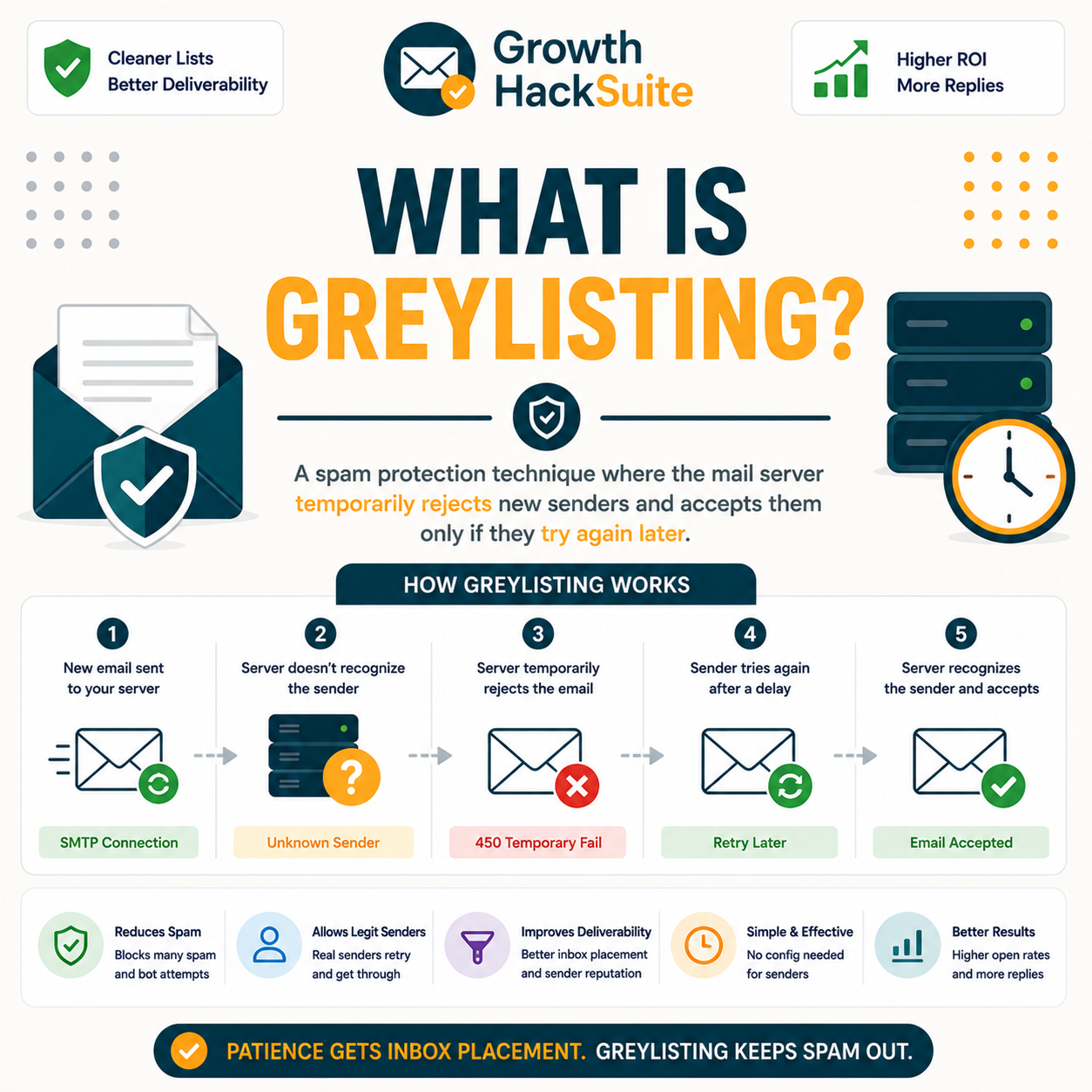
Greylisting is an anti-spam technique that temporarily defers a first delivery and accepts it on retry, which can make email verifiers return an unknown status.
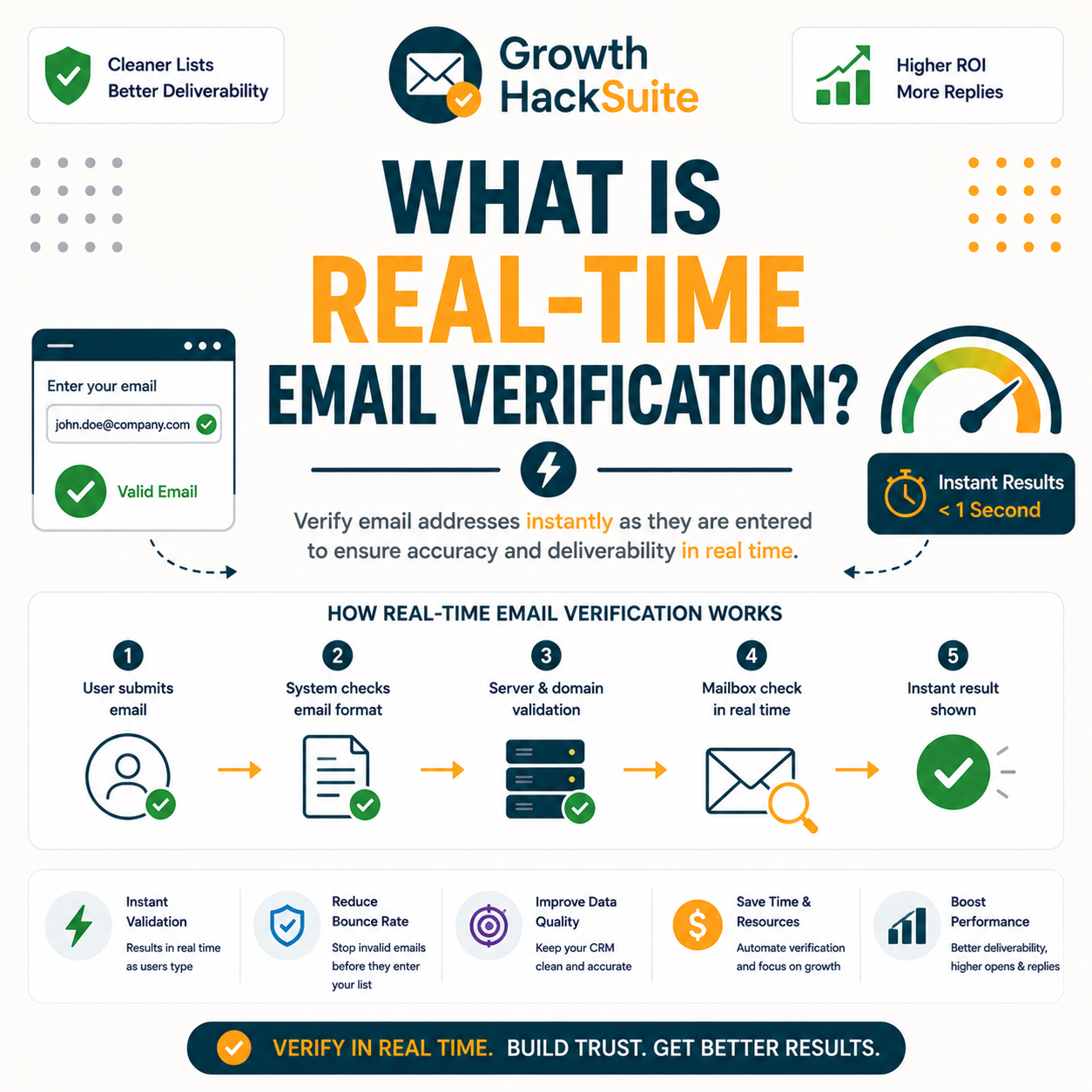
Real-time email verification checks a single address the instant it is entered, via API in under a second, blocking fake and mistyped emails at the point of capture.
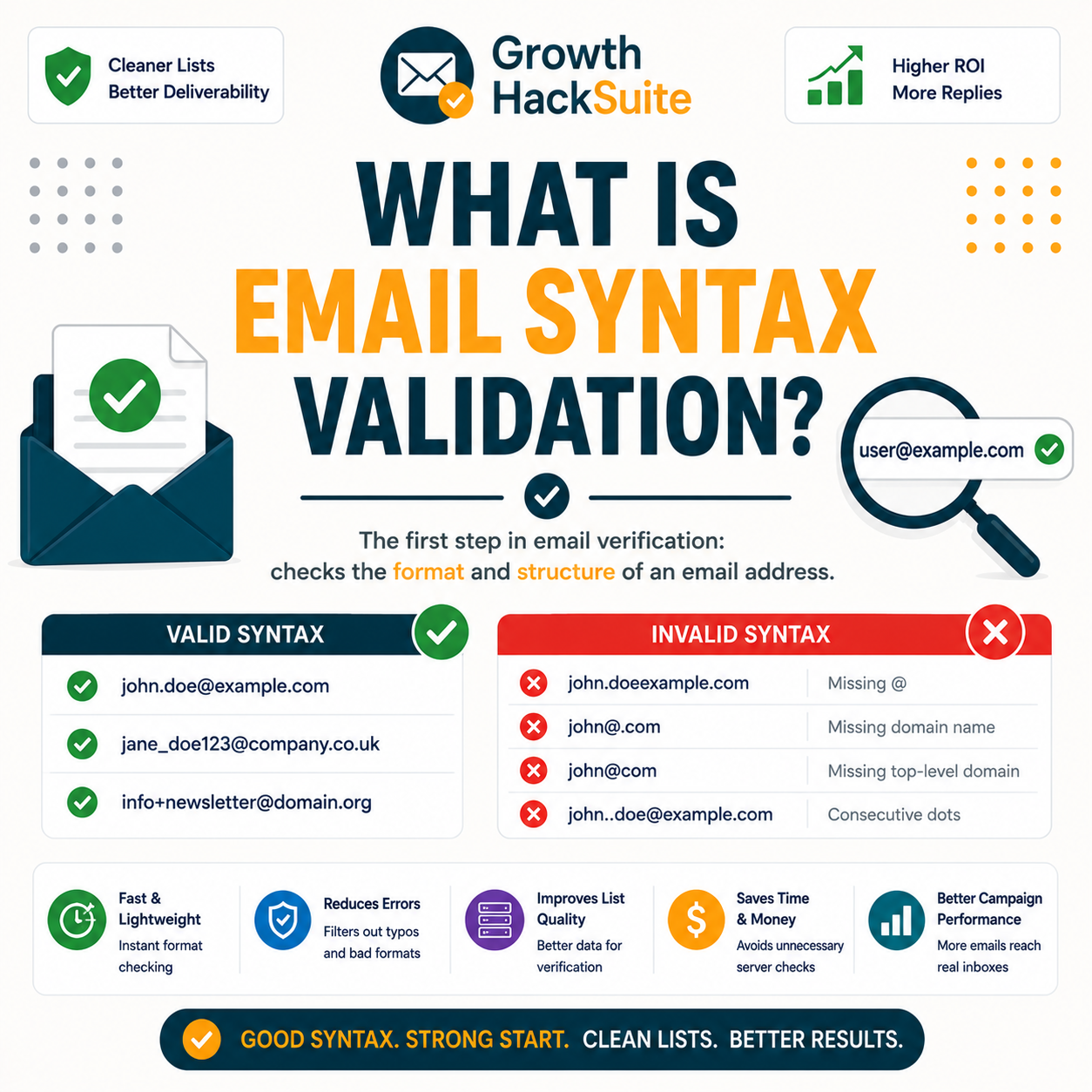
Email syntax validation checks an address is formatted right: local part, @ and valid domain. It is the fast first verification step. Full guide below.
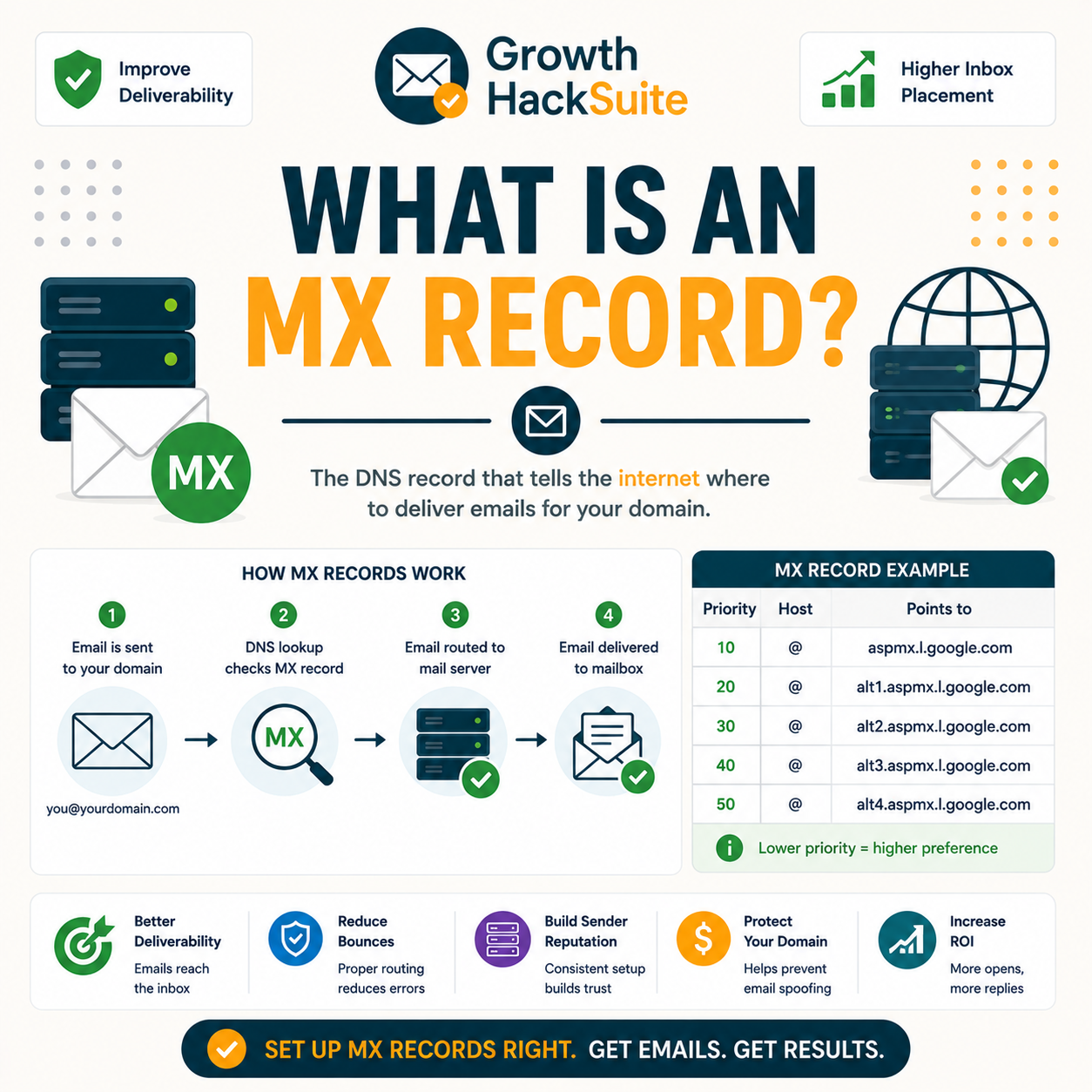
An MX record is the DNS entry that points to a domain's mail server. Verifiers check it first: no MX record means no mail can arrive. Full guide below.
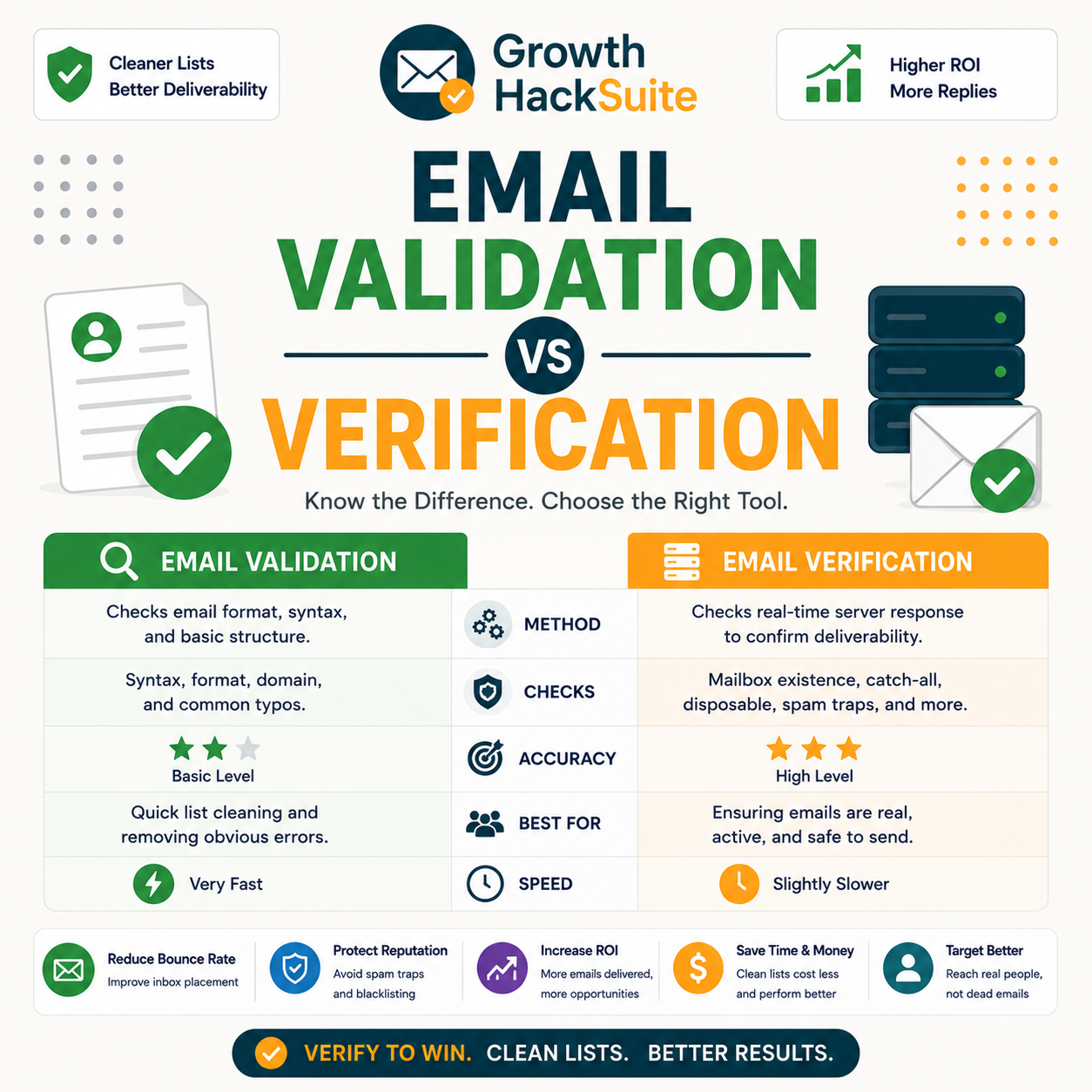
Email validation vs verification: validation checks an address is formatted correctly, verification confirms the mailbox actually exists. See what each catches and which you need. Full comparison inside.
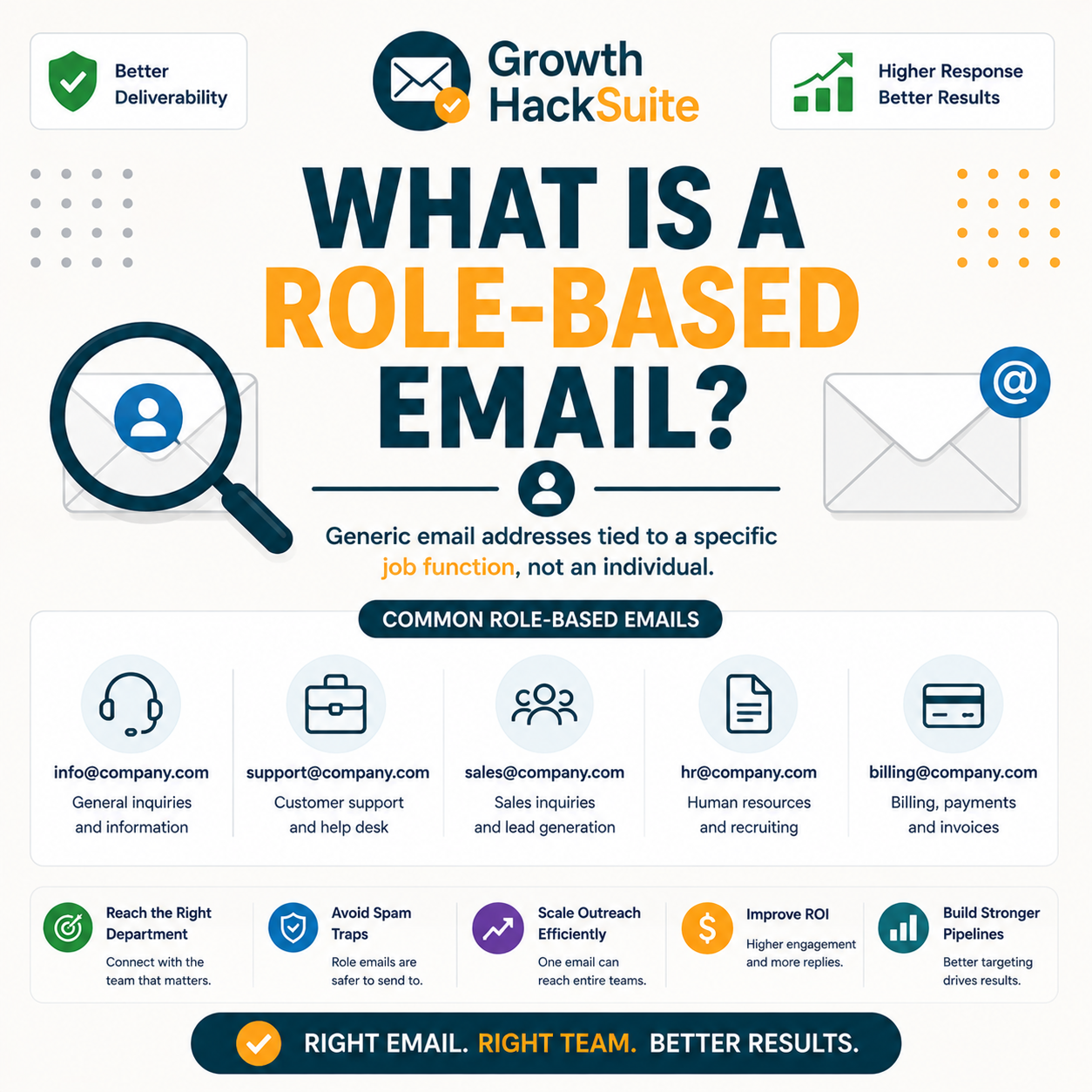
A role-based email like info@ or sales@ points to a team, not a person. See what they are, why verifiers flag them, and whether to send. Full guide below.
Honest reviews and verified pricing for sales, marketing & growth tools. Every tool tested by our team. No fluff, no sponsored rankings.